
Film notes
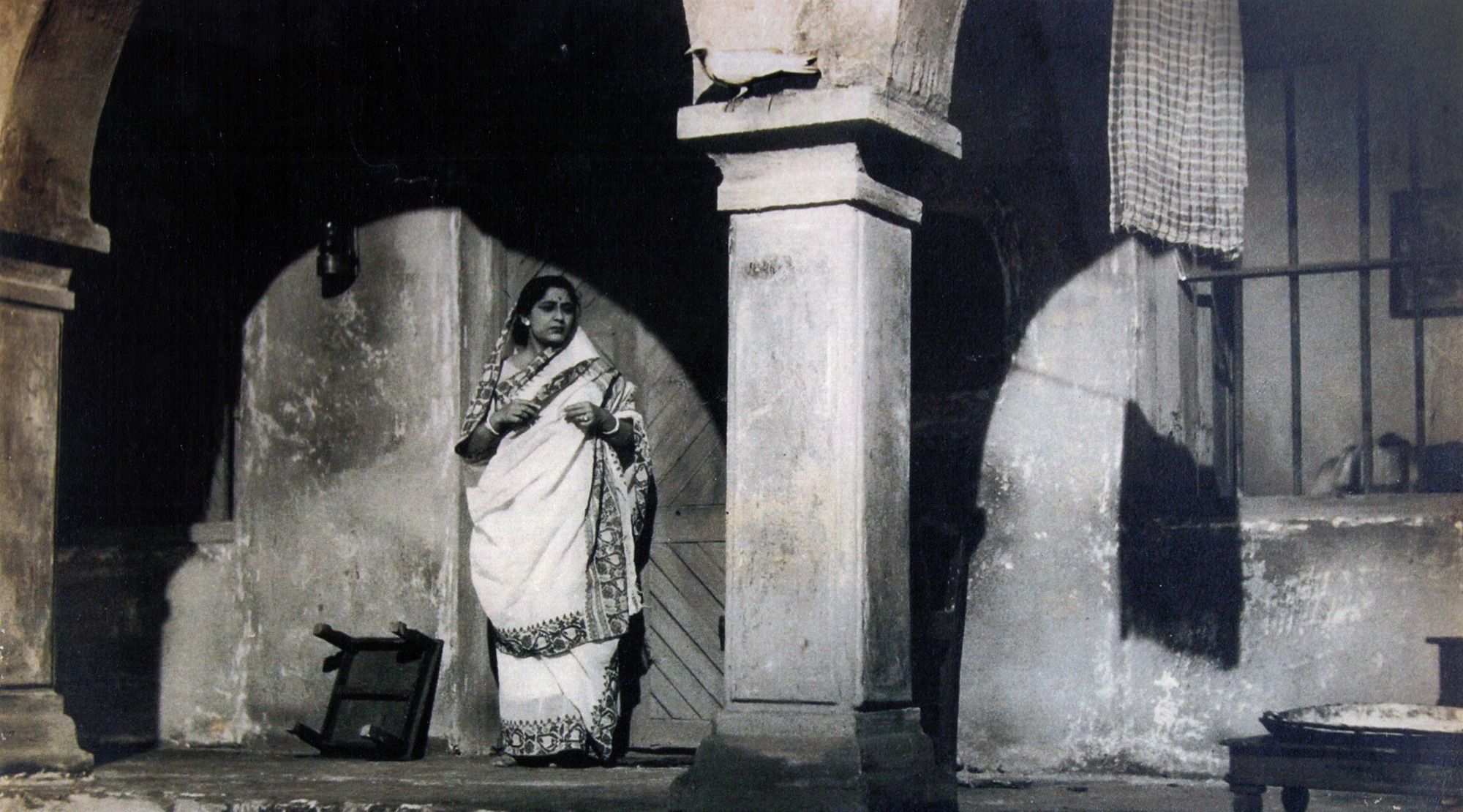
Bari Theke Paliye was Ritwik Ghatak’s second film to be released, even though chronologically it is his third after Nagarik and Ajantrik. It is an important early work – a quiet, humanist precursor, in a relatively “acceptable” narrative style compared to the more experimental impulses that became apparent in his later works. Bari Theke Paliy e already reflects Ghatak’s sensitivity to themes of urban alienation, dislocation and belonging. Ghatak transformed the story by writer Shibram Chakraborty into a tender yet quietly unsettling exploration of childhood, alienation and the seductive illusions of the city. This coming-of-age film follows Kanchan, a young boy who runs away from his village, driven by a mix of curiosity, restlessness, and the allure of urban life. What unfolds is not an adventure in the conventional sense, but a gradual stripping away of innocence as the city reveals itself to be indifferent, even hostile. Ghatak portrays Kanchan’s journey with remarkable empathy. The child’s perspective shapes the narrative, allowing moments of wonder – train rides, bustling streets, fleeting encounters – to coexist with fear and loneliness. The city, rather than being a site of opportunity, becomes a labyrinth where Kanchan is both fascinated and lost. One of the film’s most striking elements is its visual language. Ghatak contrasts the openness of the village with the cramped, chaotic spaces of the city, the overwhelming urban cacophony replacing the relative calm of rural life, reinforcing the boy’s disorientation. At its core, Bari Theke Paliye is about displacement – not just physical, but emotional and existential. Kanchan’s journey mirrors a broader post-independence anxiety about migration and the loss of rootedness. Yet, the film never becomes didactic. Its power lies in its simplicity and its deep compassion for a child caught between worlds.
Shivendra Singh Dungarpur