Film notes
Animation, Automation
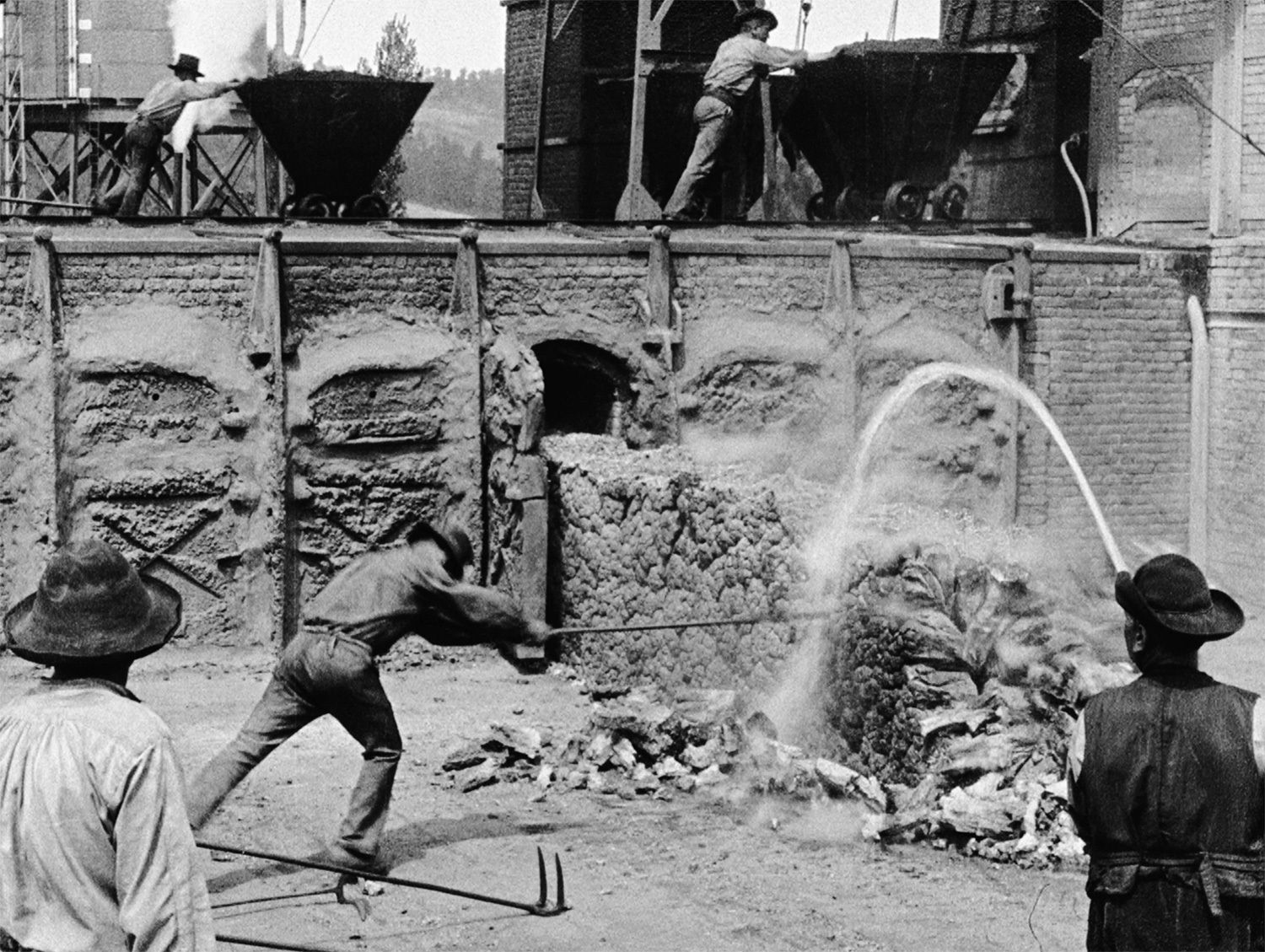
We are visual animals, and moving objects arrest and delight us to no end – the natural elements to begin with, waves, clouds, fire. We ourselves are restless and watching animals, dancers, fountains, following and losing ourselves in the rhythm, variations and patterns of their movements, soothes and distracts us. Mechanical devices and machines may have been created initially for practical uses, but as soon as they move they become fascinating visual displays, wonderfully entertaining. Many forms of art and entertainment are based on movement, be it dances, jugglers, fountains, pageants and the like. Until 1895 they defied all forms of representation. Sculpture, painting, photography can try to suggest movement, but only the Cinématographe succeeds in reproducing it in a convincing albeit illusory way. The projected photographs appear to be moving. In 1896 cinematography was all about the spectacle of movement, flaunting this unique capacity. No interest in still-life, then; we want the lion in the zoo to be animated, not asleep.
Mariann Lewinsky
Mouvements, Dimensions
The power of these films comes from their beauty and one of the aspects of their beauty is the creation – a masterly, essential creation – of dimensionality through movements create the perception of center, depth, vertical, horizontal.
On September 21, 1896 the operator Constant Girel got into a boat and filmed the city of Cologne, located on the banks of the Rhine. It’s the image itself that moves for the first time. This kind of shot, called a ‘panorama’, created the sensation of immediate participation and implicated spectators even more vividly than movements inside the image.
Mariann Lewinsky