
Film notes
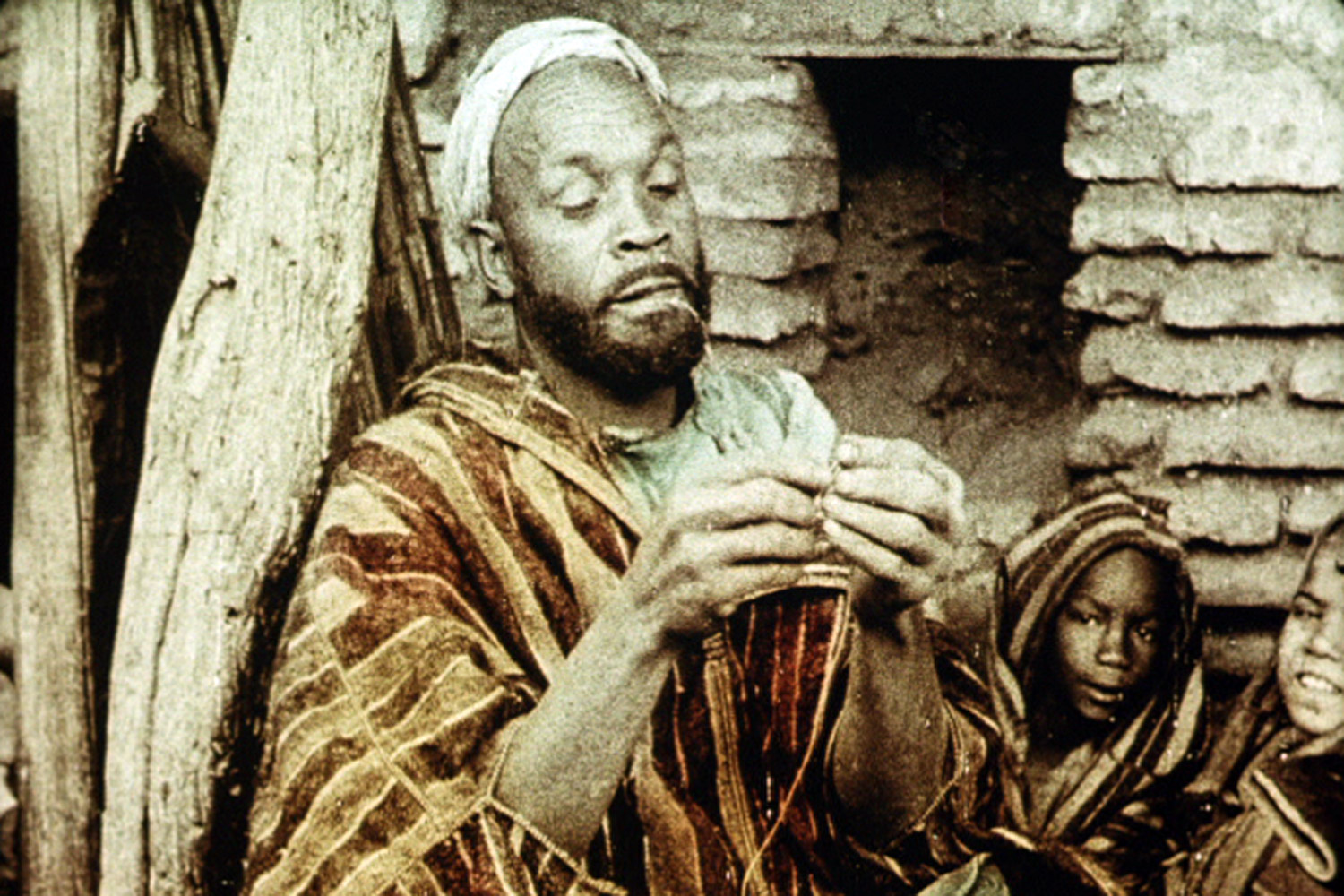
Exoticism is not confined to the West as an element of attraction; for its medieval Arab readers The Thousand and One Nights evoked a fantastic, exotic Orient owing to the Indian and Persian origins of the compendium.. Some among the gorgeously stencilled scènes à trucs et transformations and féeries et contes by Gaston Velle – see L’Écrin du Rajah (1906) and La Rose d’or (1910) – display the decorative oriental setting inherited or usurped by early cinema from stage magic and stage féeries. And wasn’t cinema a flying carpet? It transported the audience to foreign lands again and again, satisfying an unquenchable desire that fuelled the production of a staggering quantity of short travelogues in the first twenty years of cinema. With feature length films, orientalist narratives and sexual fantasies started to be acted out. With feature length films, orientalist narratives and sexual fantasies could be further developed. Valentino’s sheikh was not the first dark handsome Oriental to vanquish a white woman on screen – he had an important predecessor in Gunnar Tolnæs with the Danish box-office hit of 1917, The Maharaja’s Favorite Wife I (Maharadjahens Yndlingshustru I); Nordisk hired artists and animals of Circus Sarrasani to add exotic colour to the production.
Mariann Lewinsky