Film notes
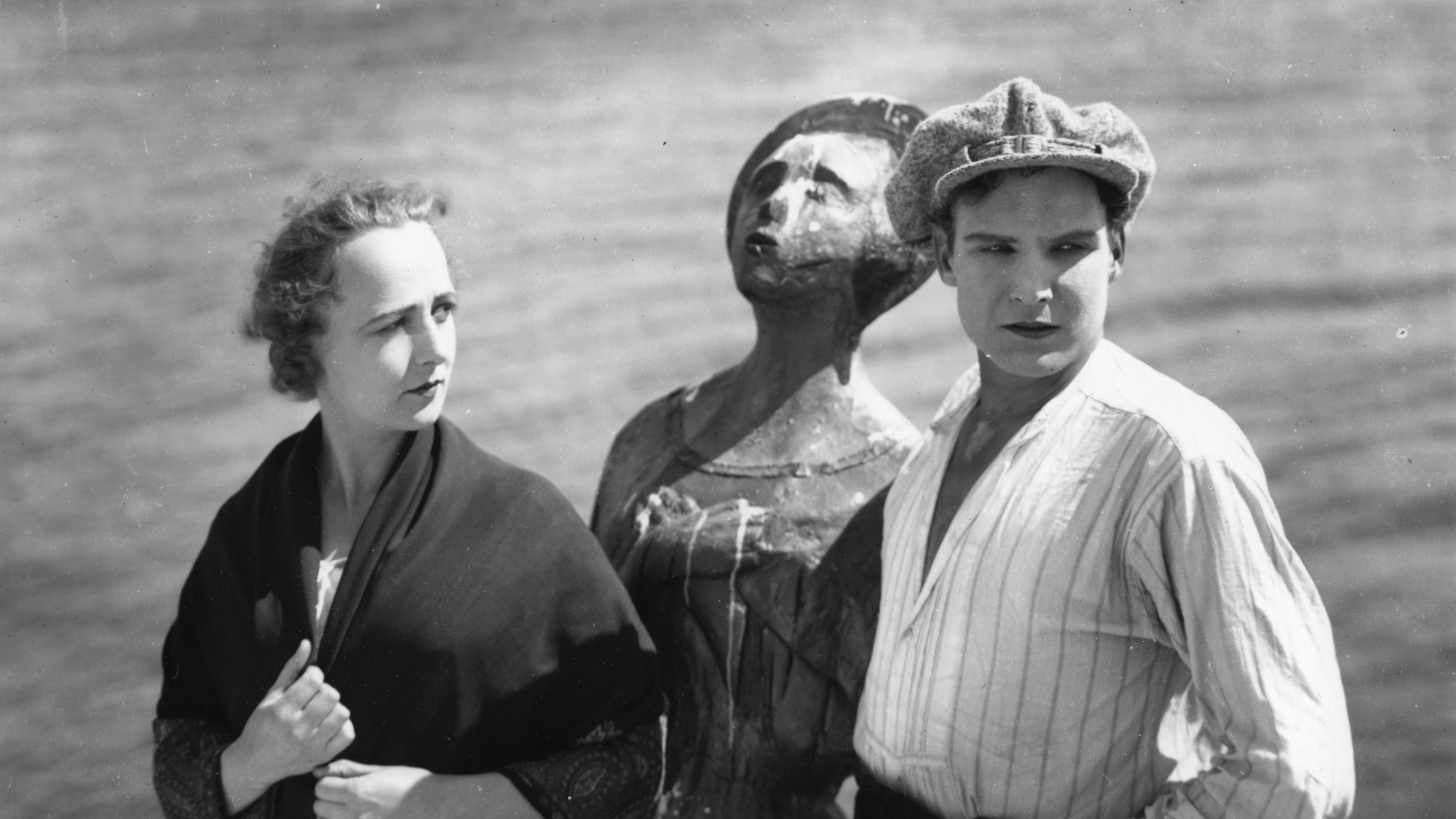
In 1926, after a slumberous year, Finnish cinema faced an upheaval when three independent companies rose to challenge Suomi-Filmi’s dominance. Of these, only the short-lived Komedia-Filmi managed to produce more than one feature. Yet with its debut Meren kasvojen edessä, it made Finnish film history. Based on a novel by the celebrated Finnish poet and author Arvid Mörne, the film shatters the idyllic image of the Finnish summer. Portents of terrible events appear on a remote island. As three young men enjoy a peaceful archipelago holiday, a mysterious silhouette catches their eye: someone is rowing a coffin across the night sea. When one approaches, the ghost of a woman appears. Komedia-Filmi was founded by director and screenwriter Teuvo Puro, cinematographer Kurt Jäger and set designer Carl Fager. Puro, a prolific actor and long-time director of the Finnish National Theatre, ranks among the most important figures of early Finnish cinema. His skill with actors is evident, but as in many Nordic films of the era, the visual treatment of landscape and nature is especially compelling. Suspense and horror were rare in early Finnish silent cinema, making Meren kasvojen edessä all the more striking. Puro crafts a story where horror entwines with mystery. At its centre stands a house on the notorious island of Hylkysaari, weighed down by longsuppressed secrets. Puro keeps viewers tightly in his grasp as Hylkysaari’s secrets unfold, each revelation darker than expected. Dream sequences and vivid flashbacks deepen the oppressive, expectant atmosphere that lasts almost until the very end. After the film’s release, Puro sold his shares in Komedia-Filmi and returned to Suomi-Filmi, where he subsequently made another early horror film, Noidan kirot. Meren kasvojen edessä itself was a major success, earning strong reviews, selling in the Nordic countries, and becoming the most-watched Finnish film of the year.
Otto Kylmälä