

Film notes
CHAPTER 2: EMPATHY AND DISASTER
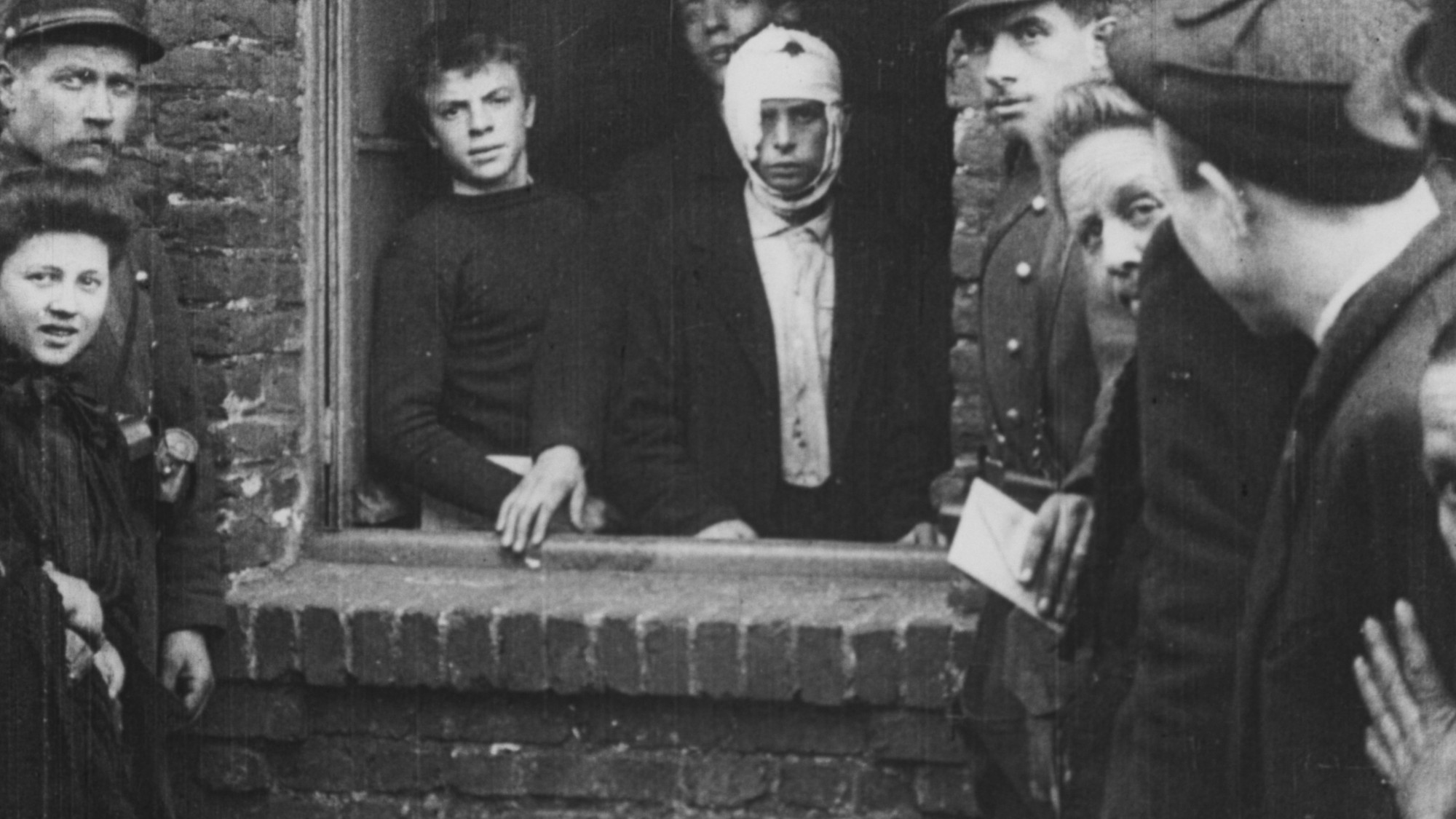
Filming depicts the real world or a staged excerpt from it. Both can lead to an immediate experience of reality – regardless of how the images presented to the audience on a cinema screen were created. Empathy can therefore be evoked in viewers by both “real” and “fictional” images. This programme reflects this inherent characteristic of cinema. Today’s viewers should consider, however, that one of the characteristics of early cinema is that it had not yet been standardized and therefore often did not censor images when, according to our habits, they are too crude. We feel painfully empathetic when we see Max Linder hanging from a tree with a noose around his neck for far too long in a comedy about an unhappy lover, or when we watch a documentary in which vast amounts of water are poured over a baby’s naked body in India. Many feel empathy when watching the documentary footage of the earthquake in San Francisco and the mining accident in the French town of Courrières in 1906, are emotionally moved when fictional dramas depict the suffering of motherhood, and (hopefully) suffer shock at the overt racism that forms the basis of the last film in the programme – a comedy. What we feel and how strongly we feel it always depends on the viewer – regardless of how well or poorly a film was made and whether the events captured on camera are real or fictional.
Karl Wratschko
