
Film notes
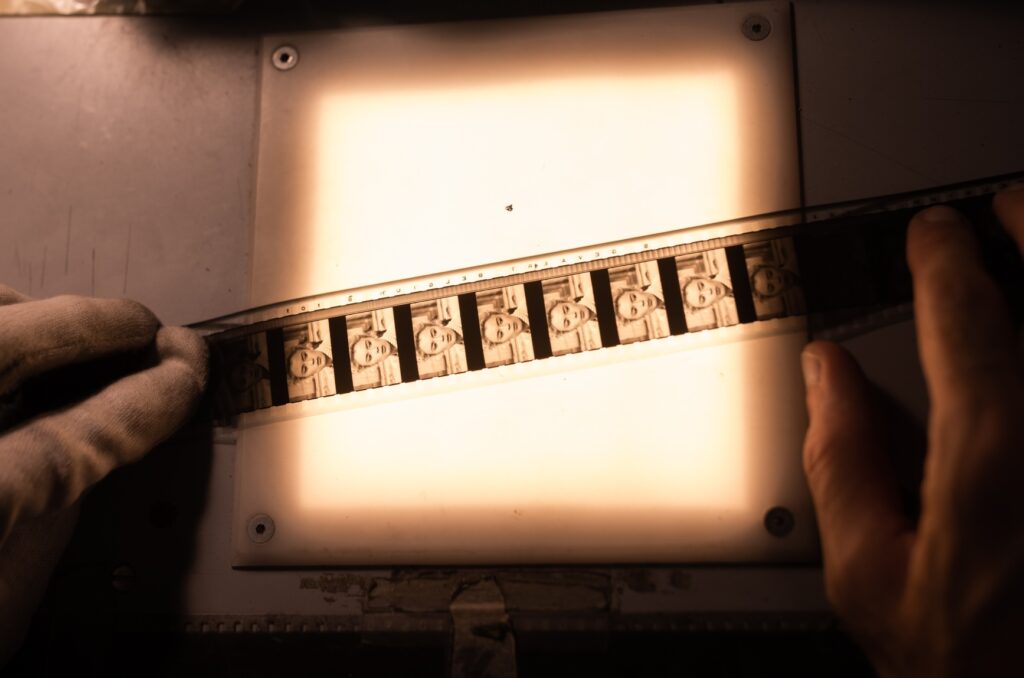
Photo © Fondation Jérôme Seydoux-Pathé
Interior New York Subway, 14th Street to 42nd Street featuring a text by Mark Twain read by Jay Weissberg
In 1905, after years of political conflict, France introduced the legal separation of Church and State. At the cinema, the resulting mood found expression in a series of openly anti-clerical films. On the one hand, there were comedies like La Confession, which wittily satirised the hypocrisy of the ecclesiastical apparatus; on the other, Lucien Nonguet revisited the horrors of the Catholic Inquisition with unprecedented cruelty and intensity in the historical Les Martyres de l’Inquisition. It was not the only film of the year to contain scenes of extreme violence. In the United States, Wallace McCutcheon and Edwin S. Porter celebrated the summary justice enacted by a white-hooded civilian militia, which replaces the State in the application of the legitimate monopoly of force, in a sinisterly contemporary film, The White Caps. As was frequently the case in the great narratives of human history, the defence of one’s ‘own’ women became the pretext for an explosion of blind justice. This fictional account of a reactionary America stands in sharp contrast to the documentary approach with which the same Porter set out to immortalise modern America through a symbolic lens in Coney Island at Night: the entertainment venues of the New York neighbourhood shine dazzlingly white, as if in a dream of great promise, while the rest of the image is enveloped by intense blacks, almost as if in an attempt to conceal ‘the other America’. A darker side to the cinema of the era re-emerges in the form of racism. This is above all true of those comedies that mock individuals and reinforce widespread stereotypes. The French Le Rêve de Dranem is an emblematic case and, like all documents of its time, provides a useful aid to understanding the era.
Karl Wratschko