The Cinephiles’ Heaven
[2019]
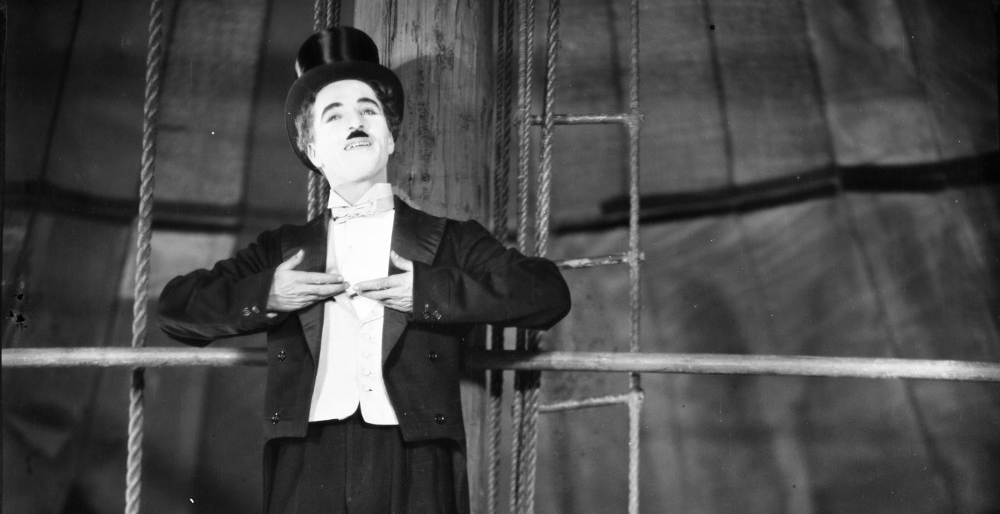
Buster Keaton and Charlie Chaplin will be lighting up the big screen in Piazza Maggiore in two cine-concerts at the upcoming festival. Released in 1928 within a few months of each other, The Cameraman and The Circus are the perfect expression of silent film’s last season and of an art that reached the height of its artistic power right before succumbing to the revolution of sound.
Tuesday 25 June will be the night of The Cameraman, perhaps the last of the Keatonian wonders and a brilliant depiction of the relationship between cinema and reality and of the fragility of the artist. A newly restored version of the film will be presented with a live performance by the Orchestra del Teatro Comunale di Bologna of an original score composed by Timothy Brock, who will also be conducting.
On Thursday 27 June the whirlwind, tightrope-walking genius of Charlie Chaplin will light up the screen with The Circus, an amazing demonstration of a confident filmmaker using his creative powers to make a comedy about being funny, unintentionally. The dazzling new restored version will be accompanied by Chaplin’s original score, meticulously reconstructed by Timothy Brock using archive materials and also performed by the Orchestra del Teatro Comunale di Bologna.
The Cameraman (1928) by Buster Keaton • The Circus (1928) by Charles Chaplin
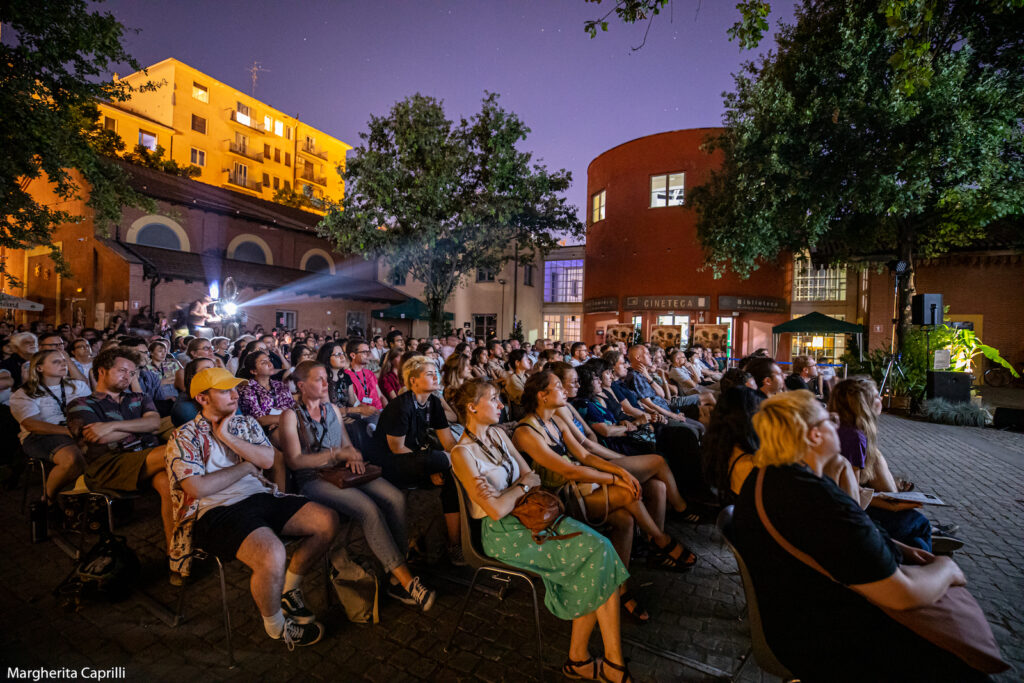
Carbon arc projector screenings return to Piazzetta Pasolini re-creating the light and ambience of vintage films. One evening will be devoted to the legendary Musidora, with a ‘Ledecky print’ of Soleil et ombre and live music by Gabriel Thibaudeau. In honour of Enno Patalas (1929–2018) we will screen a masterpiece of silent cinema, Lupu Pick’s Sylvester, using a print from the National Film Archive of Japan’s Komiya Collection with live music by Frank Bockius. The third evening is dedicated to a programme entitled Short, Coloured, Criminal.
Soleil et ombre (1922) by Musidora • Sylvester (1923) by Lupu Pick
Edition History
Sunday 24 June the giant screen of Piazza Maggiore will light up with Rosita, the magic and stormy encounter between Mary Pickford, the brilliant young star who could already see her career slowly fading, and Ernst Lubitsch, making the debut of his legendary American career. This extraordinary film will be accompanied by music performed live by the Mitteleuropa Orchestra, conducted by Gillian Anderson, who reconstructed the film’s original score from music sheets at the Library of Congress in Washington, D.C.
Wednesday 27 June is the evening dedicated to Frank Borzage’s 7th Heaven, a melodrama in the shadow of the war, a masterpiece of narrative power and scenic beauty, which will be amplified by the original score composed by Timothy Brock commissioned by the Orchestre Philarmonique de Radio France and performed by the Orchestra del Teatro Comunale di Bologna.
Der Fall Rosentopf (The Rosentopf Case, 1918) by Ernst Lubitsch • Rosita (1923) by Ernst Lubitsch • Entr’acte (1924) by René Clair • 7th Heaven (1927) by Frank Borzage
Four films projected with carbon arc lamp projector in Piazzetta Pasolini bring back to life the flickering, moody atmosphere of old cinemas. Three evenings are part of the section Song of Naples and will be accompanied by three musical groups: Guido Sodo and François Laurent, Antonella Monetti and Michele Signore, and E Zézi Gruppo Operaio.
A bánya titka I (The Secret of the Mine Part I, 1918) by Uher Ödön • ‘A Santanotte (1922) by Elvira Notari • Fantasia ‘e surdato (Soldier’s Fantasy, 1922) by Elvira Notari • Naples aux baisers de feu (1925) by Serge Nadejdine • Napoli sirena delle canzoni (1929) by Elvira Notari
Photo: 7th Heaven
On Monday, June 26th, on the ‘most beautiful cinema screen in the world’, Bologna’s Piazza Maggiore, the most enthralling visual symphony on the concept of revolution will shine once again: Battleship Potemkin by Sergej Ejzenštejn, with Edmund Meisel’s original score performed by the Filarmonica del Teatro Comunale di Bologna, conducted by Helmut Imig.
On Wednesday, June 28th, King Vidor’s The Patsy will also be screened. A sensation among the last of the American silent comedies and a compelling testing ground for the talent of Marion Davies, it will be accompanied by Maud Nelissen’s score performed by The Sprockets.
A rousing evening on Friday June 30th with the master of deadpan comedy Buster Keaton in Steamboat Bill, Jr. The masterpiece was restored as part of the Keaton Project and features a score written and conducted by Timothy Brock and performed by the Orchestra del Teatro Comunale di Bologna.
The search for lost time, which captivated audiences in recent editions, continues in Piazzetta Pasolini. Three screenings using carbon projectors: Nikolaus Wostry of the Austrian Film Archive will present a program of films screened using a vintage hand crank projector; the Austrian guitarist Florian Kmet will accompany Die kleine Veronika by Robert Land; and finally, Addio giovinezza by Augusto Genina, accompanied by Daniele Furlati on the piano and Franck Bockius on drums.
Photo: Battleship Potëmkin by Sergej Ėjzenštejn (1925)
À propos de Nice (1930) by Jean Vigo
Music by Stephen Horne & Frank Bockius
La Roue (1923, prologue) by Abel Gance
Original music by Arthur Honeger performed by Filarmonica del Teatro Comunale di Bologna directed by Timothy Brock – World premiere
Bronenosec Potëmkin (1925) by Sergej Ejzenštejn
Original music by Edmund Meisel performed by Filarmonica del Teatro Comunale di Bologna diretta da Helmut Imig
The Patsy (1928) by King Vidor
Music composed by Maud Nelissen and performed by her group The Sprockets
Steamboat Bill, Jr. (1928) by Buster Keaton
Score composed by Timothy Brock and performed by Orchestra del Teatro Comunale di Bologna
_____________________________________________________________________________
For reservations (from June, 23rd): cinetecadirezione@cineteca.bologna.it – 051 2195333
Addio giovinezza (1918) by Augusto Genina
Accompanied by Daniele Furlati (piano), Frank Bockius (drums), Filippo Orefice (saxophone and clarinet)
Die kleine Veronika (1930) by Robert Land
Accompanied by Florian Kmet on guitar.
Evening supported by the Austrian Cultural Forum 
Carbon-arc Projection
[Ein K.U.K. Feldkino-Zug während des Ersten Weltkrieges] (1916)
Holland in ijs (Holland in Ice, 1917) by Willy Mullens
DAS BACCHANAL DES TODES (1917) by Richard Eichberg
Zwei blaue jungen (1917) by Alwin Neuß
[De petroleumbrand te Vlissingen: een overzicht van der ruïne] (Petroleum Fire in Vlissingen: a Survey of the Ruins, 1917)
Azione della R. Marina nel Golfo di Trieste (1917)
Accompanied by Donald Sosin (piano) and Frank Bockius (drums)