[MOVIE]
Scen.: Asadollah Peyman. F.: Shahrokh Golestan. M.: Forough Farrokhzad. Int.: Ebrahim Golestan (voce narrante). Prod.: Golestan Film Studio. DCP. Col.
Edition History
The 4K restoration was based on the only two surviving elements: a 35mm print dubbed in English held by the University of Chicago, used for the image, and a 35mm print with original Persian soundtrack and burnt-in French subtitles preserved by the Historical Archive of Contemporary Arts of the Venice Biennale, used for the sound.
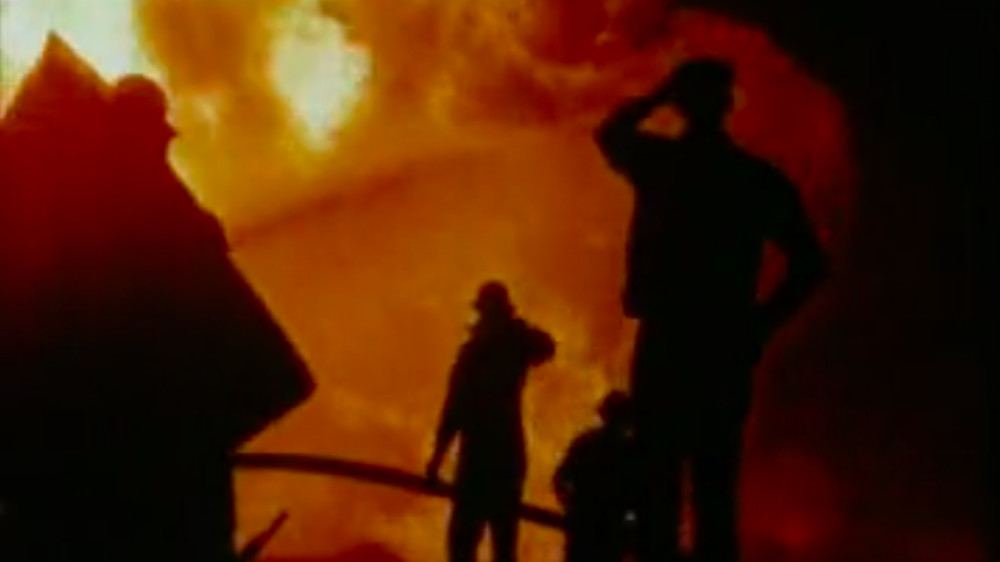
Ebrahim Golestan’s lifelong cinematic fascination with earth, water and fire found its earliest expression in the simply titled A Fire, which became his first major international success. In April 1958, an oil well located in southwest Iran caught fire. Golestan, who also worked as a producer, sent director Abolghassem Rezaie to make a documentary about the disaster. When Golestan saw the black-and-white footage, he saw that the story held even greater potential and decided to produce his own version of the events – this time in colour.
Golestan’s brother Shahrokh filmed the process of putting out the conflagration, while the poet Forough Farrokhzad (soon to direct her debut The House Is Black) edited the film – which combined her poetic sensibilities with Golestan’s more symbolic approach. The result stands in sharp contrast with other notable films that treat the same subject matter; for instance, Werner Herzog’s Lessons of Darkness. Instead of an operatic tale of individualism, Golestan develops a folkloric narrative; a celebration of collective work by ordinary people. He offers an anecdotal, poetic depiction of the lives interwoven with the disaster. As powerfully as the film shows the destructive side of fire, the element also has a sacred place in Persian culture. After all, when Abraham [Ebrahim] was thrown into the fire, it was God who said “O fire! Be coolness and safety for Ebrahim.” The blaze transformed into a garden, which in Persian is known as golestan.
Ehsan Khoshbakht

Restored and funded by Cineteca di Bologna at L’Immagine Ritrovata laboratory in association with Ebrahim Golestan
In the spring of 1958 an oil well in the southwest of Iran caught fire. Golestan took his small crew to the location and filmed the process of extinguishing the conflagration. Later, Forough Farrokhzad, fresh from an educational course on the use of archival footage in the UK, edited the film which combined her poetic sensibilities with Golestan’s more symbolic approach. The result stands in sharp contrast with, for instance, Werner Herzog’s treatment of the same subject matter in Lektionen in Finsternis (Lessons of Darkness). Golestan develops a folkloric narrative, a celebration of collective work by ordinary people, while Herzog gives us an operatic tale of individualism. Golestan looks at the situation from the inside, whereas for Herzog the process of filming becomes another epic adventure in an exotic place which stands beyong language. Golestan is not interested in the steely will of men but offers an anecdotal, poetic depiction of the lives interweaved with the disaster. After all, fire was sacred in ancient Iran and fire was also the form in which God appeared to Abraham (Ebrahim).
Da: University of Chicago Film Studies Center