[MOVIE]
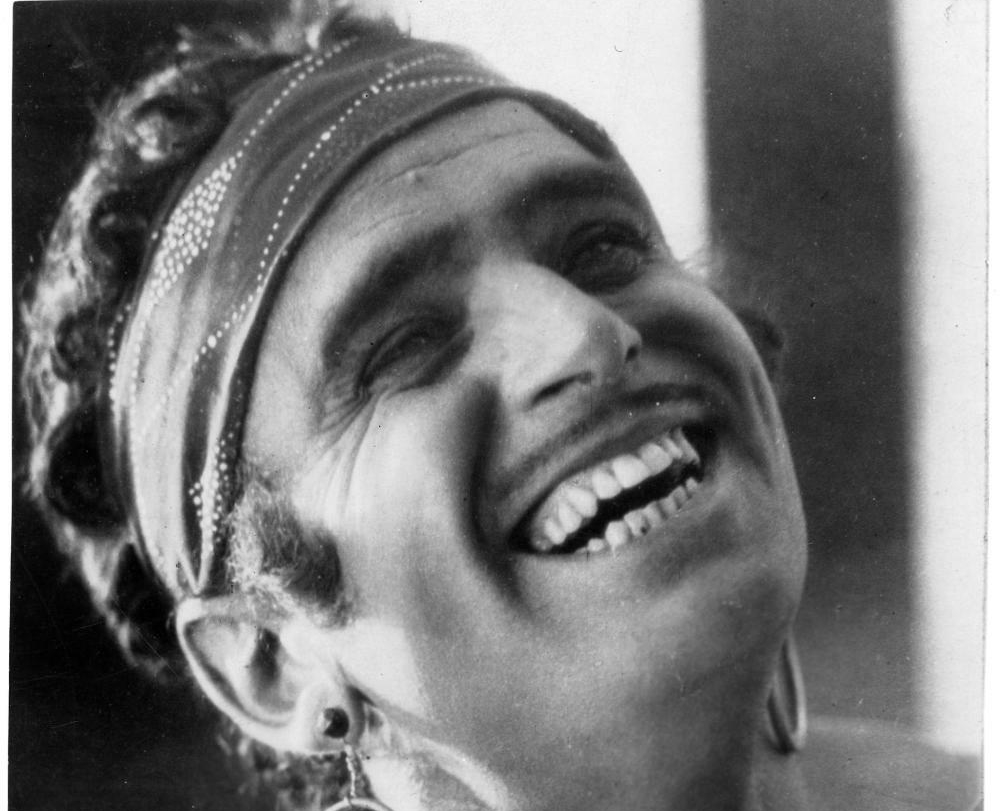
S.: da un racconto di Edward Knowblock. Sc.: Elton Thomas (Douglas Fairbanks). F.: Arthur Edeson. Scgf.: William Cameron Menzies. M.: William Nolan. C.: Mitchell Leisen. E.S.: Hampton Del Ruth. In.: Douglas Fairbanks (ladro), Julanne Johnston (principessa), Anna May Wong (schiava mongola), Snitz Edwards (l’aiutante del ladro), Charles Belcher (il santone), Sojin (principe mongolo), K. Nambu (il suo consigliere), Sadakichi Hartman (il suo mago di corte), Winter-Blossom (Schiava che suona il liuto), Brandon Hurst (il Califfo), Etta Lee, Tote Du Crow, Noble Johnson, Mathilde Comont, Charles Stevens, Sam Baker, Jess Weldon, Scotty Mattraw, Charles Sylvester. P.: Fairbanks/United Artists. 35mm. L.: 3227m. D.:140’ a 20 f/s.
Edition History
Raoul Walsh was the last major creative figure to join The Thief of Bagdad, a Douglas Fairbanks production that had been in the works for over a year by the time Walsh came on board. Fairbanks had already written a massive screenplay (under his nom de plume Elton Thomas) and William Cameron Menzies had already designed and constructed the towering art nouveau sets. When Fairbanks, trying to convince a reluctant Walsh to take the assignment, took him on a tour of Menzies’ Bagdad, “I caught my breath,” Walsh recalled in his 1974 autobiography Each Man in His Time, “I changed my mind then and there. I would make The Thief of Bagdad and it would be the best picture I had ever directed. That is what one man’s genius can do to another man’s ego”. Though the final film remained very much an expression of Fairbanks’s unflaggingly optimistic, go-getter personality, the fit with Walsh is quite close: Fairbanks already possesses the internal dynamism of the self-propelled Walsh protagonist (though without the dark side) and Walsh’s later use of great heights as a visual metaphor for his characters’ (over)achievement, as in High Sierra and White Heat, may have originated with Fairbanks’s vertiginous stunts. (Walsh himself took the credit for engineering the film’s magic carpet – which took flight suspended by cables from a construction crane.) For Jacques Lourcelles, however, the film remained “a very minor work” for Walsh: “Walsh may have understood Fairbanks perfectly, but his comic strip character did not inspire him”. Tellingly, Walsh’s only other film with a strong fantasy element was his notorious 1945 flop The Horn Blows at Midnight.
(Dave Kehr)

Per concessione di Cohen Film Collection
“Robin Hood cost well over a million dollars, but brought back profits handsome enough to encourage Fairbanks to make The Thief of Bagdad (1924). For Cooke, Fairbanks is now ‘a boy grotesquely buried in a library of costume’; and other critics have followed him. If the judgment is applied to the actor himself (apart from taking issue with the description of him as ‘a boy’: he was already forty-one), his own costumes are revealing enough at points still to raise an eyebrow. In fact The Thief of Bagdad now seems one of Fairbanks’ best, most accomplished, and certainly most durable pictures. With absolute deliberation he places himself in gigantic settings – the Cave of Fire, for instance, or the battle with the dragon – in which his minuscule figure remains always the focus of activity. No distance can reduce the indomitable vitality of the unmistakable figure”.
(David Robinson, The Hero, cit.)
“The sets and décors for The Thief of Bagdad were designed by William Cameron Menzies. He started working for cinema in 1918 with George Fitzmaurice, then with Raoul Walsh for four of his films, but his work for Rosita by Lubitsch (1923), where he built Seville “anew”, made him famous. Costumes were instead by Mitchell Leisen, also working as architect and set designer”. (The Ten Commandments by Cecil B. de Mille, 1923)
“According to the majority of reviews at the time of the film release, its set and décor were innovative. Was it due to its unprecedented massive and monumental features or to its style? If in the United States film special effects seem to be noticed more than its set-designing, in France the latter is more important. Maurice Cohen, Hollywood correspondent for Cinéa-Ciné pour Tous speaks about an ‘effective originality’ of set décor: ‘One cannot stop marvelling – especially if one has just hailed from France – at the splendour, style, precision and refinement of set-designing in Douglas Fairbanks’s studios’. A few issues later, covering the release of the film in France (to which it dedicated the cover), the magazine published an article by Fairbanks with the title La raison d’être des grands décors, where the filmmakers stressed not so much their monumental features, but rather their being instrumental to the plot”.
(François Albera, L’orientalismo delle scenografie in ‘The Thief of Baghdad’, Cinegrafie, n.12, 1998)