[MOVIE]
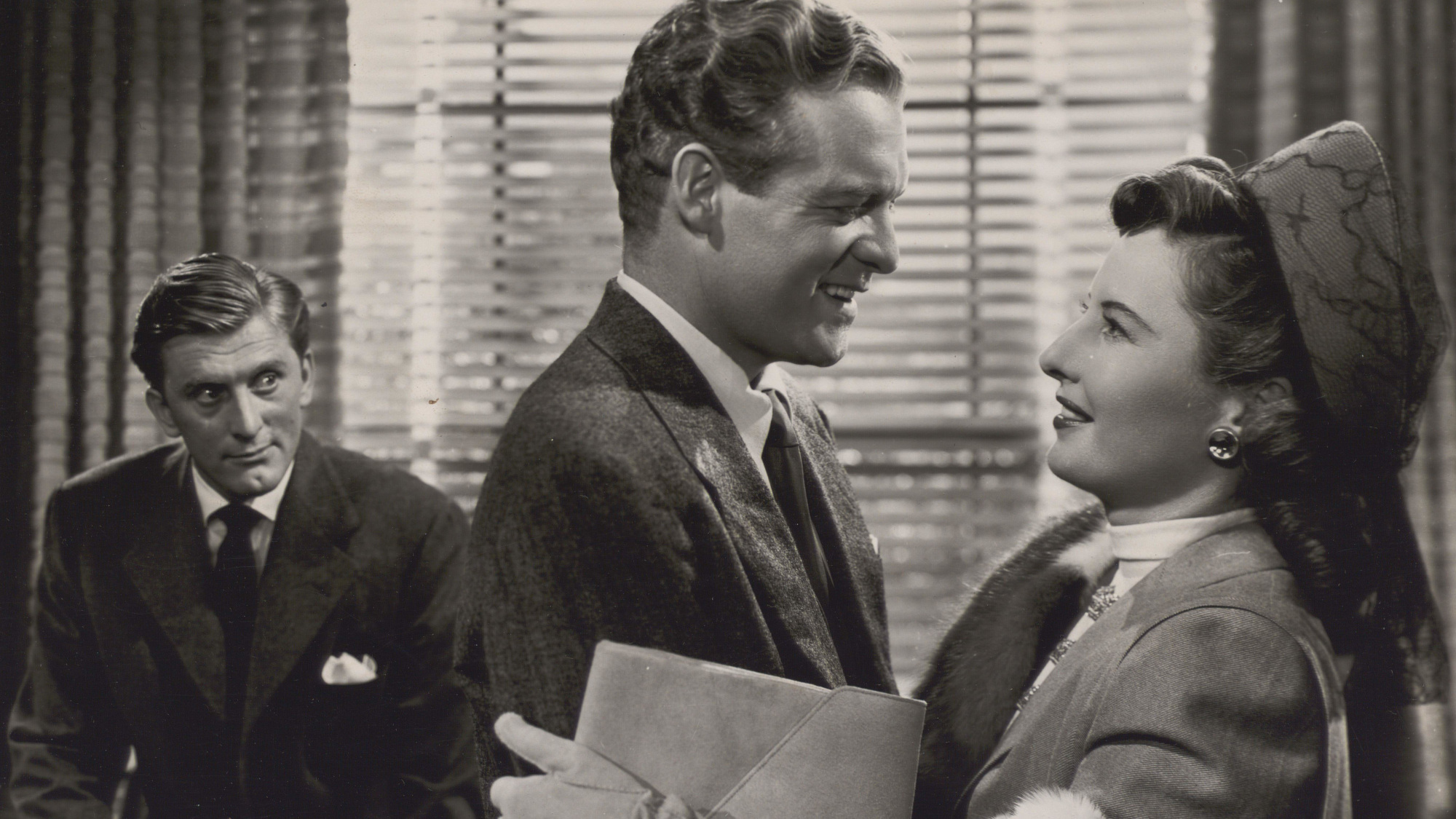
Sog.: from the story Love Lies Bleeding by John Patrick. Scen.: Robert Rossen. F.: Victor Milner. M.: Archie Marshek. Scgf.: Hans Dreier, John Meehan. Mus.: Miklos Rozsa. Int.: Barbara Stanwyck (Martha Ivers), Van Heflin (Sam Masterson), Lizabeth Scott (Toni Maracek), Kirk Douglas (Walter O’Neill), Judith Anderson (Miss Ivers), Roman Bohnen (Mr. O’Neill), Darryl Hickman (Sam as a young boy), Janis Wilson (Martha as a young girl), Ann Doran (Bobbi St. John), Frank Orth (hotel employee). Prod.: Hal Wallis Productions. DCP. D.: 116’. Bn.
Edition History
Milestone’s only film noir is an organic continuation of the visual qualities he had honed since the silent era. His signature pelting rain, low-key lighting, menacing urban skylines, and airless interiors are now in service to a script by Robert Rossen (his third collaboration with Milestone) that explores the theme of corruption through power.
Set in Iverstown, named after an industrialist family, the film opens with a long and gothic prologue featuring three childhood friends. Martha, a neurotic Ivers, raised as an orphan by her tyrannical aunt; Walter, a middle-class conformist, under the shadow of his father’s belief that servile obedience to Ivers will secure his son’s success; and Sam, a skid row rebel with dreams of escape. The trio grows up scarred by the psychological damage of that childhood, which informs the labyrinthine narrative. Eighteen years later, they have become Barbara Stanwyck, a manipulative Queen bee who runs the town, married to Kirk Douglas’s Walter, making his debut as the pathetic, drunken district attorney, and Van Heflin’s Sam, a war veteran-turned-gambler who has gained moral compass by reading the only book available to him during his lonely stays in hotel rooms – the Gideon Bible. Enter Toni (played by Lizabeth Scott), Heflin’s new love interest, a former shoplifter seeking redemption in the unredeemable Iverstown.
Sam’s return to town after two decades causes old emotions and fears to resurface, blending into a mixture of lust, suspicion, and betrayal. What the film lacks, however, is a nuanced exploration of sexuality, something Milestone was never particularly adept at handling. Is Martha a victim of childhood trauma and subtle blackmail or a psychopathic femme fatale? This indecision somehow matches the winding plot that concludes with a lurid sequence, echoing the original title of the story upon which the film was based in which “love lies bleeding”… to death.
Ehsan Khoshbakht

By courtesy of Park Circus.
Restored in 2020 by Paramount Pictures
in collaboration with Pro-Tek Media Preservation Services.
Birth of a ‘dark lady’, one stormy night. Little more than a child, Martha murders her rich and hateful aunt with a blow from a walking stick, the same stick the old lady was using to kill a kitten. Next to her is a trembling little boy. The end of childhood, a shared secret, an inheritance. Eighteen years later, Martha has become Barbara Stanywck, a proud captain of industry now 30 times richer than her aunt ever was. The place where everything happened is named Iverstown after her and, even if it not as vulgar and distressing as the Pottersville emerging from James Stewart’s nightmare in It’s a Wonderful Life (made the same year, 1946, when the war was over and someone had returned to an unrecognisable country), it is certainly not an agreeable place, with its smoky skyline of gasometers and tall furnaces. Martha, married to that trembling boy, now an alcoholic lawyer (the bravely miscast Kirk Douglas), is not a happy woman. Noir, melodrama and woman’s film, Martha Ivers is filled with the unease and menace that permeate so many American films of the period; with the suspicion that the pillars of society, capital and marriage, could be based on the suppression of a crime. Yet the narrative of Martha Ivers is unusual. Something does not add up. Martha’s adolescent love, her companion in so many failed getaways, reappears and we expect their old flame, promptly renewed, will climb some wuthering height. But Van Heflin, with his gambler on-a-losing-streak face, knows too much of the world by now and can’t pretend he’s a Heathcliff any more… so we quickly realise that everything is leading us to a different story, to a different couple, glimpsed as soon as Lizabeth Scott has revealed her luminous little face and long legs, seated next to her suitcase on the steps of a young women’s boarding house. According to Hollywood gossip it went this way because the powerful Hal B. Wallis was in love with Scott and wanted to give her role more relevance and more close-ups with every passing day; the fact remains that this sinuous narrative detour is what makes Martha Ivers a memorable film. Paramount deployed the best team that 1946 Hollywood could muster, above all Victor Milner and Hans Dreier, and even if he was in a permanent bad mood, Lewis Milestone coordinated everything with great elegance. So we welcome this restoration capable of giving us back those shafts of light on mahogany walls, those faces shrouded in darkness and desperation, that blonde hair swirling in the wind of a finally successful getaway.
Paola Cristalli
Courtesy of Park Circus. Restored in 2020 by Paramount Pictures in collaboration with Pro-Tek Media Preservation Services