[MOVIE]
Edition History
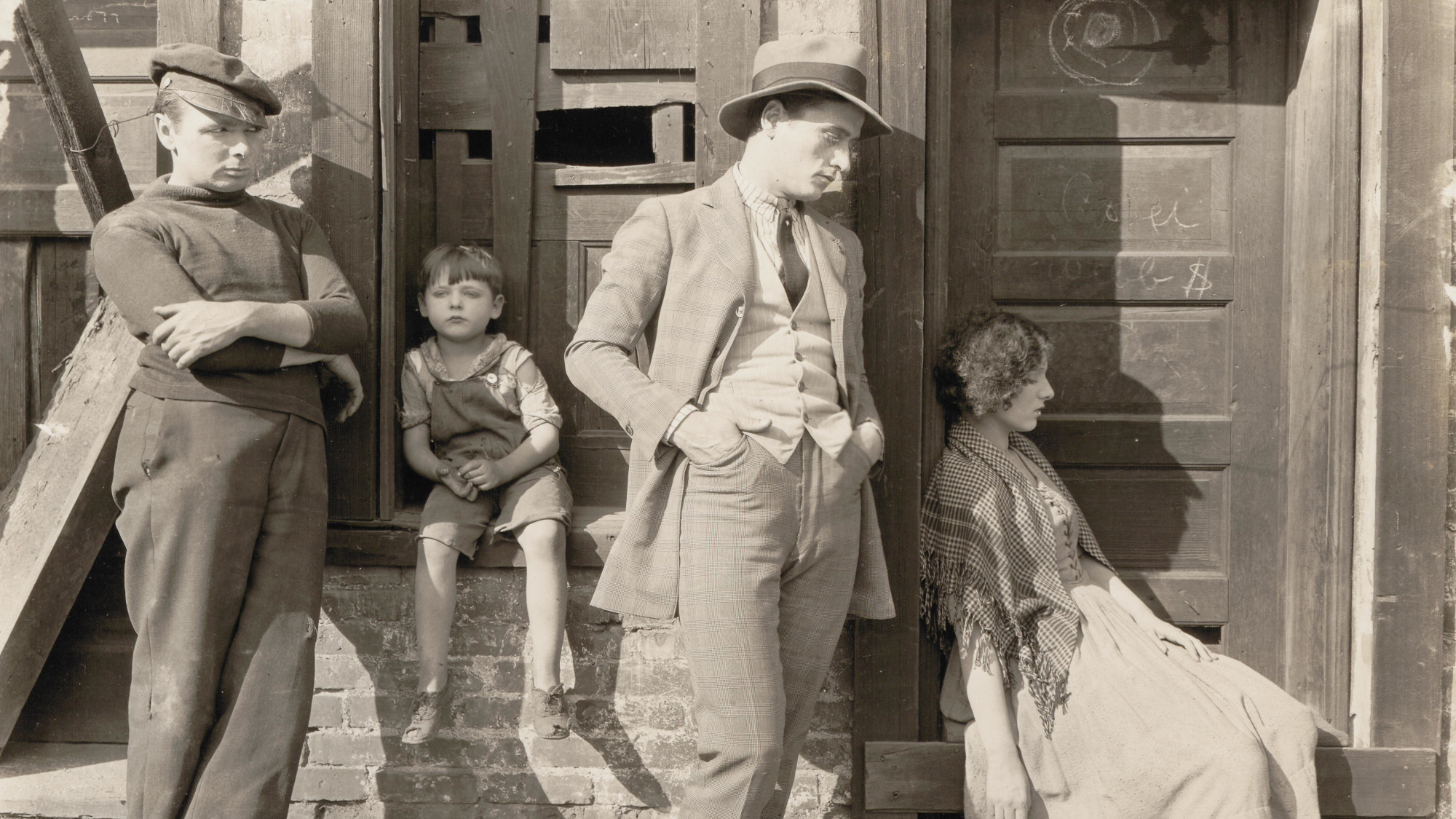
Josef von Sternberg created self-enclosed worlds with their own rules of artistic coherence and beauty. His first film, The Salvation Hunters, stands apart from the anti-realist virtuosity that made him famous later, and not only for the films that transformed George Bancroft and then Marlene Dietrich into stars. Its story is intertwined with documenting Los Angeles in 1924: the port in San Pedro, the Plaza downtown with jobless wanderers, the still uninhabited fields of the valley. Los Angeles is not named, only abstractions: the harbor, the city, the country.
Von Sternberg and British actor George K. Arthur banked their meager assets, primarily their skills and resourcefulness, to make a film that would get them work in Hollywood. Von Sternberg directed, edited, designed the sets and created visual poetry. Arthur, the male lead, won distribution from United Artists and rave reviews through his friend Charles Chaplin’s endorsement. Chaplin then cast Georgia Hale, Sternberg’s “sullen beauty”, as his glowing leading lady in The Gold Rush.
The Salvation Hunters has been called the first avant-garde feature film because of its haunting beauty and opening titles announcing “a film about thought.” But von Sternberg wasn’t aiming for the art-film circuit. He wanted to mainstream his conception of cinema art in the Hollywood studios.
“I had in mind a visual poem,” he wrote in his autobiography, Fun in a Chinese Laundry (1965). “Instead of flat lighting, shadows. In the place of pasty masks, faces in relief, plastic and deep-eyed. Instead of scenery which meant nothing, an emotionalized background that would transfer itself into my foreground. Instead of saccharine characters, sober figures moving in rhythm… And dominating all this was an imposing piece of machinery: the hero of the film was to be a dredge.”
The Salvation Hunters is the story of destitute, unrelated individuals – a boy, a girl, a child – living in the shadow of this machine’s huge claw swinging back and forth scooping mud from the channel. They find enough hope to leave for the city, naïve to its dangers.
Janet Bergstrom

Sternberg’s first film is his most badly appreciated – or simply unseen. Sternberg: “I had in mind a visual poem. Instead of flat lighting, shadows. In the place of pasty masks, faces in relief, plastic and deep-eyed. Instead of scenery which meant nothing, an emotionalized background that would transfer itself into my fore- ground. Instead of saccharine characters, sober figures moving in rhythm. Instead of stars I had engaged extras, and instead of extras I had planned to use a well-known star for one or two scenes. And dominating all this was an imposing piece of machinery: the hero of the film was to be a dredge.” Sometimes described as America’s first avant-garde feature film, The Salvation Hunters was produced on a shoestring by actor George K. Arthur (The Boy), and shot mostly on location in San Pedro, near Los Angeles. Sternberg was the director, writer, art director, editor. Chaplin’s enthusiasm got the film distributed by United Artists and the critics’ attention. Sternberg was pro- claimed a genius, in part because he dared to make a “film about thought” as the opening titles tell us. He brought Georgia Hale to the screen and to Chaplin, who made her his leading lady in The Gold Rush