[MOVIE]
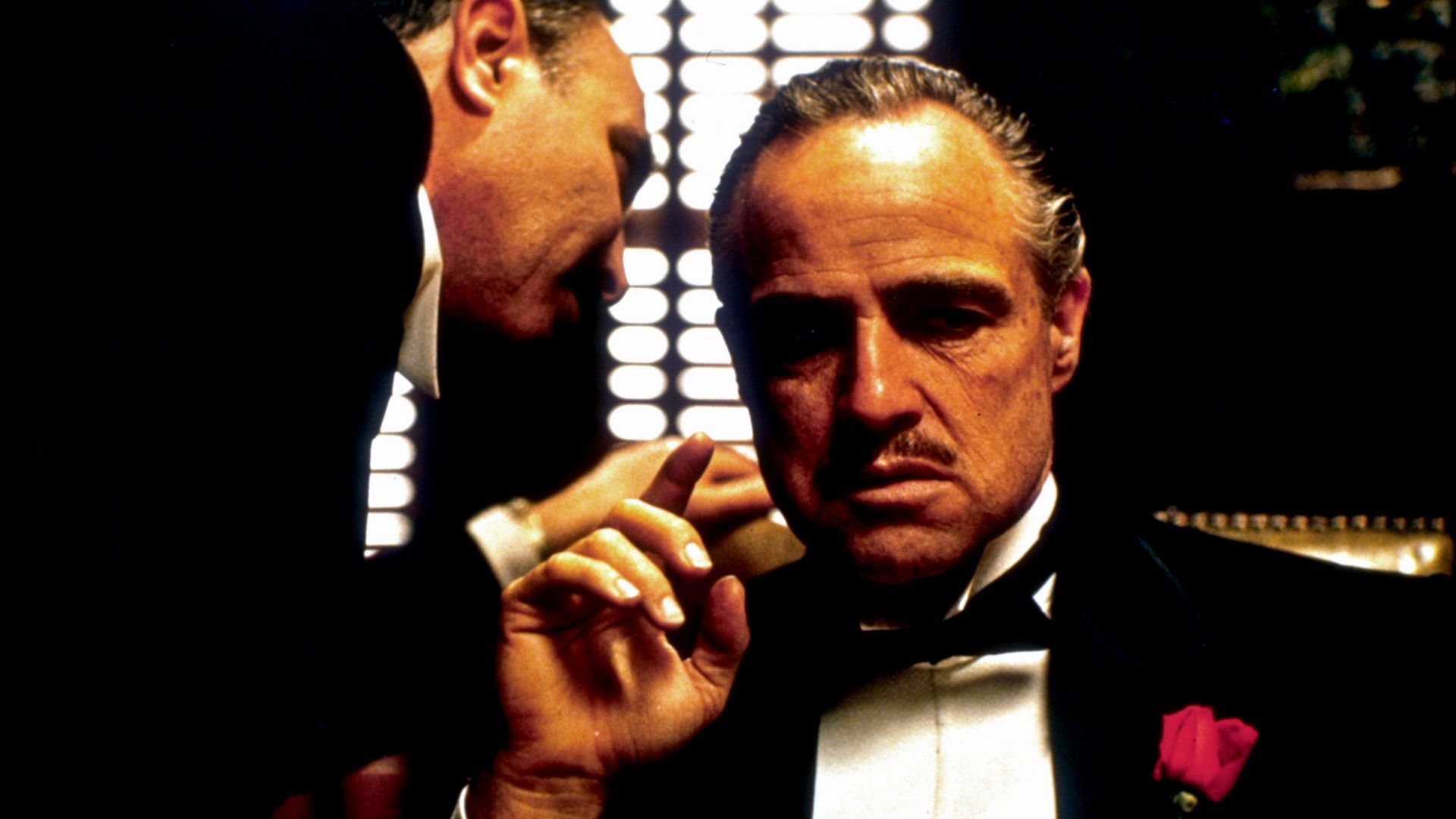
Sog.: dal romanzo omonimo (1969) di Mario Puzo. Scen.: Mario Puzo, Francis Ford Coppola. F.: Gordon Willis. M.: William Reynolds, Peter Zinner. Scgf.: Warren Clymer.Mus.: Nino Rota. Int.: Marlon Brando (Don Vito Corleone), Al Pacino (Michael Corleone), James Caan (Sonny Corleone), Richard Castellano (Clemenza), Robert Duvall (Tom Hagen), SterlingHayden (capitano McCluskey), John Marley (Jack Woltz), Richard Conte (Barzini), Diane Keaton (Kay Adams), Al Lettieri (Sollozzo). Prod.: Albert S. Ruddy per l’Alfran Productions, Inc, Paramount Pictures. DCP. D.: 175’. Col.
Edition History
With The Godfather now canonised as one of the most commercially and critically successful of all modern Hollywood productions, it is hard to appreciate the uncertainties that surrounded it. Although Mario Puzo’s novel became an instant publishing sensation in 1969, making a film almost inevitable, Paramount head of production Robert Evans noted that the studio’s recent gangster movies had mostly proved unsuccessful. He judged the solution was to hire an Italian-American director, even if Coppola was initially uncertain about how the film would affect his community’s image. Nor did Coppola’s previous track record as a precocious ‘movie brat’ make him an obvious choice for such a mainstream subject, except for his decision to revisit the classic Hollywood musical with Finian’s Rainbow four years earlier. In practice, tensions between studio, director and actors largely worked in the film’s favour. Calls to inject more action and violence pushedCoppola toward a more graphic portrayal of Mafia behaviour, and ultimately a longer film. The large cast brought many rising stars of 60s‘new Hollywood’ into the same orbit as the already legendary Brando, giving him a new currency, alongside such veterans as Richard Conteand the singer Al Martino. Surprisingly, two of Coppola’s key creative choices, which now seem indispensable to both this and the subsequent films of the trilogy, were initially contested by Paramount. Director of photography Gordon Willis perfected his low-key lighting register and extensive use of shadows, subtly injecting sepia into the colour balance, and helping establish a new era in cinematography. And for the composer Nino Rota, who had worked with all the great postwar Italian filmmakers, but never on an American film, The Godfather would bring lasting worldwide fame.
Ian Christie
Disfilm
Restored in 4K in 2021 by Paramount Pictures in collaboration withAmerican Zoetrope at Warner Bros. Motion Picture Imagining and Deluxe Audio laboratories, from the 35mm original negative
With The Godfather now canonised as one of the most commercially and critically successful of all modern Hollywood productions, it is hard to appreciate the uncertainties that surrounded it. Although Mario Puzo’s novel became an instant publishing sensation in 1969, making a film almost inevitable, Paramount head of production Robert Evans noted that the studio’s recent gangster movies had mostly proved unsuccessful. He judged the solution was to hire an Italian-American director, even if Coppola was initially uncertain about how the film would affect his community’s image. Nor did Coppola’s previous track record as a precocious ‘movie brat’ make him an obvious choice for such a mainstream subject, except for his decision to revisit the classic Hollywood musical with Finian’s Rainbow four years earlier. In practice, tensions between studio, director and actors largely worked in the film’s favour. Calls to inject more action and violence pushed Coppola toward a more graphic portrayal of Mafia behaviour, and ultimately a longer film. The large cast brought many rising stars of 60s ‘new Hollywood’ into the same orbit as the already legendary Brando, giving him a new currency, alongside such veterans as Richard Conte and the singer Al Martino. Surprisingly, two of Coppola’s key creative choices, which now seem indispensable to both this and the subsequent films of the trilogy, were initially contested by Paramount. Director of photography Gordon Willis perfected his low-key lighting register and extensive use of shadows, subtly injecting sepia into the colour balance, and helping establish a new era in cinematography. And for the composer Nino Rota, who had worked with all the great postwar Italian filmmakers, but never on an American film, The Godfather would bring lasting worldwide fame.
Ian Christie

Courtesy of Park Circus.
Vintage Technicolor 35mm dye transfer print
It was Mario Puzo who proposed Marlon Brando for the film based on his bestseller. In Italy the film’s title was inaccurately rendered by an undoubtedly Northern Italian translator as Il padrino, which literally refers to a godfather but lacks the original title’s Mafia connotations, which would be better conveyed by the Sicilian term ‘compare’. […] The production was entrusted to Al Ruddy, who thought of Coppola because he was Italian-American and because he had scripted an action film, Patton. Ruddy and Coppola called Brando, who accepted immediately, but ran into opposition from Paramount: Brando had ceased to be a box-office draw some time ago and was known to be a troublemaker. Legend has it that the company bosses were convinced by a screen test which showed Brando transformed beyond recognition. […] Many believe that the film’s success is largely due to the ‘phase’ in which the United States found itself in 1972 – a conservative backlash after the upheavals of the 1960s – and that it is symptomatic that an actor who had been in the front ranks supporting the struggle ‘against the system’ (albeit with typical ideological confusion) now found himself interpreting a sort of emblem of conservative values. […] As soon as it was released Coppola’s film was subjected to two contrasting lines of criticism: on the one hand conservatives championed it while those of opposing politics attacked it for the exact same reasons; and on the other, it was seen as a metaphor for America, which coincidentally also happened to be Brando’s interpretation.
The actor had assessed both the role and the project in positive terms, and displayed a certain courage in doing so given that Coppola was not an established name and there was a strong chance that the film would go badly. This is evident in several interviews with the actor quoted by his biographer Bob Thomas. After a private screening of the finished film: “I consider this is one of the most powerful statements ever made about America”. To “Newsweek”: “I don’t think the film is about Mafia at all I think it is about the corporate mind. In a way, the Mafia is the best example of capitalists we have”. And to “Life” magazine: “The Mafia is so… American. Just before pulling the trigger they told him; ‘Just business, nothing personal’. When I read that, McNamara, Johnson and Rusk flashed before my eyes”.
Goffredo Fofi