[MOVIE]
T.It.: La Cura Miracolosa; Scen.: Charles Chaplin; F.: Roland Totheroh; Mo.: Charles Chaplin; Int.: Charles Chaplin (Alcolizzato Alle Terme), Edna Purviance (Ospite Delle Terme), Eric Campbell (Uomo Con La Gotta), Henry Bergman (Massaggiatore), Albert Austin (Infermiere), John Rand (Infermiere/Massaggiatore), James T. Kelley (Fattorino Decrepito), Frank J. Coleman (Proprietario Delle Terme), Leota Bryan (Infermiera), Tom Wood (Paziente); Prod.: Charles Chaplin Per Lone Star Mutual; Pri. Pro.: 16 Aprile 1917; 35mm. D.: 31′ A 16 F/S. Bn.
Edition History
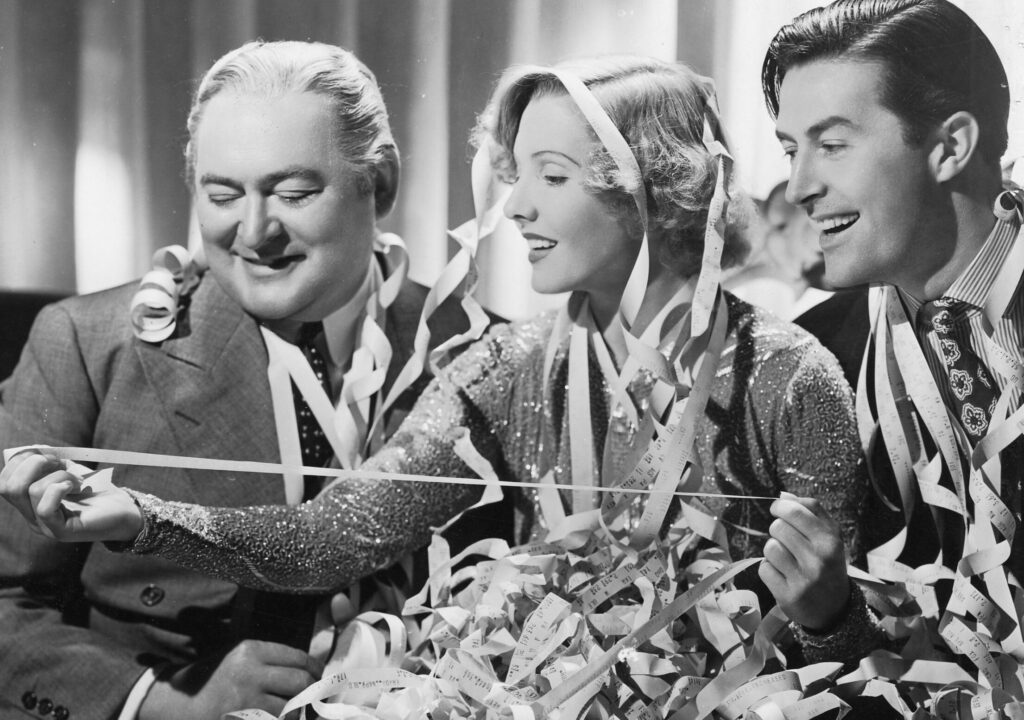
In part inspired by the sketch by Fred Karno, The Hydro (set in a health spa), and as Chaplin often claimed in part from his direct experience living at the Los Angeles Athletic Club at the time, The Cure is the most multi-voiced and, according to many, the funniest of the films Chaplin directed and starred in for Mutual.
It’s also one Chaplin short on which we have more insight. Thanks to the valuable work of Kevin Brownlow and David Gill we’ve been granted a look at the making of The Cure and can trace it back to its origins, with all of its revisions and adjustments.
On the one hand, looking at the film today, one is struck by the rhythm, the relentless torrent of sophisticated comic routines and of the perfectly matched cast beside him; on the other hand we know that this perfect casting and that some of the initial gags were not the product of spontaneous instinct but of many repeated efforts, each slightly different than the one before, with various versions and even role changes (with Chaplin originally playing the hotel bellboy). At the same time it is clear that Chaplin already, in this early stage of his career, had the ability and understanding when to sacrifice a scene, even a successful one, so as not to affect the overall harmony of the piece, or throw the various elements out of balance, as in the case of the wonderful gag of the traffic jam of wheelchairs that survives only in the Unknown Chaplin. These revelations take nothing away from the enjoyment of The Cure, as it stands, and in fact as Bazin claimed, the best Chaplin films can be enjoyed over and over: “because the pleasure you get from certain gags is as inexhaustible as it is profound, mainly because the comic form and aesthetic value hardly rely on surprise at all. The element of surprise, gone after the first viewing, is replaced by the much more refined pleasure of waiting for and then savoring the perfection”.

Restored in 2013 by Fondazione Cineteca di Bologna at L’Immagine Ritrovata laboratory, in collaboration with Lobster Films and Film Preservation Associates.
Restoration supported by The Film Foundation, the George Lucas Family Foundation and the Material World Charitable Foundation
Half-brother Sydney Chaplin’s interest in, support of, and enthusiasm for Charlie’s career began with Charlie’s debut as Billie the pageboy in Sherlock Holmes in 1905. Charlie wrote in his autobiography that Syd “read the part to me and helped me to memorize the lines… [He] had so zealously coached me that I was almost word-perfect”. Later, in America, with his Mack Sennett/Keystone Studios contract fulfilled in the fall of 1915, Syd decided to again devote his energies to Charlie’s career. It is well-known, for instance, that Syd was the prime negotiator for Charlie’s history-making Mutual Films contract in 1916, resulting in $670,000 for the first year. Perhaps less well-known is that Syd seems to have had a significant influence on both the choice of storylines and bits of comedic business used in the films of the Mutual period (1916-1917). In this session, we will explore the close relationship between Syd’s experience as one of Fred Karno’s London Comedians in the English music hall (skills acquired and scenarios written and performed) and traces of that experience as discernible in three Chaplin Mutual films: The Pawnshop (1916), The Rink (1916), and The Cure (1917).
Lisa Stein
Courtesy of David Shepard