[MOVIE]
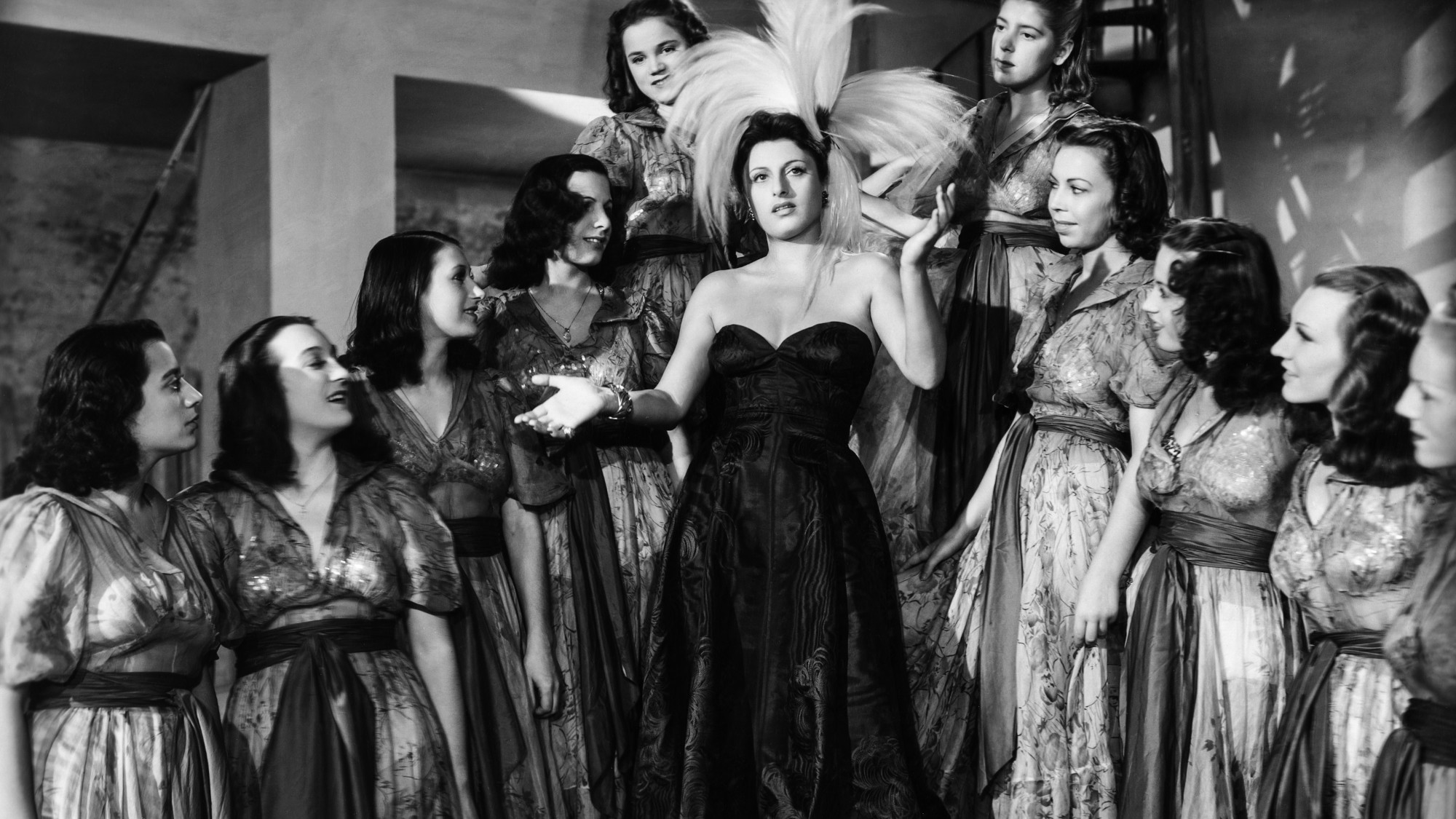
T. int.: Do You Like Women. Sog.: Gherardo Gherardi, Franco Riganti, dal romanzo Péntek Rézi (1937) di Rezsö Török. Scen.: Gherardo Gherardi, Vittorio De Sica, Margherita Maglione, Aldo De Benedetti. F.: Vincenzo Seratrice. M.: Mario Bonotti. Mus.: Renzo Rossellini. Scgf.: Mario Rappini. Int.: Adriana Benetti (Teresa Venerdì), Anna Magnani (Maddalena ‘Loletta’ Prima), Vittorio De Sica (dottor Pietro Vignali), Irasema Dilian (Lilli Passalacqua), Clara Auteri Pepe (Giuseppina), Zaira La Fratta (Alice), Olga Vittoria Gentili (Lola Passalacqua), Giuditta Rissone (l’istitutrice Anna). Prod.: Alleanza Cinematografica Italiana, Europa Film. DCP. D.: 92’. Bn.
Edition History
Vittorio De Sica was the most famous comedy actor in Italy when he made this, his third film as director, following the success of Maddalena… zero in condotta. Once again, he pushed at the boundaries of the genre as if it provided a way to escape from the trappings of the cinema of the Fascist regime. He does so through the story of a hot-headed young man who is assigned the position of head physician in a female orphanage. He is surrounded by young girls who provide contour to the film’s white telephone comedy surface, as well as an endless circle of women representing a sample of character-types common in the cinema of the era: the dreamer Irasema Dilian, the teacher Giuditta Rissone, and the naïve Adriana Benetti in the role of Teresa Venerdì who is in love with the doctor. Then, of course, there is Anna Magnani in her first significant film role play-ing his lover, the soubrette Maddalena, a.k.a. Loletta. Her role is significant not in terms of screen time (she only appears for a few minutes), but rather for the precision with which De Sica recognises her comic talent, creating a character which is split between a pretence of elegance and a common touch that would typify many of her postwar roles (her final line is timeless: “It’s over for her, it’s over for me… we have understood one another perfectly.”) The film constitutes a dress rehearsal for Magnani as a comedienne and she enters and exits the role as if she were already a star with a clearly defined persona, grappling with a character who steps into the limelight and acts, all the while ironically commenting on her own performance. This is evident right from the start, in the irresistible scene in which she listlessly practices the song: “Here in my heart, here in my heart/ there is love/ and there is pain”.
Emiliano Morreale

courtesy of Viggo
I don’t worry about the accusations made about me that I suffer from ‘camerinismo’. I am fully aware that Camerini, my director on so many films, has had a major influence on me: but this is largely because Camerini and I share the same spiritual approach, we have the same sense of humor, and we tend, when it comes to considering human issues, to seek out the truth. Instead of one’s identity. But the question only interests me up to a point. What concerns me the most now is to succeed soon in making a film that is entirely cinematic, eliminating as much as possible any and all elements that have their roots in theater.
Vittorio De Sica, interview by D. M., Teresa Venerdì, “Il Tempo”, October 30, 1941
Here we find a concerned and thoroughly sincere look at first youth. With just a trace more resolve De Sica might have achieved the aura of biter and painful mystery and poetry that sorrounds young girls: an aura that is so dangerous and secret that almost no one risks to explore it; even poets steer clear of it, mildly discouraged, asking what young people dream of, without ever venturing an answer. Ultimately, the director didn’t challenge himself with extraordinary intentions meant to reveal mysteries, but rather, with graceful elegance, to sharpen, streamline, and illuminate the circumstances, using familiar themes, quite stale elsewhere, but with such skill to make it all seem utterly fresh and new (for istance the smack to the spiteful girl).
The story was based on a Hungarian novel, written by Rezsö Török, a winning tale of a young orphan girl, Teresa, and the characters populating the school for deprived little girls: with the wise headmistress, the sociable blond schoolmistress, the frivolous, chubby lady professor, the slick and cruel watchwoman, the kindly nurse and, among mostly lovely students, the one malicious girl, a born snoop and perennial informant, jealous of Teresa, with evil intentions (and naturally described as having her fingernails edged in black).
Called in to replace the old doctor, the health inspector, is the young, inexperienced yet luminous doctor, played by De Sica, utterly devoid of knowledge or clients, but nonetheless making up for it by being loved by two women, Anna Magnani, a variety star and Irasema Dilian, a daughter of a good family, gushing with poetry. Teresa too, naturally, loves him […]. Another enchanting young lady comes to De Sica’s attention, Adriana Benetti, who resembles a beautiful golden doe with the slow movements of her enchanting eyes, her sweet fearful expression and her slender, graceful stride.
Irene Brin, Che cosa sognano le giovinette, “Cine Illustrato”, October 24, 1941
Cesare Zavattini was an un-credited screenwriter on the script as well. He’s quoted as saying: “De Sica asked me to help, but in secret. There were already writers in place whom he admired, and who were very respected: Gherardi, De Benedetti. I still remember how much I was paid for my collaboration: 5000 lire”. This confirms that Aldo De Benedetti – excluded from the credits for ‘racial’ reasons – also did contribute to the writing of the film.
Francesco Savio, Ma l’amore no: realismo, formalismo, propaganda e telefoni bianchi nel cinema italiano di regime (1930-1943), Sonzogno, Milano 1975