[MOVIE]
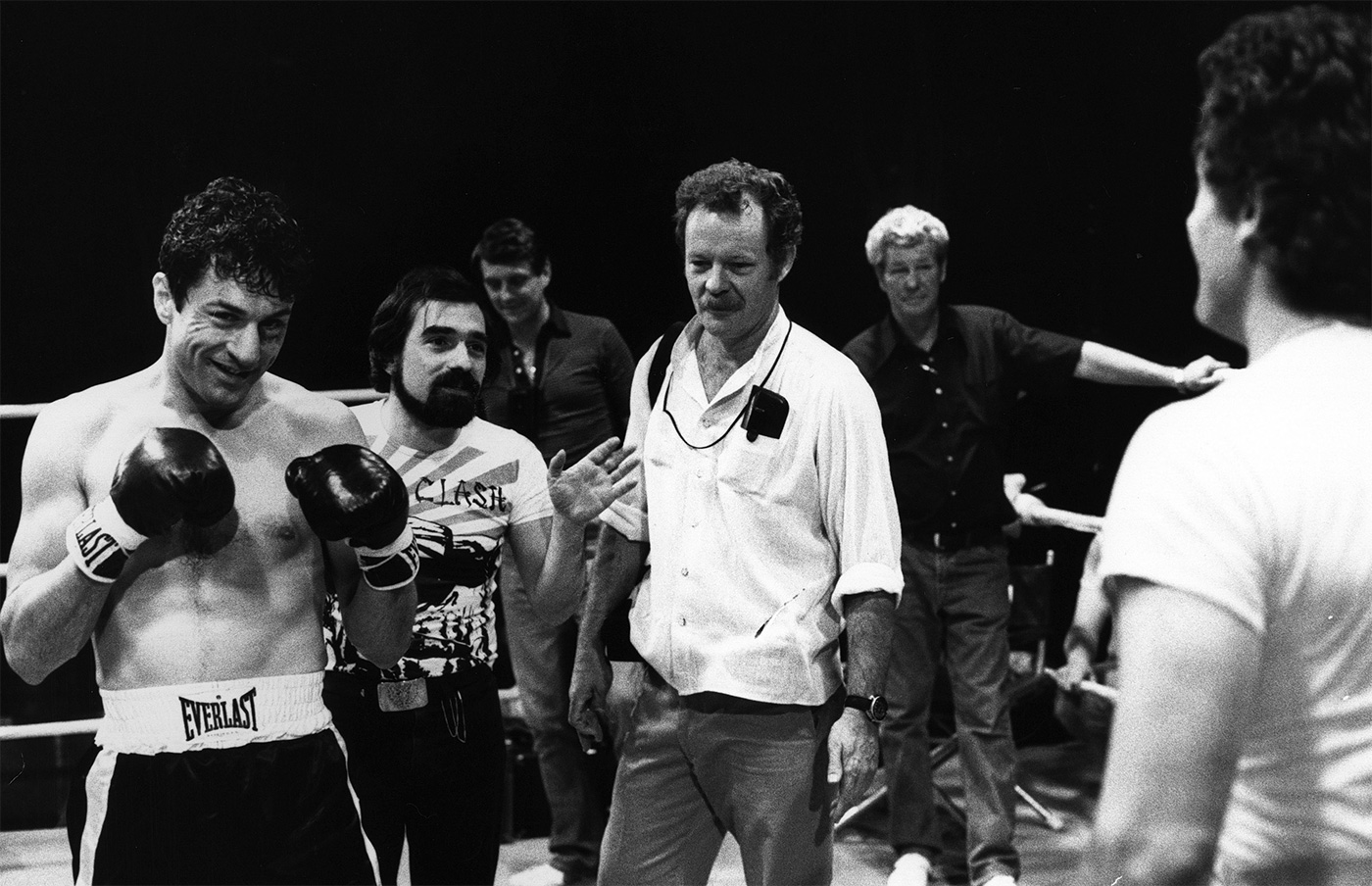
Sog.: dall’autobiografia Raging Bull, My Story di Jake La Motta e Joseph Carter. Scen.: Paul Schrader, Mardik Martin. F.: Michael Chapman. M.: Thelma Schoonmaker. Scgf.: Gene Rudolf. Int.: Robert De Niro (Jake La Motta), Cathy Moriarty (Vickie), Joe Pesci (Joey La Motta), Frank Vincent (Salvy), Nicholas Colasanto (Tommy Como), Theresa Saldana (Lenore), Frank Adonis (Patsy), Mario Gallo (Mario), Frank Topham (Toppy). Prod.: Irwin Winkler, Robert Chartoff per Chartoff-Winkler Productions. DCP. D.: 129’. Bn.
Jake often quoted On the Waterfront on the stage. Mardik’s script included a soliloquy from Shakespeare. Michael Powell talked me out of it; he found the character original enough that he didn’t need any quotations. Against his advice, I decided on Kazan. At this point, I wasn’t listening to anyone, I was acting like a kamikaze. Just like when I was making Mean Streets, I was convinced that this would be my last film, the end of my career. So I had a good time. I saw On the Waterfront when I was 12 years old and never forgot it. It’s so beautiful, that monologue of Brando’s, so funny and so sad: “Let’s be honest, I’m just a bum…”. And, even more, it was the story of two brothers, like Raging Bull. But I didn’t want people to take the monologue as a comment on the relation between Jake and Joey: Jake isn’t accusing his brother, because without him he would have lived in the same way. Bobby and I explored all kinds of different ways of saying the lines. We did at least twenty takes. The most interesting one, the one we used, is also the simplest, the least expressive. A small, thin voice, that’s all. Bobby would have liked us to use three different takes in a row, but the most monotonous one was the best. I thought of the end of Taxi Driver: on the screen, the reading of a letter moves me even more because the face and the voice betray no emotion. The coat-stand in the dressing room is an homage to Ermanno Olmi, a reference to the death of the hero in Il posto that stunned me. […]
After filming the fights, not without difficulty, I asked myself: does all of this have any meaning? Is there a good reason for printing all this film? Why move the camera? Is it really necessary? If I could, I would be happy to shoot it all in one take three hours long. I made this film for myself, no? Films are the most important thing in my life. OK, that’s understood. You still have to find reasons to manipulate this tool which has been given to us.
Interview with Martin Scorsese by Michael Henry, “Positif”, n. 241, April 1981