[MOVIE]
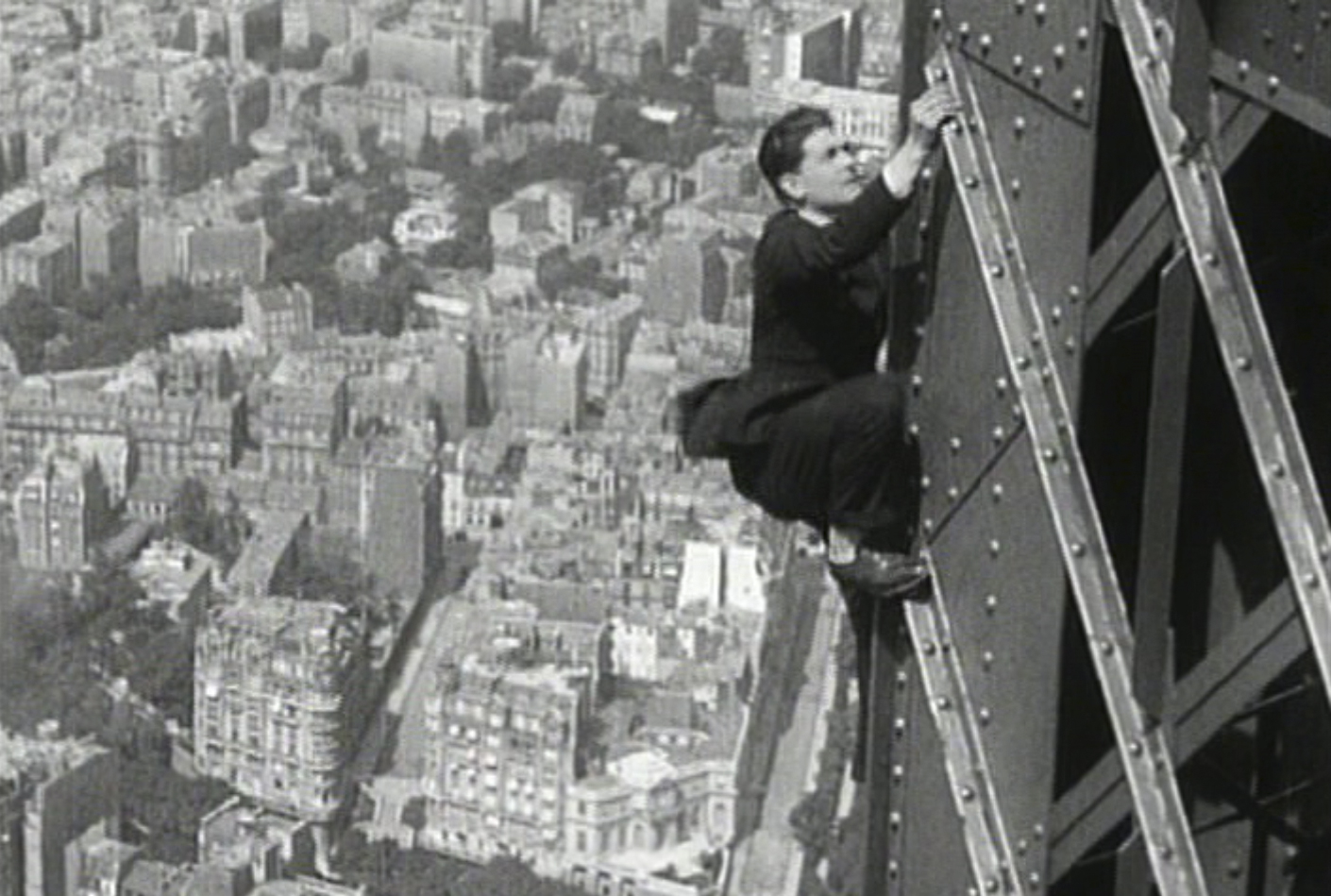
(Francia, 1925). R., S. e Sc.: René Clair. F.: Maurice Desfassiaux e Paul Guichard. Scgf.: André Foy. In.: Henri Rolland (Albert), Marcel Vallée (il ladro), Albert Préjean (l’aviatore), Martinelli (lo scienziato), Préfils (il poliziotto), Stacquet (l’industriale), Madeleine Rodrigue (la passeggera dell’aereo), Myla Seller (la figlia dello scienziato). P.: Les Films Diamant. 35mm L.: 1527m. D.: 69’ a 20 f/s.
“This is the first film by a 26 year old who, only three years before, was completely illiterate in matters of cinema, and who wrote, directed and edited the film completely on his own”. That is how Pierre Billard describes the conditions of the making of Paris qui dort, in his book Le Mystère René Clair. In 1971 at the age of 73, René Clair, member of the Académie Française, dedicated himself to reworking the editing of this youthful work: he shortened it by 15 minutes and added music by Jean Wiener. After thirty years, it is this reworked version, this belated regret, that is in circulation, but the results of the reworking correspond more closely to the image of prudent technician and master of classicism that the cinematographer left behind him. The young twenty six year old showed himself as bolder, and the obligation to use what he filmed, as imperfect as it was, made him use his imagination. Whether he liked it or not, he couldn’t be worried about harmonious transitions and fluidity of the narrative, and if his scanty means made it necessary, he cut his script without hesitating, creating ellipses with disdain for any kind of narrative or psychological verisimilitude. It can be thought that if Paris qui dort has always been considered as an avant-garde film, that is in part due to the light-hearted incoherence of this ingenious bricolage. The corrections made by the director fifty years later were an attempt to soften the errors of youth: the longer, restored version of the film returns it to its original sloppiness, but above all allow us to understand how in 1923, René Clair managed to get past certain difficulties without worrying about perfection.
Claudine Kaufmann

Restored in 1999, from a dupe positive safety dupe negative (French version) and from a nitrate print (English version), with intertitles rewritten and remade