[MOVIE]
Edition History
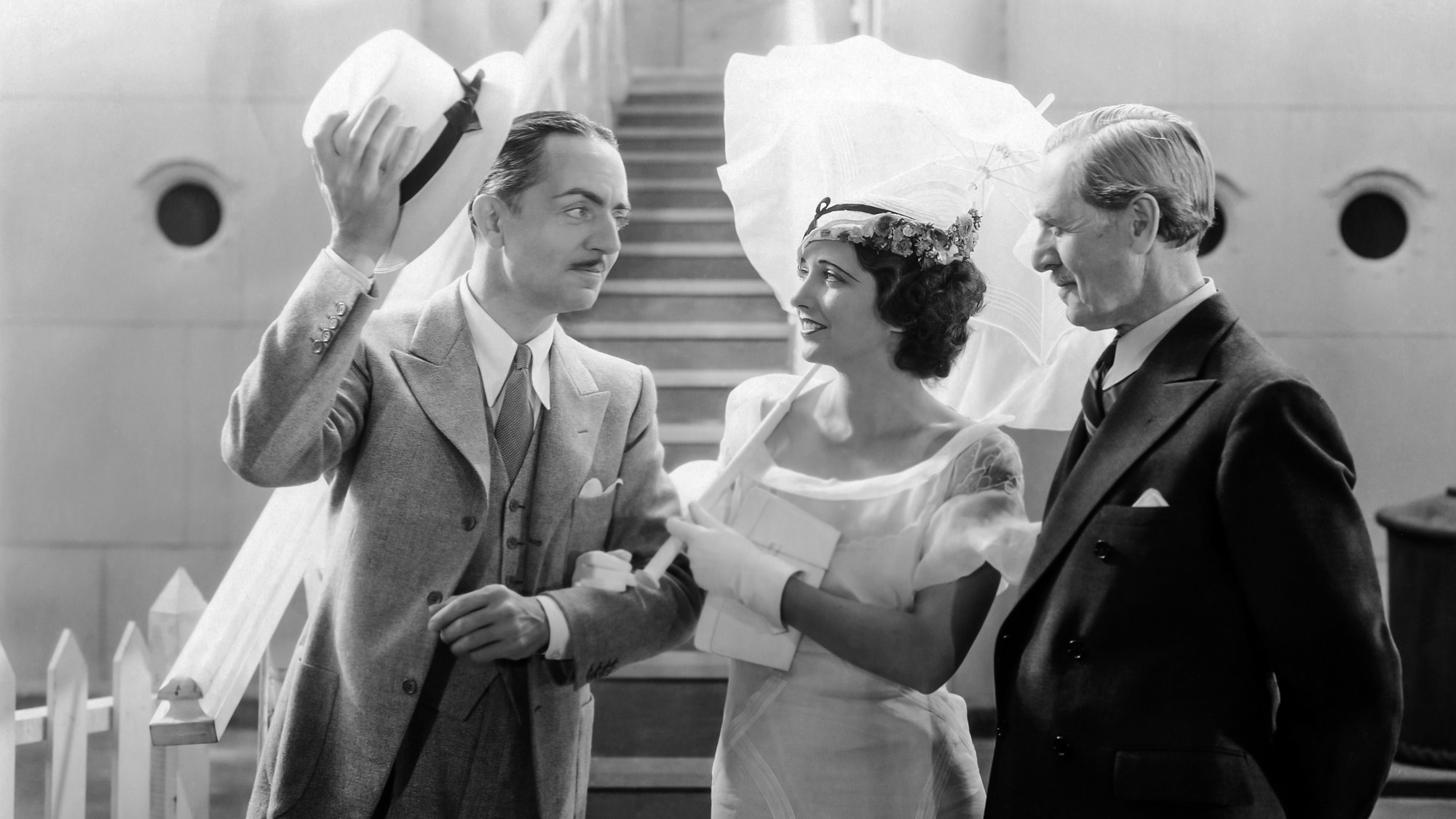
William Powell is allowed to spend the ocean voyage from Hong Kong to San Francisco without handcuffs, based on a deal with the policeman escorting him to death row. So Powell joins the ship’s passengers as a suave gentleman, just like the heroes of the upper-class comedies of the 1930s. There he meets Kay Francis who is terminally ill. The couple is as unlikely as a Hollywood pair can be, and that’s exactly why they’re the only right ones for each other.
They don’t know about each other’s fate and, when they first guess, and then know, it is in the nature of the matter that it is never referred to. This dual knowledge is the sounding board against which emotions are born and broken, and yet they endure, transcending time. The mood might turn sordid, but instead the awareness of death distills the emotion into a fresh and clear one.
The world is inseparably grim and romantic and – the vision of the “real” world is as merciless as the access to a “separate reality” is exalted. From the beginning, Powell and Francis establish a habit: they end each fragile moment by smashing their champagne glasses. Such gestures which exist in the mutual world of lovers are the salt of every romantic movie.
The final image is the culmination of these gestures. Powell and Francis are both gone – inexplicably, but for good. All we see is an enigmatic image: two glasses shatter. The view tests our sense of justice since the lovers fail to “get each other” – and yet they do.
Tay Garnett was an uneven director. He covered almost any kind of film, often with an alarmingly half-hearted attitude. When such a gem and masterpiece emerges among everything else he did, it would be tempting to speak of the “genius of the system”. But no. One Way Passage is pure Tay Garnett to such an extent that the director’s fragmentary oeuvre, in which a red thread is otherwise impossible to discern, does find that thread in this very film, light (like Lubitsch), clear, playful, hilarious and sad – radiant like life itself.
Peter von Bagh, from an unpublished chapter for Lajien synty [On the Origin of the Species], WSOY, Helsinki 2009. Edited in English by Antti Alanen

Restored by Warner Bros. in collaboration with The Film Foundation
One Way Passage is the most fulfilling moment of the career of Tay Garnett, in which Garnettian exuberance confronts all the fervour and cowardice of melodramatic romanticism. On an ocean crossing, a man condemned to death (William Powell) meets a woman (Kay Francis) who is herself terminally ill. The pair are as improbable as they could ever be in a Hollywood film – and for this reason alone they are made for each other Neither of them at first knows the destiny of the other, and then, as they come to suspect and then arrive at full awareness, the subject must not be touched upon either in words or in gestures. In this resonant situation emotions are born, shattered, but then in time persist. The pervading prospect of destruction could without doubt easily be oppressive but this does not happen, not even for a moment. On the contrary, it lifts the emotion to a pure and fresh level. The melodramatic aspect and even the directly comic element – the background of degenerate characters, typical of Garnett – elevate the composition in a supreme fashion above the world and its stupidities, to a true world of rediscovered innocence.
From their first meeting Powell and Francis make a habit of breaking their champagne glasses to celebrate their fragile moment. In the final incomparable image of the film, two glasses are shattered, even though the two no longer exist, without explanation but in a definitive manner. The enigmatic happy ending, because this is how Tay Garnett directed it, puts to the test the viewer’s benumbed sense of justice, given that respectable people do not “get together” – and perhaps because Tay Garnett, director of this film about goodness, after all wished to give the last word to life.
Jean-Charles Tacchella catches this impression well when he writes: “In Garnett there is a rare quality, at times even uncanny, as in Lubitsch and Borzage. The great directors are those who transform some fragments of their film until they create something more real than real life. Tay Garnett, who worked in the artificial Hollywood universe of easy stereotypes, had this talent of expressing in his inimitable manner the happiness and the charm of the lived moment. He resolutely turned his back on dramatics and exaggerated sentimentality – and even on death, as if he would wish to ignore it entirely.”
Peter von Bagh