[MOVIE]
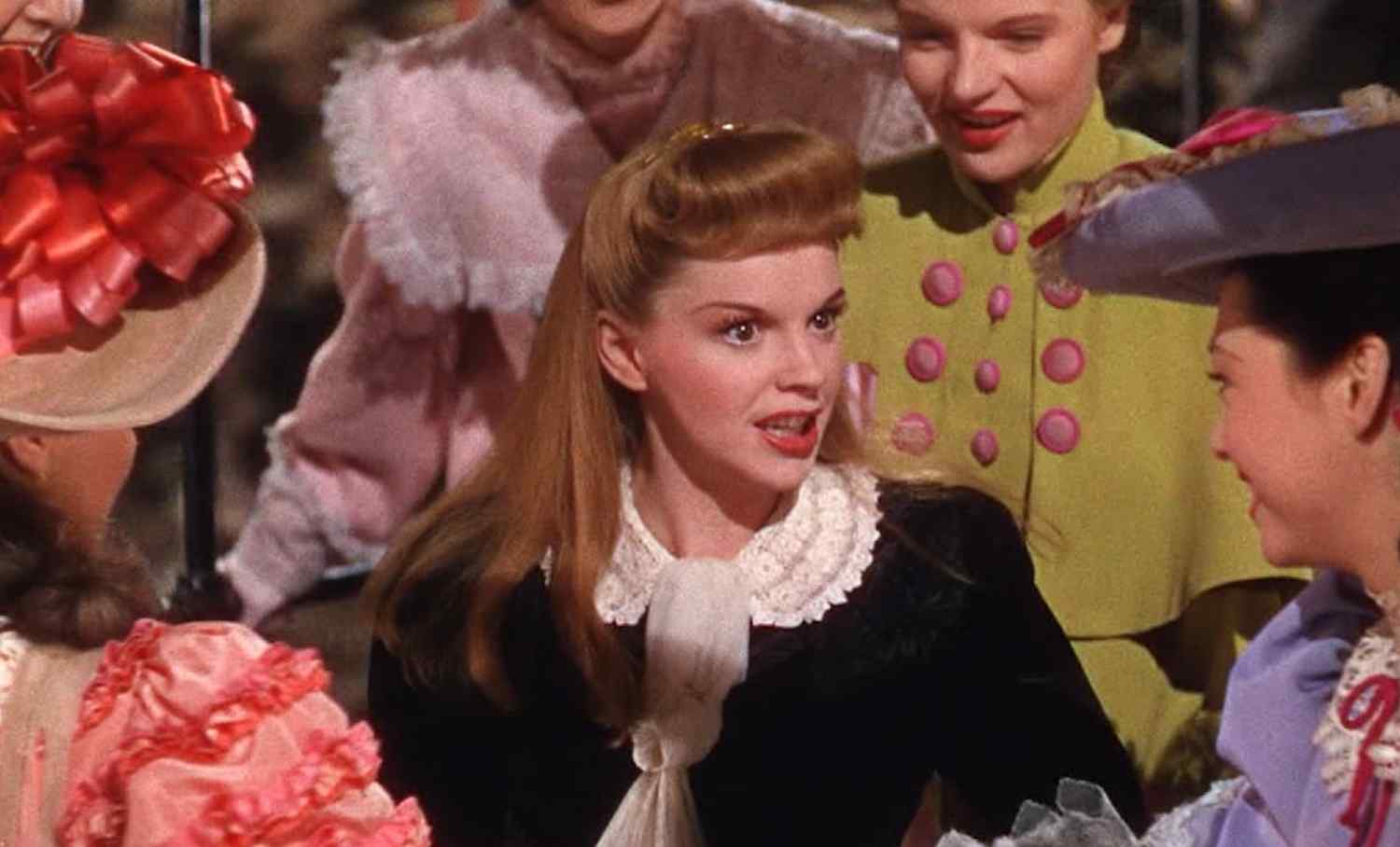
Sog.: dalla serie di racconti brevi 5135 Kensington di Sally Benson, poi raccolti nel romanzo Meet Me in St. Louis. Scen.: Irving Brecher, Fred F. Finklehoffe. F.: George Folsey. M.: Albert Akst. Scgf.: Cedric Gibbons, Lemuel Ayers, Jack Martin Smith. Int.: Judy Garland (Esther Smith), Margaret O’Brien (‘Tootie’ Smith), Mary Astor (signora Anna Smith), Lucille Bremer (Rose Smith), Leon Ames (signor Alonzo ‘Lon’ Smith), Tom Drake (John Truett), Marjorie Main (Katie), Harry Davenport (il nonno). Prod.: Arthur Freed per Metro Goldwyn Mayer. 35mm. D.: 113’. Technicolor.
Edition History
“There’s no place like home”, declared Judy Garland just a few years earlier, exhausted by the gleaming world of Oz and happy to be back in her grey Kansas. Those words would resonate throughout many family comedies of the 1940s and ’50s, and Vincente Minnelli deftly depicted the joys and anxieties of places called home, in houses overturned by wedding preparations (Father of the Bride) or in trailers on the edge of a precipice (The Long, Long Trailer). That phrase, however, never had a more melodious or more colourful echo than in this film the young director took off George Cukor’s hands, an Arthur Freed original screen musical based on a few stories that appeared in “The New Yorker”. The home here is a city, St. Louis (which basically we never see but nevertheless reverberates from the characters’ hearts and voices) and a world, the best of worlds or the only world conceivable, if the sheer idea to leave it unleashes panic and tears. Could it be any other way, when you have been so lucky “to be born in my favorite city”, as the “micro-Bernhardt Margaret O’Brien” (Catherine Surowiec) chirps? My favourite city, or better still my favourite country: the movie’s action takes place in 1903 but it was released in 1944, in the midst of the war…
Using Technicolor for the first time, Minnelli immerses this celebration of the American family in the soft evocative colours of impressionism, even referencing Renoir père with two reddish-haired girls at a piano. Every enchanted world is built on what can not be mentioned, and in this one shadows abound; death crops up even if in an innocent guise (dolls dying, Halloween costumes, decapitated snowmen). The stylistic pattern is clear: the triumph of the medium shot, full of flushed faces, hats and bows, burgundy tapestries, blue frills, rosy roast-beefs and decorated cakes, and moments in which everything disappear to make room for close-ups of absolute emotional and chromatic purity, Judy Garland’s wide eyes, the crystal-clear voice in the songs tying the film together (flowing naturally from the story’s development, which was not a given in 1944). When it finally arrives, the World’s Fair of 1904 is just a view beyond that balcony, that boundary we will never cross: a phantasmagorical silhouette, a mondo niovo, a marvellous panorama: here comes the Vincente Minnelli era of the American musical.
Paola Cristalli

Courtesy of Park Circus.
Original tinted Technicolor print
Meet Me in St. Louis has been charming audiences ever since its release in late 1944. Its warm, simple story of home, hearth, and family had a special resonance for wartime America. Its appeal is perhaps even more potent today, with its nostalgic evocation of a world and way of life even further from our grasp. This was only Minnelli’s third feature, and his first in Technicolor, but his touch already informs every frame. His stylistic hallmarks are in full flow: a painter’s eye for design and composition; rich use of colour; orchestration of movement, staging, and direction of actors; taste; attention to detail; lyric sense. The masterful opening sequence immediately sets the scene and the characters: the Smith family, their gingerbread American Gothic house, and their hometown, St. Louis (lovingly recreated on the M-G-M lot). It’s the summer of 1903, and everyone’s abuzz about the World’s Fair, opening the following spring. The film is structured in four seasonal “acts”, introduced with family-album postcards brought to life. We spend a year with the Smiths, discovering romance with the boy next door, singing on a trolley, enduring the terrors of Halloween (an amazing phantasmagorical sequence featuring the studio’s pint-sized Bernhardt, Margaret O’Brien), and worrying about the dreadful possibility of having to move away.
Above all, the film is Minnelli’s valentine to its star, Judy Garland. She originally fought against playing romantic teenager Esther Smith, wanting more adult roles. As directed by Minnelli and photographed by George Folsey, Judy literally glows, giving one of her best performances, and introducing the hit songs “The Trolley Song”, “The Boy Next Door”, and “Have Yourself a Merry Little Christmas”. Pay careful attention to the quietly beautiful scene of Esther and John extinguishing the lamps in the house: one gets a sense that this whole sequence was staged by a director in love with his star. Minnelli and Garland married the following year.
Catherine A. Surowiec