[MOVIE]
R., S. e Sc.: André Deed. F.: Alberto Chentrens. In.: André Deed (Modestino detto Saltarello), Valentina Frascaroli (Mado, l’avventuriera), Gabriel Moreau (prof. D’Ara), Mathilde Lambert (Elena D’Ara), Ferdinando Vivas-May (Ramberti), Giulia Costa. P.: Milano Films. l.o.: 1821m. 35mm.
Edition History
<!--
@page { margin: 2cm }
P { margin-bottom: 0.21cm }
-->
In 1921 André Deed shot L’uomo meccanico (The Mechanical Man), 1821 meters long according to its censor certificate; he was the author of the film’s storyline and screenplay, its director and actor (alongside Valentina Frascaroli). L’uomo meccanico was not, however, a film in its own right but the second episode of a ‘Cine-Romanzo’ following the trend of the French and American serial. Three episodes were planned for the project: Il documento umano, now lost; L’uomo artificiale (later L’uomo meccanico); Gli strani amori di Mado, which was either left unfinished or never made. L’uomo meccanico is the only surviving work of the trilogy, or rather a fragmentary copy of it. Its incomplete and narratively incoherent state is not only due to the damage of time: censors also saw to shortening it. (Luck saved the scene of the giant robot carrying Mathilde Lambert – unconscious, bare-breasted and no less erotic than the girl in King Kong). Based on the first draft of the screenplay, Jean Gili helped reconstruct the film’s plot (in André Deed, Le Mani, 2005); even when reconstructed, the story seems improbable. In any event, the inconsistencies do not spoil the film’s originality nor its extraordinary inventions. L’uomo meccanico is a hybrid of three genres: burlesque, adventure serial and science fiction.
André Deed, acting here as ‘Saltarello’, provides the burlesque.
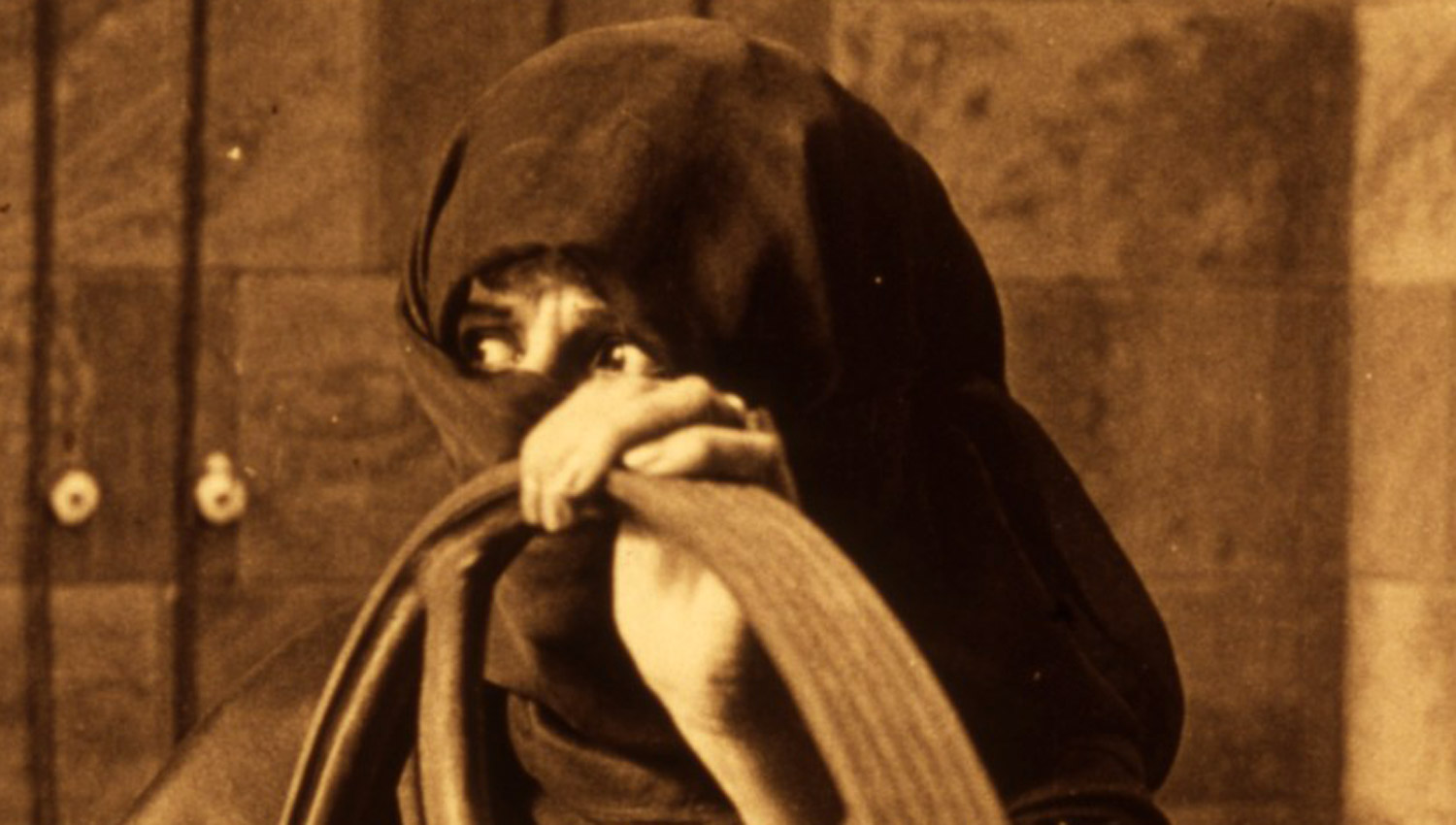
The adventure serial comes with the character ‘Mado, the adventuress’: Valentina Frascaroli peeking through a triangular opening of her black cloak. Pearl White’s and Musidora’s Italian sister. She embodies the modern urban woman in juxtaposition with the divas burned by D’Annunzio’s sacred fire, flowery imagery and a declining aestheticism.
Science-fiction: there is a screen that heralds the arrival of television (at the time just a loose experiment), but more importantly there is a gigantic robot remotely controlled by a TV set. This mechanical man with his stove-like appearance is without precedent. It soon became a theme of the most important instances of the avant-garde ‘mechanical aesthetics’, and thirty years later it would become an icon of American science-fiction. André Deed, who had already made his appearance as a body that can be dismembered and multiple man (Cretinetti che bello!, Too Much Beauty, 1909), leaves the screen after the electric and explosive showdown between two robots.
Spoiler alert: Mado (Valentina Frascaroli) is the head of a criminal gang. It is not something you would immediately understand from what remains of the film. So I am treacherously revealing the secret here. As punishment Mado will be in my dreams tonight.
Michele Canosa

Contrary to what has always been believed, L’uomo meccanico, is not an autonomous film, but the second part of a ciné-roman. This would explain the presence in the story of certain elements that are not very clear. In fact the film was distributed in the twenties without recalling that it was the following to Il documento umano. As far as the historians are concerned, today they can only analyse one reel that is a little more than a third of the original length.
In 1921 André Deed returned to Milan to shoot the sequel to Il documento umano, L’uomo artificiale, which became L’uomo meccanico. As with the previous episode he is the author of the story and the screenplay, director and actor, alongside Valentina Frascaroli. The Museo Nazionale del Cinema di Torino has a first draft of the screenplay, L’uomo artificiale, “Ciné-Roman by André Deed. Sequel to Documento umano”. The summary of the story is preceded by some ‘Notes on the character of the Uomo artificiale’, also called electrical man or man of steel:
“The amazing invention of the engineer Dell’Ara consists of a machine in human form built out of pure steel and extremely resistant. The electric mechanism is operated by the influence of Hertzian waves. The inventor from his laboratory, with a series of handles, can communicate to his monster, both near and far, a terrifying strength, an incalculable speed and if necessary render him uncatchable due to the electrical charges that can emanate from his body. In short a truly infernal invention”.
Jean A. Gili
[…] An extraordinary film which mixes adventure serial, burlesque, science-fiction (very unusual in the Italian cinema). The print from La Cineteca di Bologna is quite incomplete, although the film had already undertook such violations to become unintelligible (as it can be read in Cinema muto italiano di Martinelli).
André Deed plays the part of Modestino, called Saltarello. Valentina Frascaroli is Mado the adventurous woman, with an elegant profile and the insolent look cut by a black hat – echo of Pearl White and of Musidora.
[…] The mechanical man in Deed’s film is an “authentic” gigantic robot, remote-controlled by television. It doesn’t seem that there are precedents: it comes out of the tradition of the automatons. But the reference to R.U.R.- Rossum’s Universal Robots is unprobable. Karel Capek wrote it in 1920 and it had two famous representations by Feurstein in 1921 in the national theater of Praha. The Frederick Kiesler’s one is of 1922. On the contrary, on the 2nd of June 1922, Vinicio Paladini and Ivo Pannaggi have presented Ballo meccanico futurista in La Casa d’Arte Bragaglia in Rome.The costume created by Pannaggi is surprisingly similar to Deed’s Uomo meccanico. We want to precise that we don’t intend to count Deed’s film among the precursor of the “mechanical esthetic”. On the contrary we believe that one of the major episode of our avantgarde finds a thematic-figurative motive (mechanigraphical) precisely in the “low” Italian cinema. If it’s a direct source, we just have to demonstrate it (L’uomo meccanico is approved by censorship on the 1st of November 1921 but it is released in Rome only one year later, the 25th of October 1922). […]
(Michele Canosa, Cinegrafie, n.4)