[MOVIE]
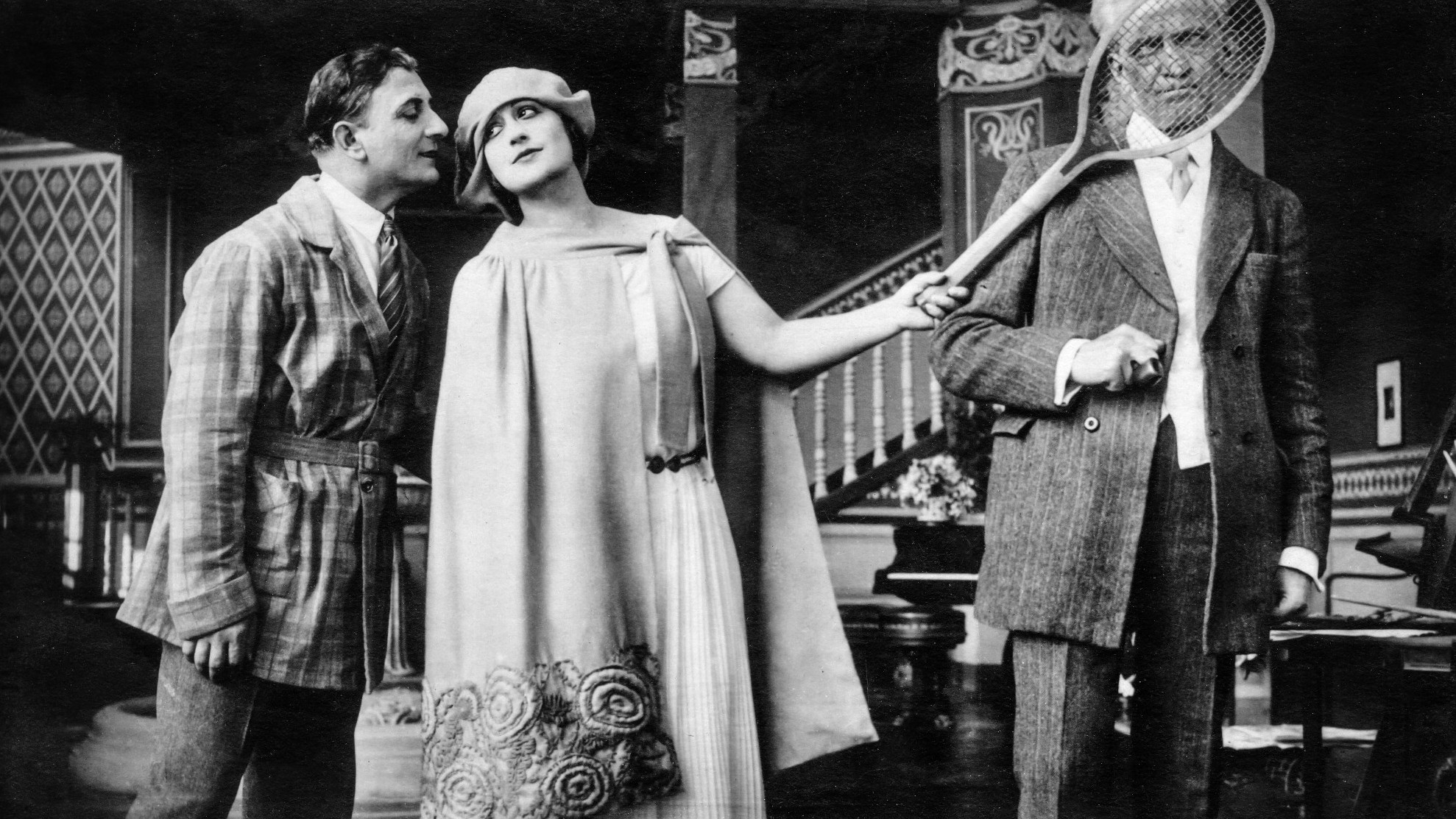
Sog.: dalla pièce omonima (1915) di Dario Niccodemi. Scen.: Mario Almirante. F.: Ubaldo Arata. Int.: Italia Almirante-Manzini (Berta Trégner), Alberto Collo (Gerardo Trégner), Liliana Ardea (Elena Previle), Andrea Habay (Alberto Dawis), Domenico Marverti (il dottore), Vittorio Pieri (Michele, padrino di Berta), Oreste Bilancia. Prod.: Alba-Film. DCP. D.: 90’. Col. (from a tinted nitrate print)
Edition History
L’ombra (The Shadow) is based on Dario Niccodemi’s popular stage play that has frequently been adapted for screens big and small, before and since Mario Almirante’s version of 1923. The film partly recalls the oft-told silent film parable of people with paralysis who make a miraculous recovery, as in King Baggot’s The Home Maker (1925) or Frank Borzage’s Lucky Star (1929). In addition, the film follows a similar narrative to silent films about blind people who regain their sight only to be confronted by a bitter reality such as finding their love for a significant other is no longer reciprocated (notable examples include the 1911 Éclair production Mieux valait la nuit or the 1916 Danish film Hjertestorme directed by August Blom). Here the wife, Berta, upon recovering from her paralysing condition, must learn that her husband Geraldo, an artist, has sired a son with another woman while his once-vivacious and sporty wife was paralysed and unable to bear children herself.
Writing in his blog Observations on Film Art in 2010, David Bordwell states, with regard to the plot of L’ombra, that “a paralysed diva seems a contradiction in terms”. However, analysing the seemingly “small-scale scene” of the paralysed wife’s recovery, Bordwell points out how a “remarkable range of [micro-] emotions” emanate from leading actress Italia Almirante Manzini. These micro-emotions go hand-in-hand with the director’s avoidance of the type of “longshot choreography” that had dominated the diva film genre just a few years previously in favour of building “a performance out of face, body, and arms in a close framing”. This is revealed in shots such as the one of Berta’s hand seen reflected in a wall-mounted mirror, gradually becoming visible as she regains her strength and raises her arm.
Two different prints of L’ombra are preserved and available today, at the CNC in Bois-d’Arcy and the Cinémathèque royale de Belgique respectively, both of which were duplicated from vintage tinted nitrates (the print from CNC was screened at Il cinema ritrovato in 1994). The Belgian print is the longer and more complete of the two, and it is this version that served as the basis for the new digital restoration by the Museo Nazionale del Cinema of Turin, in collaboration with the Cinémathèque royale de Belgique.
Ivo Blom

Restored in 4K in 2023 by Museo Nazionale del Cinema di Torino in collaboration with Cinémathèque royale de Belgique from a 35mm duplicate negative. The latter was made by Cinémathèque royale de Belgique from a tinted nitrate print
This film confirms Mario Almirante and Italia Almirante-Manzini as two of the most eminent figures of Italian cinema of the 20’s. The drama is based on a delicate theatrical work by Niccodemi which unwinds with credibility and allows Italia Almirante-Manzini to construct a complex and many faceted character, something rare for a diva.
The very accurate photography and chromatisms, the constant use of masks and backgrounds, certain movements of the camera demonstrate the stylistic monogram of Almirante and his attempt to surpass the obsolete stylistic models of Italian cinema, in particular, those of the film star genre.