[MOVIE]
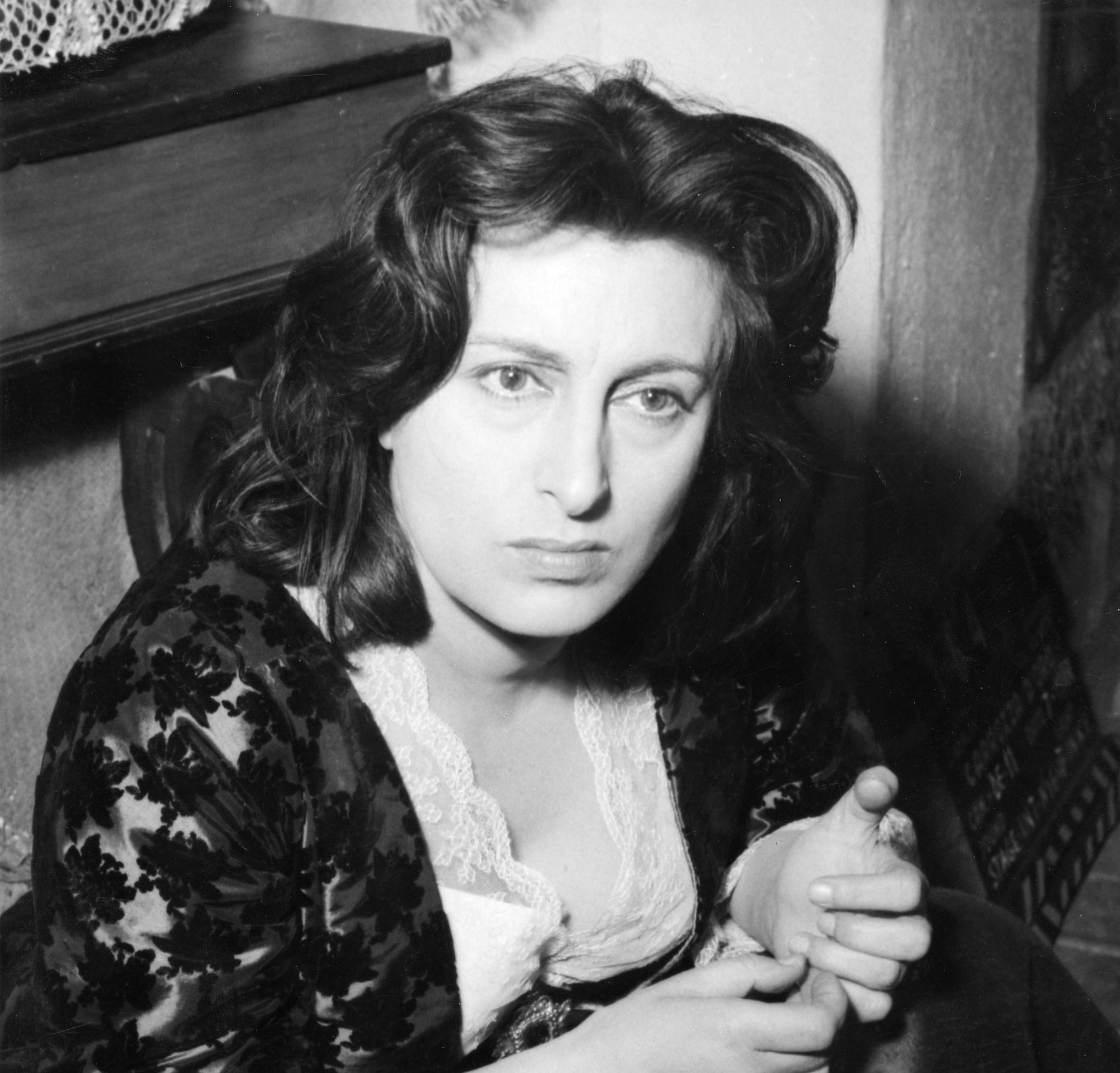
T. it.: La carrozza d’oro; Sog.: liberamente ispirato alla commedia “La carrosse du Saint-Sacrement” di Prosper Mérimée; Scen.: Renzo Avanzo, Giulio Macchi, Jack Kirkland, Ginette Doyel, Jean Renoir; F.: Claude Renoir, Ronald Hill; Mo.: David Hawkins, Mario Serandrei; Scgf.: Mario Chiari; Cost.: Maria De Matteis; Ass. R.: Marc Maurette, Giulio Macchi; Int.: Anna Magnani (Camilla – Colombine nella vers. francese), Duncan Lamont (Ferdinand, il viceré), Odoardo Spadaro (Don Antonio), Riccardo Rioli (Ramon, il torero), Paul Campbell (Felipe), Nada Fiorelli (Isabella), Georges Higgins (Martinez); Prod.: Francesco Alliata per Panaria Film, Ray Ventura per Hoche Production 35mm. L.: 2800 m. D.: 102’. Col.
We were making The Golden Coach and two other films at the same time, because economically The Golden Coach was a disaster for us, not only through the fault of Luchino Visconti, who in the course of a year had spent a hundred and forty million to achieve nothing, but also because of the sets which we had to build at Cinecittà. (…) I talked to a lawyer, who advised me to rescind the contract [with Visconti] but to have witnesses. So I got some of my friends – they were Vittorio Sala, Antonio Pietrangeli, and Mario Chiari – and had them hide behind the curtains so that they could hear everything. I called in Visconti, who denied all his misdemeanours, and I told him that we no longer needed his services. He responded with heavy accusations. At the end, I took him by the shoulders, put him out of the office, and closed the door. Two days later a delegation of directors consisting of De Sica, Soldati, and Bragaglia presented themselves, endeavouring to get me to take Visconti back. I naturally reacted, insisting on my rights to do what I wanted. They left, but came back the next day and continued the debate, asking me in fact in a very sympathetic fashion. De Sica was a crafty devil! Subsequently I realized that perhaps he would have liked to direct the film himself. He was so charming that you could forgive him anything. Then I offered the film to Blasetti, but he refused out of solidarity. Next I turned to Camerini, but he also declined the offer. Seeing that in Italy there was this wall of solidarity with Visconti, I decided to go to France (…) At a certain point an agent called me: Renoir was ready to return to Europe. So we discussed the conditions and finalized the contract with Renoir: we had secured the maestro’s maestro! I left him free to do what he wished, and he began the film over again from the start, departing from the Mérimée comedy, which was a delicate, light, superficial story. (….) Renoir created a true masterpiece. From this superficial story, he drew a film which has become a sacred cinematographic text on what is the actor. Is the actor someone who can live his own life or not? Renoir imposed a very profound discourse under the psychological and professional profile, giving life to a film that was moreover directed with resounding style – because Renoir was an adorable man from every point of view.
Francesco Alliata, Il nuovo spettatore, n. 9, Kaplan, 2005

Original vintage Technicolor triacetate print