[MOVIE]
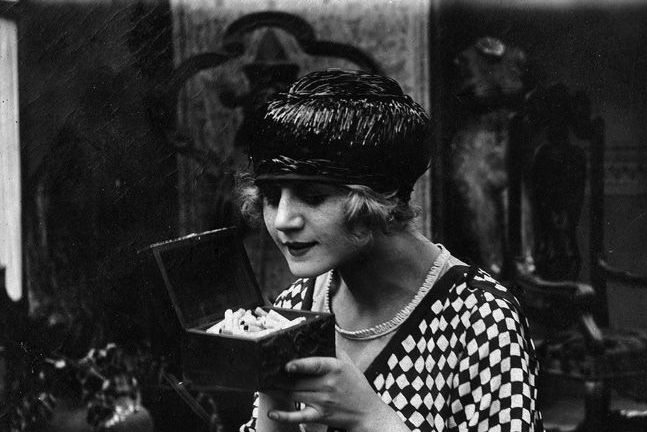
Scen.: Jacques de Javon (Baroncelli); Adattamento: Germaine Dulac; F.: Louis Chaix; Int.: Gabriel Signoret (Pierre Guérande), Andrée Brabant (Denise Guérande), Jules Raucourt (Maurice); Prod.: Le Film d’Art 35mm. L.: 1156 m. D.: 56’ a 18 f/s. Bn.
Edition History
Dulac’s earliest surviving film, La Cigarette announces the foundational elements of the Impressionist film movement that she helped launch soon after: location shooting, realist acting, symbolist iconography, associative montage, and musical analogy. Shot in the twilight of World War I (Spring 1919), and based on an original script by naturalist filmmaker Jacques de Baroncelli, the film also features one of the most patently liberated young heroines, as well as one of the most distressed and suicide-driven male heroes of Dulac’s oeuvre. This unrestrained liberty of expression, visible in its purest form here, gradually eroded in the face of the post-war neo-natalist moral discourse. In this fresh, inventive, and direct film, we see the seeds of Dulac’s key cinematic strategies from reflexive narrative structures and performance styles to symbolic technical effects and abstract visual associations – that would allow her to communicate her progressive social ideals through an elaborate signifying network based on ‘suggestion’. La Cigarette tells the story of a young independent-minded Parisienne, Denise Guérande, whose carefree jaunts outside of the home (and her association with the young and modern Maurice, who plays golf and dances the tango) awakens a jealous anxiety in her husband, Pierre (Gabriel Signoret), a tradition-bound archaeologist and curator of Egyptian antiques at the Musée d’art oriental. The heroine’s youthful modernity and sense of liberty and the aging husband’s angst – heading him to inject one of his cigarettes with poison – are expressed through the characters’ associations with various natural locations (Musée Guimet’s galeries du Panthéon bouddhique; les Champs Elysées; and the modern and naturalistic setting of a golf course). Dulac further employed naturalistic acting, as well as abstract gesture (as condensed visual description), to associate her female protagonist with existing archetypes (e.g. from pre-Raphaelite painting), which she either developed or deconstructed.

Dulac’s earliest surviving film, La Cigarette announces all of the elements of the Impressionist film movement that she helped launch soon after: location shooting, realist acting, symbolist iconography, associative montage, and musical analogy. Shot in the twilight of World War I (Fall 1918), the film also features one of the most patently liberated young heroines, as well as one of the most distressed and suicide-driven male heroes of her oeuvre. This unrestrained liberty in expressing progressive women’s roles, visible in its purest form here, gradually eroded in the face of post-war neo-natalist moral discourse. Dulac soon turned to “suggestion” in order to express certain notions of emancipation.
Tami Williams