[MOVIE]
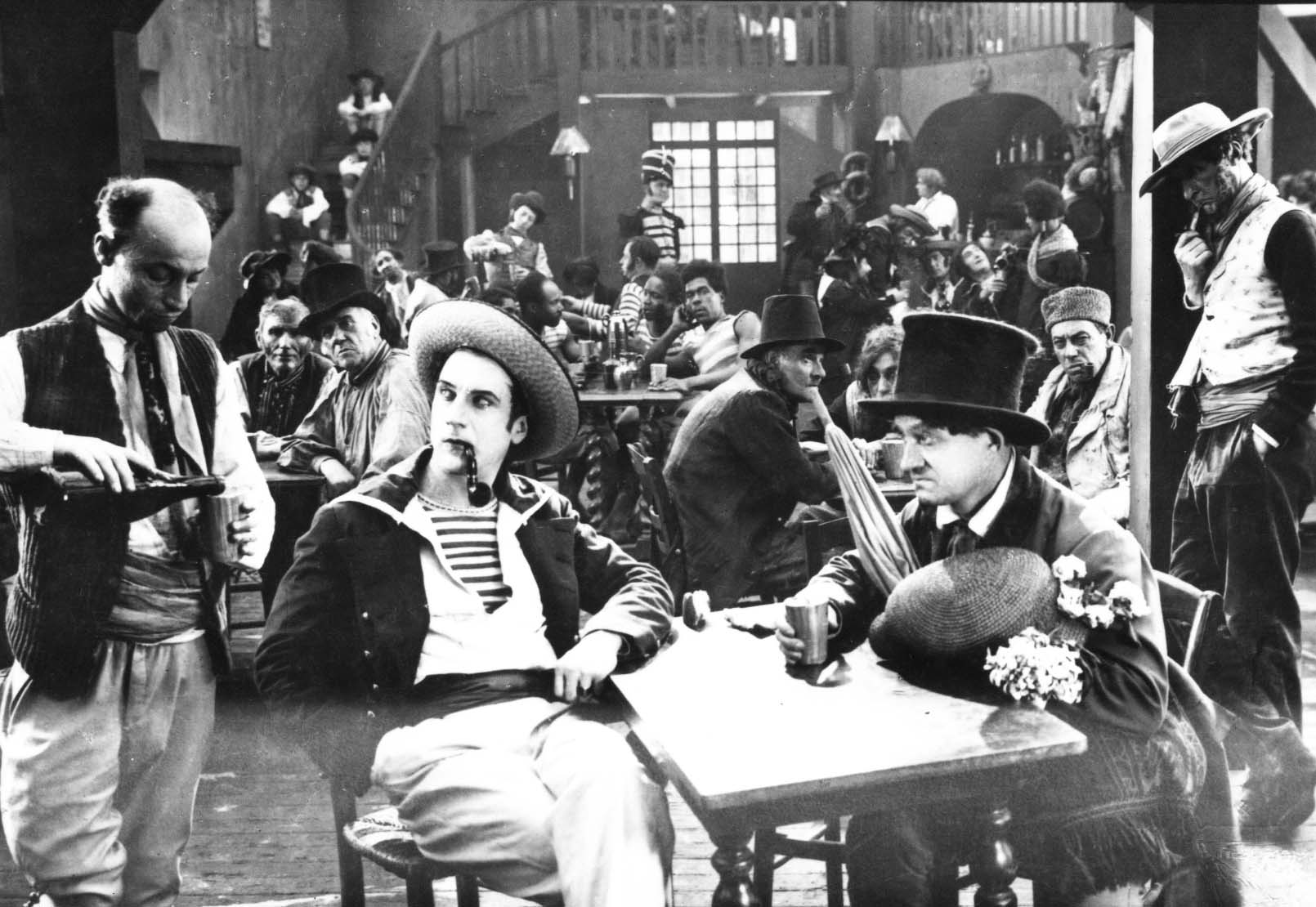
R.: Alexandre Volkov. S.: dalla pièce di Alessandro Dumas padre, Thiaulon e de Courcy. Sc.: Alexandre Volkov, Ivan Mosjoukine, Kenelm Foss. F.: Jean-Louis Mundwiller, Fédote Bourgassov. Scgf.: Ivan Lochakov, Edouard Gosch. In.: Ivan Mosjoukine (Edmond Kean), Nicolas Koline (Salomon), Nathalie Lissenko (Contessa di Koefeld), Otto Detlefsen (Principe di Galles), Georges Deneubourg (Conte di Koefeld), Kenelm Foss (Lord Mewill), Albert Bras, Joe Alex, Laurent Morlas, Jules de Spoly, Pierre Mindaist, Constantin Mic, Mary Odette, Pauline Pô. P.: Films Albatros. D.: Compagnie Vitagraph de France. L.: 2845 m. D.: 136’ a 18 f/s.
“Maybe Mosjoukine, always astounding, has not overly emphasised the romanticism of Kean. He has expressed disorder and genius, in such a way that sometimes they seem to us overly calculated. But on the screen how many actors are capable of depicting such truth, such breath and such sensitivity?
Léon Mussinac, Les Films, Les Crapouillot, 1/2/1924
“This week we happen to discover Ivan Mosjoukine, a peerless artist, whose skills cannot be questioned. I have met a few filmmakers who have told me: ‘I have seen Kean; have you seen Kean? There is an actor playing… what’s his name… wait… Mosjoukine… an impossible name… but an extraordinary actor, as we do not have the like here..and…and so forth’. And they are all ready to drop the actors they are used to work with and to kneel before a man called Mosjoukine to beg him to work with them…
I believe that all have seen Tempêtes and La Maison du mistère, and Brasier ardent, which I think could be included in that dozen of French films which we can be proud of. Kean, ample, harmonious, correct, slightly bourgeois, arrives after all these revealing and decisive efforts. But this cannot be confessed! Ivan Mosjoukine had to be discovered in Kean.
This is the week’s latest fashion.
Others are very curious to see Mosjoukine in Kean, but for other reasons. Respectful of the cinematic drama and the desired approach, he seems concerned about not overexceeding the 1930 context – family romanticism – which the director had to adopt in order to adapt the story of the famous English actor. This is a tale by images marked by an impeccable style, together with a rigid charm. Dumas father told his tales with his violent bonhomie. ‘Genius and disorderliness’, says the caption. Cinema, which is more seductive, is also the more so disappointing. It is very difficult, with this brilliant well ordered tale in hands, making something different from “Discipline and talent”, and it is already more than expected.
A knowing spectator is telling me: ‘This is a splendid film, but I have not found in it Mosjoukine in his entirety’. Mistake! The fact is that there is not a single Mosjoukine. The theatre actor and the cinema interpreter show such a lively intermingling that one is reminded of a duel. The duelists equal each other, one overcomes the other just to be replaced soon after that and so forth; and all is happening in such rapid, incisive, and intense manner that intervals and interruptions escape out notice”.
Louis Dellus, Ecrits, II, Paris, Cinémathèque Française, 1985