[MOVIE]
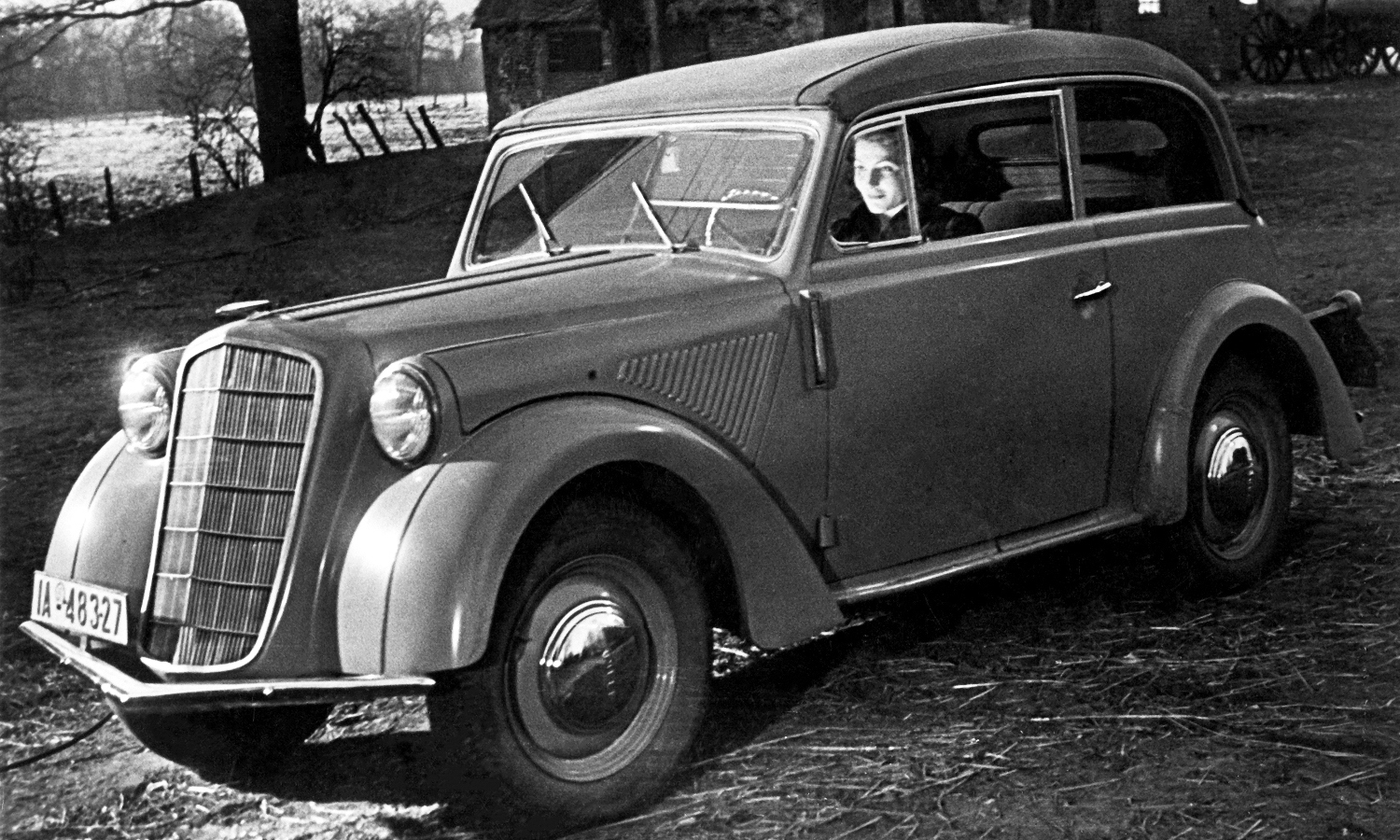
Scen.: Helmut Käutner, Ernst Schnabel. F.: Igor Oberberg. M.: Wolfgang Wehrum. Scgf.: Herbert Kirchhoff. Mus.: Bernhard Eichhorn. Int.: Helmut Käutner (voce dell’automobile), Erich Schellow (Karl), Gert Schaefer (Willi), Winnie Markus (Sybille), Werner Hinz (Steffen), Karl John (Peter Kaiser), Franz Schafheitlin (Wolfgang Buschenhagen), Alice Treff (Elisabeth Buschenhagen), Hans Nielsen (Wolfgang Grunelius). Prod.: Helmut Käutner per Camera-Filmproduktion GmbH. 35mm. D.: 103’. Bn.
Edition History
In jenen Tagen is among the very first productions ventured in the future Trizone. Käutner offers a historical panorama in seven anecdotes, detailing German sorrow, suffering and unexpected benevolence during the Nazi regime, with a car wreck as narrator (given a voice by l’auteur). All of which sounds initially unappealing: how could Germans not see themselves as the guilty party at that point in time? The answer is probably: how where they supposed to find a way back into the world without at least a glimpse of goodness? It’s all a matter of size, really, for Käutner, the genius of demi-tones and small gestures, never talks about anything grand and glorious, only about minute deeds ending in something good for one or two people. Käutner knew only too well that this is the proper dimension: for certainly many people did try to behave decently, albeit in tiny, almost private ways. In jenen Tagen never challenges the myth of Nazism as an all-encompassing horror. It also never suggests that this terror regime functioned only because almost everybody made their compromise-laden peace with it (an uncomfortable truth the FRG still has trouble accepting). Käutner is also clear about the fact that the good deeds he shows were exceptions to the rule – a few individual acts of defiance more than resistance. It’s the view of an enlightened bourgeois who understands that an audience living in rubble can best relate to something that is as small as a pebble or a bit of broken brick; it’s with these pieces that you begin to rebuild life, society, culture. That is probably another reason why In jenen Tagen is told in episodes: not only to stress how uncharacteristic each of these acts was, but to also to make them feel similar to shards and shreds. It’s easy to misunderstand In jenen Tagen as an attempt at exculpation. Far from it: Käutner merely tries to keep a faint flicker of life burning.
Olaf Möller

by courtesy of Beta Cinema
The protagonist is a special one: a car, through which sketches ow from ten by- gone years. The irony and poignancy are manifold: an object more human than the real humans of the era; an object that happens to be one of the central products of the forthcoming “German miracle”; and, as the manipulator of images, a director who was one of the few who lived and worked through the Nazi period in a way best described as human and decent way. The cemetery of cars shows the idea of the disillusioned conclusion: there are no more people here, that’s how low we have fallen. The car is talkative. We tried to create order around us, but that was meaningless. When the car was in its youth, it seemed to have a thousand years ahead of it, but something went wrong and the years were limited to only twelve…
This remarkable episode film was made at the peak of the form that gave as disparate films as Dead of Night, Flicka och hyacinter, Retour à la vie or Paisà, obviously the greatest of them all. (And, indeed, Chris Marker has referred to In jenen Tagen as the German equivalent of Paisà). Being entirely in the hands of Helmut Käutner, none of the episodes is trivial; we are approaching the level of the authentic art of the short story. In jenen Tagen might well be the most important German film, of both, from the immediate post-war period, and perhaps many years after. Thrown into the bargain, these “fragments of human destinies” are a fascinating and ironic cross-section of the history of one country during the ten most dramatic years of its entire existence.
Peter von Bagh