[MOVIE]
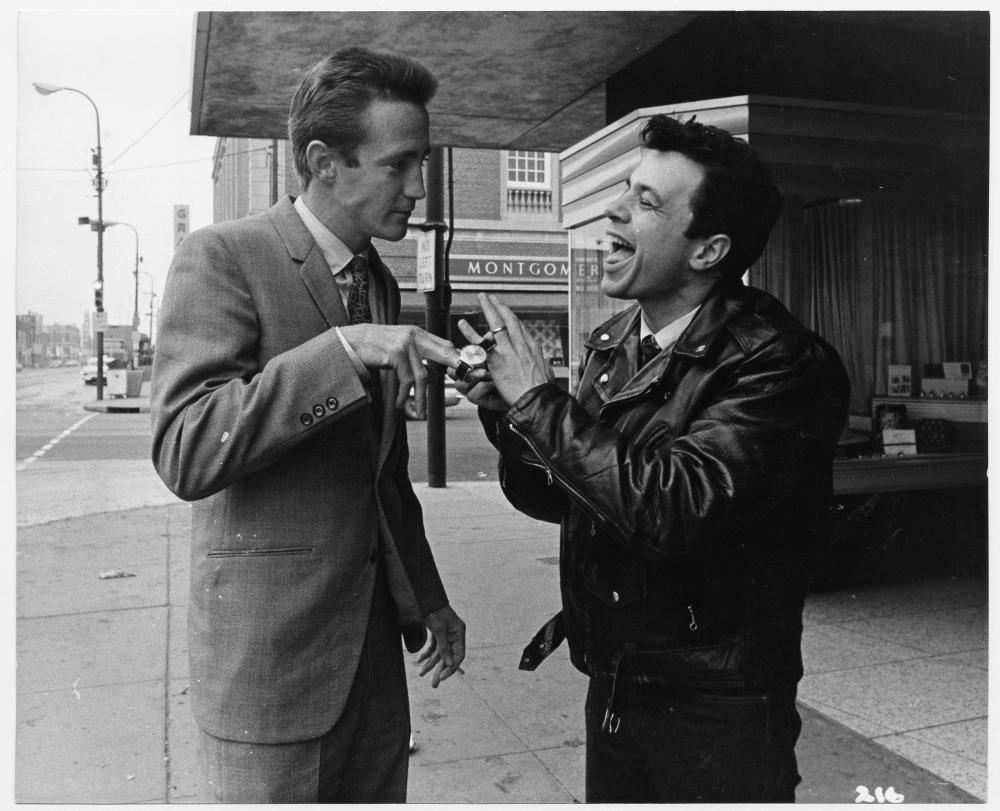
Sc. e P.: Richard Brooks. S.: tratto da un romanzo di Truman Capote. F.: Conrad Hall. Mu.: Quincy Jones. In.: Robert Blake, Scott Wilson, John Forsythe, Paul Stewart, Jeff Corey, Gerald S. O’Loughlin, Will Geer. P.: Columbia Pictures (A Pax Enterprises Production) 35mm. D.: 134’ a 24 f/s. Bn Cinemascope
Following the success of his 1966 western, The Professionals, also photographed by Conrad Hall, director Richard Brooks turned to adapting Truman Capote’s riveting non-fiction novel that tells the true story of the murder of a family in Kansas in 1959. Shot is stunning black and white in all of the actual locations, and with a dynamic jazz-flavored score by Quincy Jones, the film traces the paths of the killers from planning the crime, their flight and capture, to their eventual execution. When the evaluation of the film began in early 1999, it was discovered that the original picture negative was seriously damaged in over thirty places. A plan for restoration was developed and, using a series of alternate fine grain master elements, a separate B-roll negative was built to run in compliment with the original negative. In this way, nearly all of the damaged sections of the film were replaceable. At the same time the picture restoration was in development, all of the available soundtracks were being examined. During this evaluation, it was discovered that the best and most original track was a magnetic LCR stereo track created at the time of production. The production manager and assistant director for the film confirmed that the original intent was to release the film in stereo, but the studio balked at the time in paying the expensive magnetic-striped prints, so the film was released in mono. The stereo and original mono tracks have all been preserved, but the print being shown will have the original stereo version. In an effort to create an authentic version of the filmmaker’s original achievement, cinematographer Conrad Hall was asked to become involved during the final stages of the restoration. With Mr. Hall’s many invaluable suggestions, working with color-timer Gilbert Carreras, the original look and tone of the film has been preserved. In Cold Blood restoration was overseen by Grover Crisp for Sony Pictures; laboratory work was performed by Cinetech in Valencia, California; audio restoration by Chace Productions, Burbank, California.
Grover Crisp
Brook’s screenplay and direction are remarkable in that pic avoids so many pitfalls: it is not a crime meller, told either from the police or criminal viewpoint; it is not social tract against capital punishment; it is not cheap exploitation material; and it is not amateurish in technical execution, despite its realistic flavour. Instead, Brooks gives carefully exposition to his main characters and their motivations, and by shrewd story-telling and underplaying of climatic events, appeals to the viewer’s intellect as well as his senses, never to excess. Although millions know that the murders really took place, a hefty amount of suspense is generated (…). Blake (a former serial star as a youngster, and latterday tv player) seems assured of a renewed and bigtime career from his portrayal of the fantasy-ridden Perry Smith, who did the actual murdering. Laconic, lately violent, child-like, pitiable, sympathetic, virile, submissive – all these facets emerge from his excellent performance. Atmosphere is heightened by black-and-white lensing, supervised in outstanding fashion by Conrad Hall who used crisp Panavision lenses. There may be debate on b&w usage, as opposed to subdued color lensing which would have been possible, no doubt. But such debate would be merely pounding sand; Brooks chose b&w and, through Hall, used the entire black-and-white spectrum to superior dramatic advantage.
Murf., Variety, December, 13th, 1967