[MOVIE]
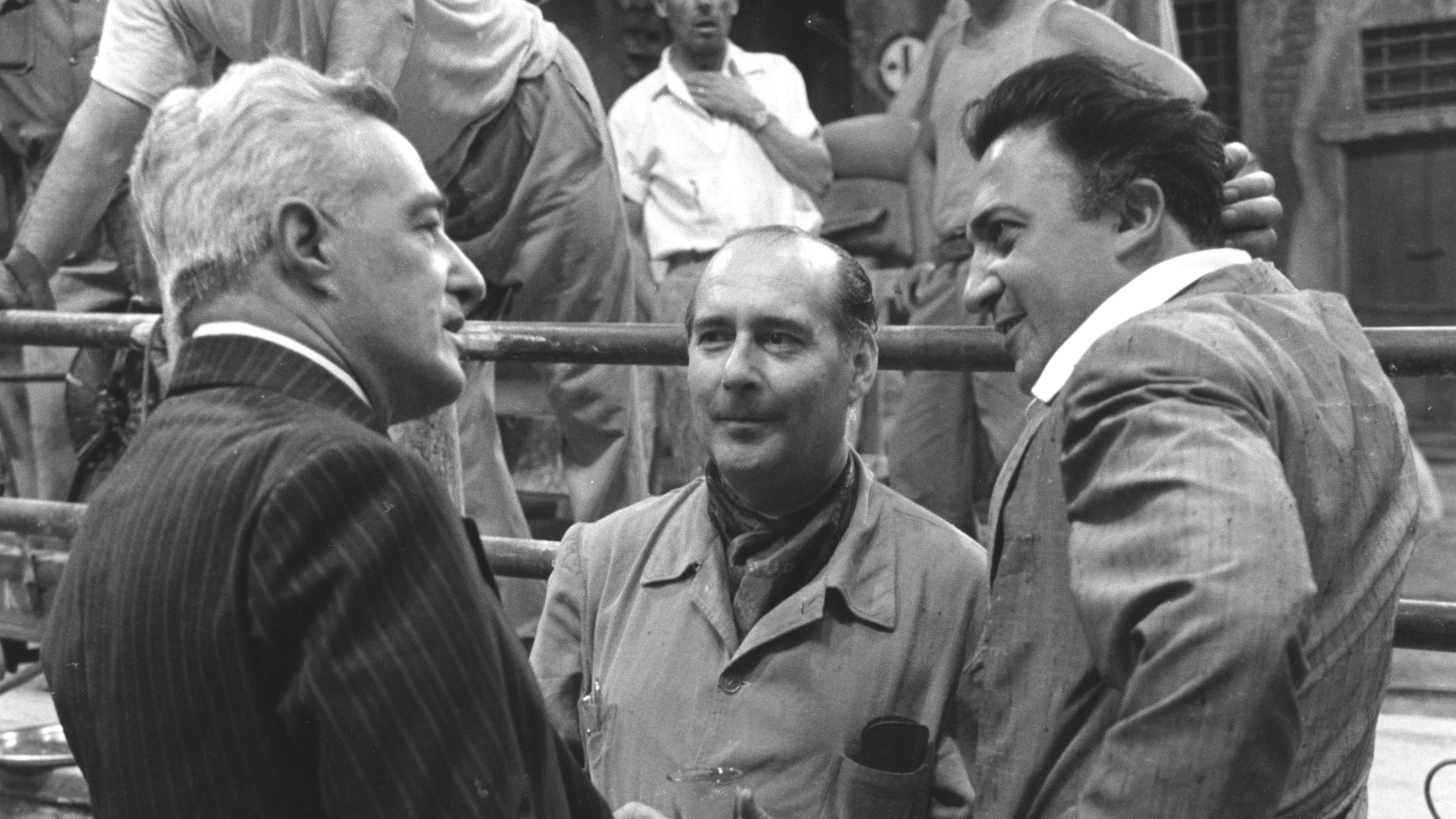
Subject: from the novel of the same name (1959) by Indro Montanelli. Scen.: Sergio Amidei, Diego Fabbri, Indro Montanelli. F.: Carlo Carlini. M.: Cesare Cavagna. Scgf.: Piero Zuffi. Mus.: Renzo Rossellini. Su.: Ovidio Del Grande. Int.: Vittorio De Sica (Giovanni Bertone, falso generale Della Rovere), Hannes Messemer (colonnello Müller), Vittorio Caprioli (Aristide Banchelli), Nando Angelini (Paolo), Herbert Fischer (Walter Hageman), Mary Greco (madama Vera), Bernardino Menicacci (il secondino), Lucia Modugno (la partigiana), Franco Interlenghi (Pasquale Antonio). Prod.: Moris Ergas per Zebra Film, S.N.E. Gaumont. Pri. pro.: 7 ottobre 1959 35mm.
Edition History
I was immediately drawn to the extraordinary case of this character, who actually existed, and who was at once a deplorable swindler and a genuine hero. History has yet to define him. Some regard him as a spy, others as a pathological liar. Personally, I imagined him as a somewhat unhinged character, a cheat, a swindler with good intentions. If he committed the most despicable kind of fraud there is, taking advantage of distressed families whose relatives had been arrested by the Gestapo in order to extract money from them, he nevertheless had no sense of deceiving them, but rather of selling them comfort. He even tried, when he could, to secure their release. When he was unmasked, the Germans used him to impersonate, in prison, General Della Rovere, one of the leaders of the Resistance whom they had killed during a clandestine infiltration. My character grows into his role, and little by little comes to believe he truly is the general. He behaves as the general would have behaved, and in the end dies a hero’s death. Beyond this remarkable case, I was interested in making a historical film about a period so close to us and yet, fortunately, distant. Roberto Rossellini, Il mio metodo. Scritti e interviste, edited by Adriano Apra, Marsilio, Venice 1987 In the role of General Della Rovere, Vittorio De Sica is so convincing and fitting, beyond any and all expectations, that it deserves special comment. It is a genuine surprise: he has risen from a character actor to a true artist. Forgive us if his performance has induced an elegy seemingly rife with hyperbole … It was Rossellini who understood that as an actor he was not only limited to playing the Marshal in Pane, amore e fantasia. In Il generale Della Rovere, De Sica is one of the principal reasons for the success of the film. He seems born for the role of the petty thief Bertone.
Maurizio Liverani, Trionfo di Rossellini, “Paese Sera”, 31 August 1959

Restored by Gaumont at Éclair Cinéma laboratory, from the original negatives.
per concessione di Minerva Pictures Group
How many real characters did I play? Less than you can count on one hand, seriously, less than the number of Oscars I’ve gotten for directing. You could fit them on the head of a pin: my first film, Gli uomini che mascalzoni, I played an anti-hero at a time when films were fascist, with colonels and Jarabubs. Camerini was the one with courage, and since I myself am antiheroic, I was comfortable with it. That’s one. Then there was the lawyer in the Blasetti film with Gina Lollobrigida, Altri tempi. Then, yes, alright, my gambler in Oro di Napoli, when I play cards with the kid… and the last, Il generale Della Rovere, which Rossellini entrusted to me, perhaps one of my best performances. That’s it, no others. One doesn’t always manage to achieve one’s desire, to be true to a character.
Vittorio De Sica, in Giuliano Ferrieri, De Sica visto da De Sica, “L’Europeo”, n. 47, November 21, 1974
In the role of General Della Rovere, Vittorio De Sica is so convincing and fitting, beyond any and all expectations, that it deserves special comment. It is a genuine surprise: from a character actor he has risen to become a true artist. Forgive us if his performance has induced an elegy seemingly rife with hyperbole, but in part of his own doing and in part the fault of the normally vapid Italian cinema that feeds off its own children like Thyestes, De Sica seemed destined by this point to be a prisoner within himself. Actors have a tendency, in fact, to typecast themselves, much the way a silkworm makes its own cocoon. […] It was Rossellini who understood that as an actor he was not only limited to being the Marshall of Pane, amore e fantasia. In Il generale Della Rovere, De Sica is a principal reason for the success of the film. He seems born for the role of the petty thief Bertone, a minor swindler who survives day to day as needed, ready to deal in cocaine or hot watches, from big heist to little scam. […] The first part of the film is a sort of preface to the action narrated by Indro Montanelli, […] showing the character in his relationship with a low rent showgirl (Giovanna Ralli), with a shady adventuress (Sandra Milo), and in his world of clandestine, improvised gambling halls. […] This hardened crook, by now fiftyish, has the dignified appearance that in wartime allows him to pass as a Colonel, bragging about (imaginary) friendships with high level German officials, so as to swindle money from the families of arrested partisans, promising the connections to get their loved ones released. His true nature emerges and comes to life however in his relationship with the German official (played splendidly by Hannes Messemer) who shuts him inside San Vittore prison, giving him the identity of a general in the resistance, so he might infiltrate a group of resistance prisoners and expose their organization. […] In that trap of persecuted victims he ultimately prefers to be shot with the others rather than betray them.
Maurizio Liverani, Trionfo di Rossellini, “Paese Sera”, August 31, 1959