[MOVIE]
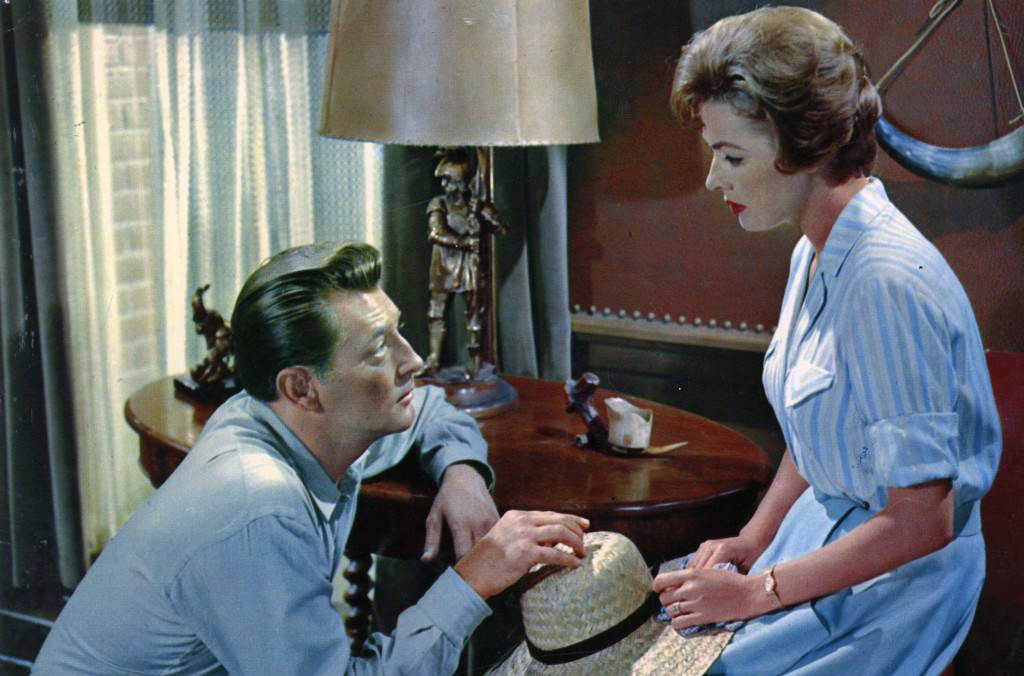
Sog.: dal romanzo omonimo di William Humphrey. Scen.: Harriet Frank Jr., Irving Ravetch. F.: Milton Krasner. M.: Harold F. Kress. Scgf.: George W. Davis, Preston Ames. Mus.: Bronislau Kaper. Int.: Robert Mitchum (Wade Hunnicutt), Eleanor Parker (Hannah Hunnicutt), George Peppard (Raphael ‘Rafe’ Copley), George Hamilton (Theron Hunnicutt), Everett Sloane (Albert Halstead), Luana Patten (Libby Halstead), Anne Seymour (Sarah Halstead), Constance Ford (Opal Bixby), Ray Teal (dottor Reuben Carson). Prod.: Edmund Grainger per Metro Goldwyn Mayer 35mm. D.: 150’. Col.
Edition History
Theron (George Hamilton) comes of age in the family of macho Texas patriarch Wade Hunnicutt (a sleepy Mitchum). The boy has been coddled by his mother (played with a wondrous Hollywood Texas accent by Eleanor Parker), the price to pay for Wade’s extra-marital cavortings. But now Wade wants to take him hunting and make a man out of his son, whom he would like to resemble cowboy helper Rafe (a very cool George Peppard). The film starts tipping towards delirious melodrama once Theron discovers Rafe’s true relationship to his father, leading to mind-boggling violence and destruction.
Although Minnelli shot on locations in Texas and Mississippi and Milton Krasner’s photography contributes to the film’s psychotic beauty, the director seems more interested in showing the sadness of the Hunnicutts’ ravaged marriage and the ultimate emptiness of Wade’s patriarchy. As he did four years earlier in Tea and Sympathy, Minnelli digs at society’s perception of virility with troubling precision, showing scenes almost never seen in classic Hollywood cinema.
Philippe Garnier

By the late 1950s, home had been many places in Minnelli’s career: nostalgic turn-of-the-century St. Louis; the Impressionist painters’ Paris; Broadway and Radio City Music Hall. All places where an aesthete and craftsman could be among friends. Never, before Home from the Hill, had he fetched up in Texas with strutting machismo, a décor of animal trophies and rifles, and what Stephen Harvey described in his excellent Minnelli book as a “man-sized easy chair the colour of fresh-killed meat”.
But Texas might have been expected. The 1950s saw a rising wave of films about tortured families from the Deep South, full of oil money, ranchers, large emotions, and skeletons in closets. Fox adapted William Faulkner’s The Long Hot Summer and The Sound and the Fury, with scripts by the married writing team of Irving Ravetch and Harriet Frank Jr. On their coat-tails, MGM, Minnelli, Ravetch, and Frank adapted a new book, Home from the Hill, the first novel of a Faulkner acolyte from east Texas, William Humphrey. The production actually used Faulkner’s home territory, Oxford, Mississippi, as one of the locations, along with Paris and Clarksville in northeast Texas.
The story details the tensions between a rich stud father (Robert Mitchum), his alienated wife (Eleanor Parker), and two sons, legitimate and illegitimate (George Hamilton, George Peppard). A lesser director on unfamiliar ground might have tried to hide, functioning only as the script’s illustrator. Not Minnelli. He splashes out with operatic abandon, facing the machismo and the meat-chair head on, charging through a wild-boar hunt with dynamic camerawork and cutting, and pacing the finale as a grand symphonic climax topping even the last stretch of Some Came Running.
Yet in all of this Minnelli remains alert to still, small voices. He makes you feel the sense of loss endured by loveless lives. There is quiet observation, warmth, and humour, particularly in Peppard’s scenes as the illegitimate, gentle Rafe, growing to maturity despite all his hurdles. For Peppard, a New York stage actor keen on the Method, the role marked his cinema breakthrough. For Minnelli, the film represented a challenge largely surmounted. As for Mitchum, a strong presence as the father, Home from the Hill was a job done well, though he carped after- wards. “The sets got a lot of fan mail,” he said.
Geoff Brown