[MOVIE]
(Il film fu iniziato da Mario Bonnard – e molti testi continuano ad attribuirgli la regia – poi sostituito). Aiuto Regia: Sergio Leone. S.: Luciano Vincenzoni. Sc.: Mario Bonnard, Ruggero Maccari, Aldo Fabrizi. F.: Mario Bava. Mu.: Carlo Rustichelli, dir. Alberto Paoletti. M.: Maria Rosada. Scgf.: Flavio Mogherini. Dir.P.: Paolo Frascà. Ass. R.: Sergio Leone. Isp.P.: Mario Gabrielli. S.ed.: Silvana Mangini. Op.: Corrado Bartoloni. Fonico: Ovidio Del Grande. In.: Aldo Fabrizi (Cesare Mancini), Carlo Campanini (Bernasconi), Lucia Banti (Marcella, figlia di Mancini), Juan De Landa (Rossi), Lia Rainer (Teresa), Mimo Billi (caposervizio), Bruno Corelli (il pretore), Alvaro Alvisi (il fidanzato di Marcella), Bruno Magoni, Oreste Biavati (l’avvocato), Fernanda Giordani (la suocera), Armando Guatti, Zoe Incrocci, Aldo Pini, Bruno Lanzarini (il Pubblico Ministero), Leontina Zucchelli (noleggiatrice di biciclette), Anna Zamboni, Franco Lannicci (Nino), Libero Grandi, Teresa Moggi, Eugenio Galadini. P. Luigi Rovere per Imperial Film. 35mm. D.: 90’ca. a 24 f/s.
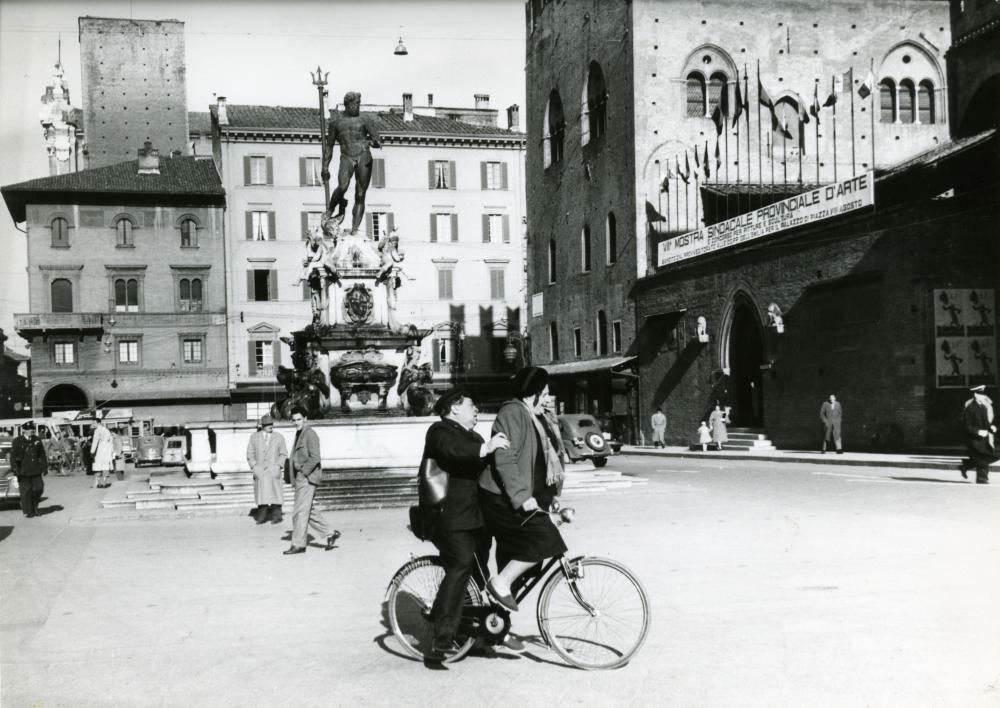
“Fabrizi is a pleasant, good-natured tram driver in Bologna. The film revolves around the misadventures that befall him as a result of the rivalry between him and department head Rossi who can’t bear that Fabrizi is a better Boccia player The department head’s aversion soon turns into persecution. This puts such pressure on the poor tram driver that he runs into a series of incidents for which he is first punished, then demoted, and finally temporarily suspended from duty. Desperate, he ends up robbing a tram one night and taking around a group of passengers for free. In court everything will end up being settled” (L’uomo qualunque, March 30, 1955). Bologna is the true protagonist of this small film directed, as well as acted in, by Aldo Fabrizi. At that time, the city had practically never been seen before on film. Today it is above all the surprising photography by Mario Bava that makes the film enchanting and amazing. It brings perspectives and architecture of the streets in the center and the outskirts back to us, nighttime views of undisputed evocative power that turn the city into something more than just a simple baekdrop. The spectator who knows the city will discover imaginative topography, gone a bit haywire in the editing (streets that open up into squares that in reality are located somewhere else…). All the outdoor bits in the film were shot in Bologna during the fall of 1954, together with some inside shots in the ATM (Azienda Tranviaria Municipale – Municipal Tram Company) hall, where various scenes occur. The city’s participation did not stop there: people from Bologna, improvising as actors, lent themselves to minor but essential parts for the pathetic-farcical characterization of the film, especially for the regional character exchanges with the Roman protagonist. Supporting the protagonist were straight man Carlo Campanini and antagonist Juan de Lando (the department head, nicknamed “Dog head”), in what would be defined as the clash of the potbellies. The role of the tram driver was not new at all for Fabrizi, neither in film (in Avanti c’è posto in 1942) nor in variety shows. The episode, mentioned in the title, was inspired by a real happening, and perhaps even Buñuel knew about it since an analogous story is told almost identically in the Mexican film he directed La ilusion viaja en tranvia in 1953, but that was never distributed in Italy.
Paolo Simoni
“It was in 1954 that Fabrizi was able to further develop the character of the tram operator by acting in, writing and directing the film Hanno rubato un tram. In the film, Cesare Mancini, tram operator demoted to conductor, states adamantly to his boss, who persecuted him without mercy: “I was a man before I was a tram operator, and as I man I want to tell you…” earning himself a three month suspension.
These are the same small personal battles, the same class rivalry of simple day to day life, that enliven Fabrizi’s sketches, including the one called I tranvieri della città (The City Tram Operators), and that are rejected by the censors in 1943. During those years, the many letters from admirers highlight precisely the fact the people recognized themselves in Fabrizi’s characters, in his ties with a life that obstinately refused to consider the inconsistent, amorphous insolence of that era, in his ways that were still governed by the rules of the heart.
Maria Cielo Pessione, Aldo Fabrizi, cuore di tranviere

With the collaboration of Fondazione Aldo Fabrizi