[MOVIE]
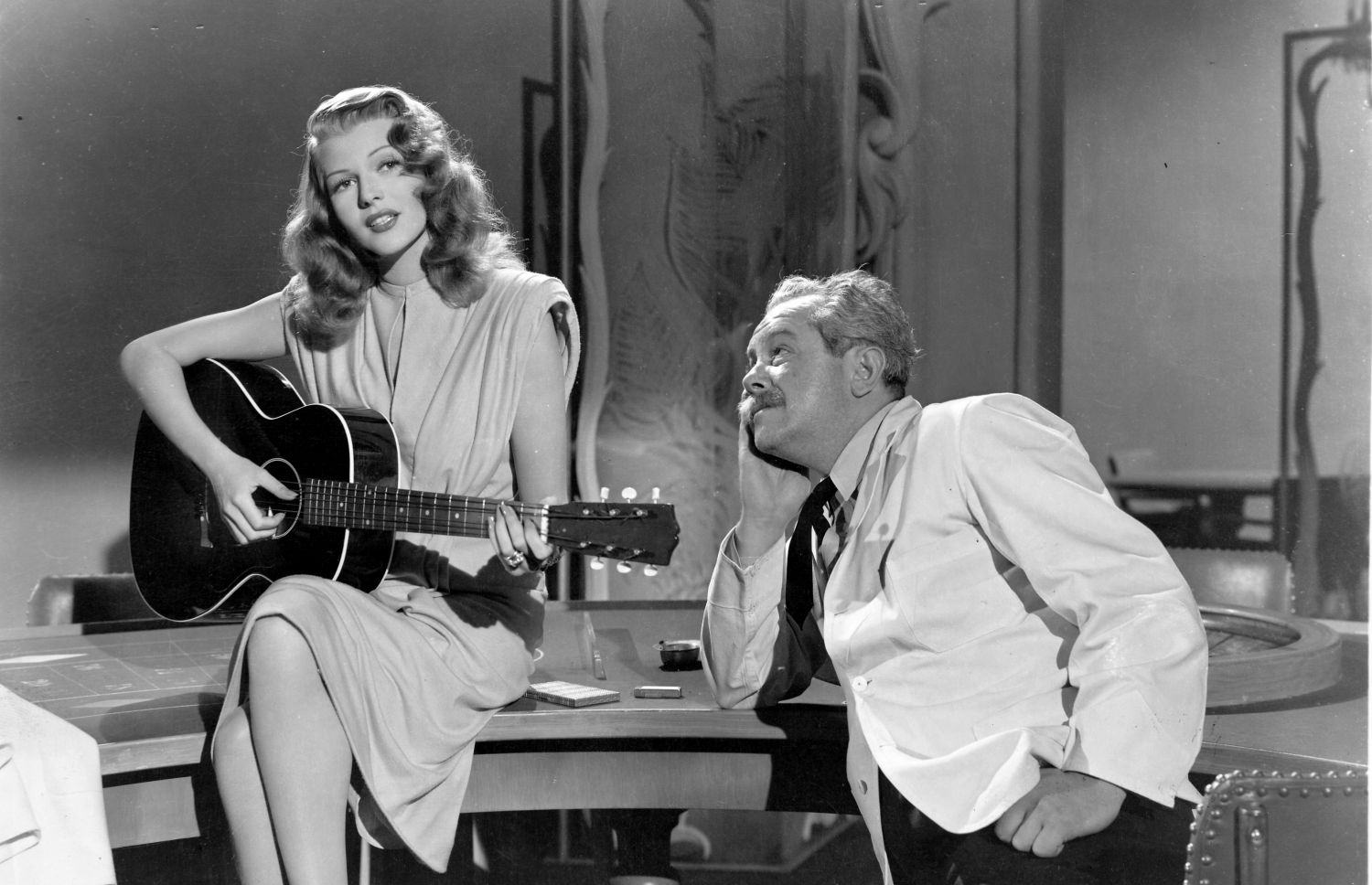
Sog.: Jo Eisinger dal racconto omonimo di E.A. Ellington. Scen.: Marion Parsonnet, Ben Hecht. F.: Rudolph Maté. M.: Charles Nelson. Scgf.: Stephen Goosson, Van Nest Polglase. Mus.: Morris Stoloff, Doris Fischer, Allan Roberts. Int.: Rita Hayworth (Gilda), Glenn Ford (Johnny Farrell), George Macready (Ballin Mundson), Joseph Calleia (Obregon), Steven Geray (zio Pio), Joe Sawyer (Casey), Gerald Mohr (capitano Delgado), Robert Scott (Gabe Evans), Don Douglas (Tom Langford). Prod.: Virginia Van Upp per Columbia Pictures Corp.. DCP. D.: 110’. Bn.
Similar to but even more so than Casablanca, Gilda resists any attempt at interpretation, offering itself to the admiration of its spectators without having lost an ounce of its seventy-two-year-old charm. The most famous noir love triangle in the history of cinema immediately elevated its characters to almost mythical proportions: two months after its release, at the end of June 1946, “The New York Times” reported that the film had so impressed scientists working on the nuclear program that they had decided to give the name Gilda to the atomic bomb they were preparing to explode at Bikini Atoll, with a picture of Hayworth painted on it. Since then, Gilda’s destructive love for Johnny and the father-son relationship between Ballin and Johnny haven’t stopped capturing the imaginations of audiences; an unrivalled representation of a desperate and absolute love, to which only cinema could give shape. If on one hand, to use the words of Michael Wood, Gilda is “one of the most acidic and lucid portraits of romantic love that Hollywood has ever given us”, a perfect web of “poisonous atmospheres and the almost abstract subtleties of basic desire”, on the other hand, their sublimation in an indeterminate series of twists opens the film up to the wildest of psychoanalytical readings, from repressed rage and masochistic impulses to games of seduction and fear, where nothing ever has a single face. Like the cane with the retractable blade that Ballin uses, which “looks like one thing, but in front of your eyes becomes something else”. And like Gilda, a triumph of the female body, built on the ambiguity of a pleasure constructed out of allusions and eternally unsatisfied impulses. And above all, thanks to Hayworth’s unattainable femme fatale, “a threat even when she doesn’t do anything”, innocent yet sensual, neither vulgar nor exotic, who in a small cinema theatre in Caorle bewitches even the young Pasolini, who in Amado mio remembers her “immense body, her smile and her breasts, both of a sister and of a prostitute – ambiguous and angelic – stupid and mysterious – with that cold and tender myopic gaze, so tender it is almost languid […] Meanwhile, with the audience panting, Rita Hayworth, with delicate lust and a furious patience, peeled off her glove against the night sky”.
Paolo Mereghetti

Courtesy of Park Circus. Restored in 2012 by Sony Pictures Entertainment in collaboration with UCLA Film & Television Archive at Sony Colorworks, Chace Audio, YCM laboratories from the original nitrate negative and a 35mm fine grain master