[MOVIE]
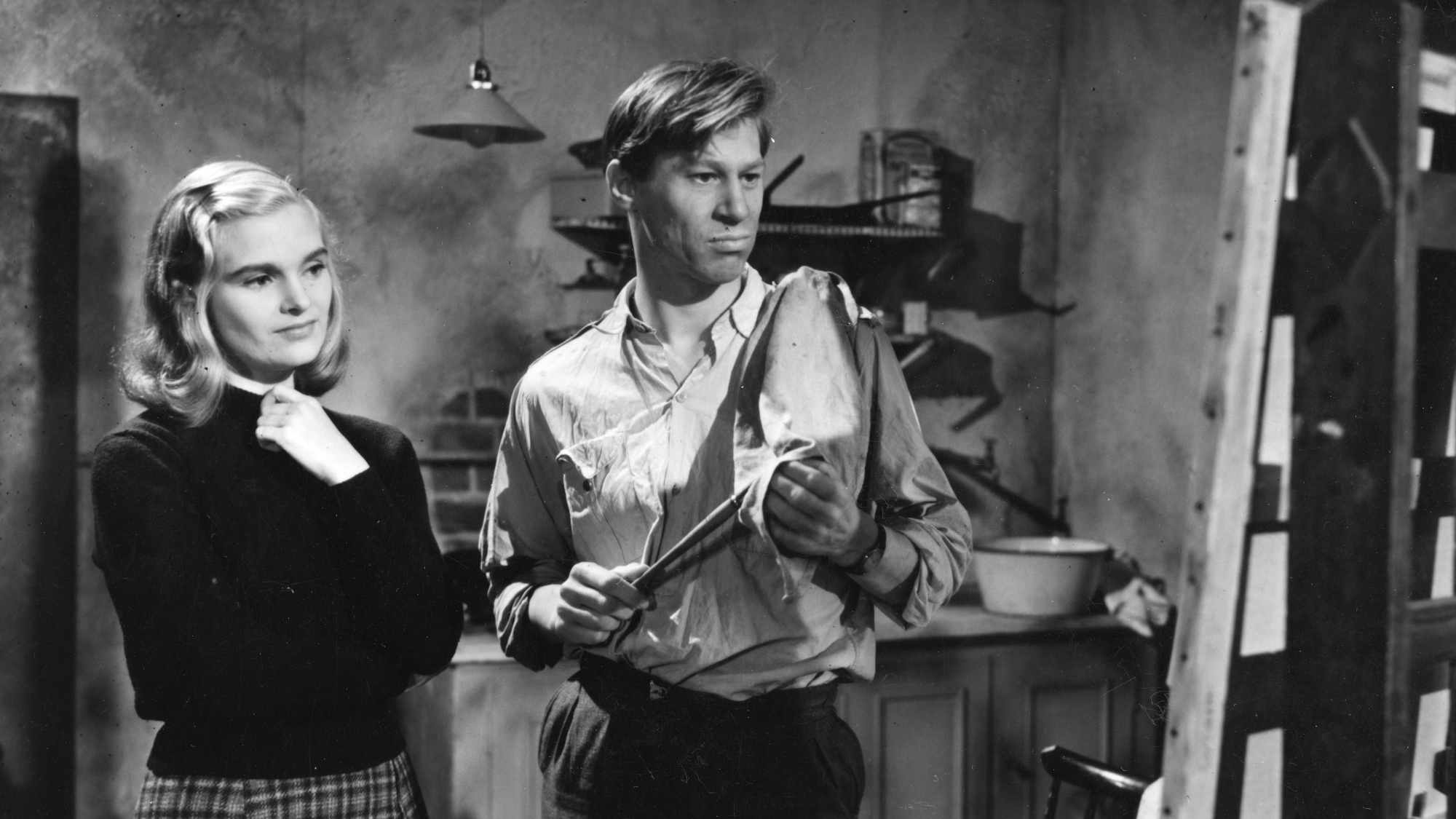
Scen.: Hasse Ekman. F.: Göran Strindberg. Scgf.: Bibi Lindström. Mus.: Erland von Koch. Int.: Eva Henning (Dagmar Brink), Ulf Palme (Anders Wikner), Birgit Tengroth (Britt Wikner), Anders Ek (Elias Körner), Gösta Cederlund (von Lieven), Karl- Arne Holmsten (Willy Borge), Keve Hjelm (Stefan Brink). Prod.: Terrafilms Produktions AB 35mm. D.: 90’. Bn
Edition History
Dagmar Brink, a young female pianist, commits suicide in her Stockholm apartment. She leaves all her belongings to her next-door neighbours, an author and his wife. Perplexed and curious, they investigate the reasons for Dagmar’s decision. As they visit her friends, acquaintances and former boyfriends, her story unfolds. She emerges as a loner, a woman no one could truly understand, always yearning for something that eluded everyone she met. Hasse Ekman’s masterfully staged story, whose theme of forbidden desire and lesbian love still moves audience today, is considered by many to be his best film. A melodrama with deep shadows portrays a life lost too soon and serves as a puzzle detective story reminiscent of Citizen Kane. The narrative structure features a writer piecing together and interpreting a life story by seeking out individuals whose flashbacks offer varied perspectives on the enigmatic protagonist’s motivations. Stylistically, while Ekman doesn’t strive for technical innovation like Welles, he effectively employs established techniques from 1940s American film noir. Notable similarities include the camera’s mobility and angles, the use of deep focus and long takes, and dramatic lighting. Ekman was one of Sweden’s finest filmmakers. However, unlike contemporaries such as Ingmar Bergman, he never gained significant recognition outside Sweden. Born in 1915 to the renowned actor Gösta Ekman, Hasse began his career as an actor in the 1920s. In 1940, he wrote and directed his first film, and over the next 25 years, he made over 40 films before retiring from filmmaking in 1965. In the 1940s, he was regarded as Sweden’s best director. While some films were made out of contractual obligations, most were personal and deeply felt, ranging from comedies to dramas that explored unhappy marriages, the world of the theatre, and the lives of poets, painters, writers and dreamers.
Kajsa Hedström

for courtesy of Telepicture Marketing
Hasse Ekman made more than 40 films between 1940 and 1964, as well as being a famous writer, actor and stage director. During his first ten years as a film director he made finely tuned psychological dramas and elegant comedies at an amazing pace, often experimenting with elaborate narrative structures. Much has been made of the alleged rivalry between Ekman and the young Ingmar Bergman, but they deeply respected and admired each other and both their careers flourished at Terrafilm in the late 40s, under the astute eye of famous independent producer Lorens Marmstedt. Flicka och hyacinter, shot in late 1949 and released in March 1950, is Ekman’s chef d’oeuvre. In the film a writer tries to find out the truth about his enigmatic female neighbour by interviewing people who once knew her. The Citizen Kane like structure is expertly executed (Ekman also wrote the script) and the mystery is solved only in the final moment of the film, without the investigating writer ever finding out.The fear, loneliness and silence of an angst-ridden post-war Europe is reflected by the film’s atmosphere, heightened by the rich contrasts of Goran Strindberg’s black-and-white cinematography.
Jon Wengstrom, Svenska Filminstitutet

Print restored in 2006 from a silent duplicate negative and a sound negative made from a 35mm interpositive held by the Cinemateket-Svenska Filminstitutet