[MOVIE]
Scen.: Ernst Lubitsch, Hanns Kräly. F.: Theodor Sparkuhl. Scgf.: Ernst Stern, Max Gronau. Int.: Pola Negri (Rischka), Paul Heidemann (Alexis), Victor Janson (il comandante), Marga Köhler (sua moglie), Edith Meller (Lilli), Hermann Thimig (Pepo), Wilhelm Diegelmann (Claudius). Prod.: Projektions-AG Union (PAGU). 35mm. L.: 1935 m. D.: 85’ a 20 f/s. Bn
Edition History
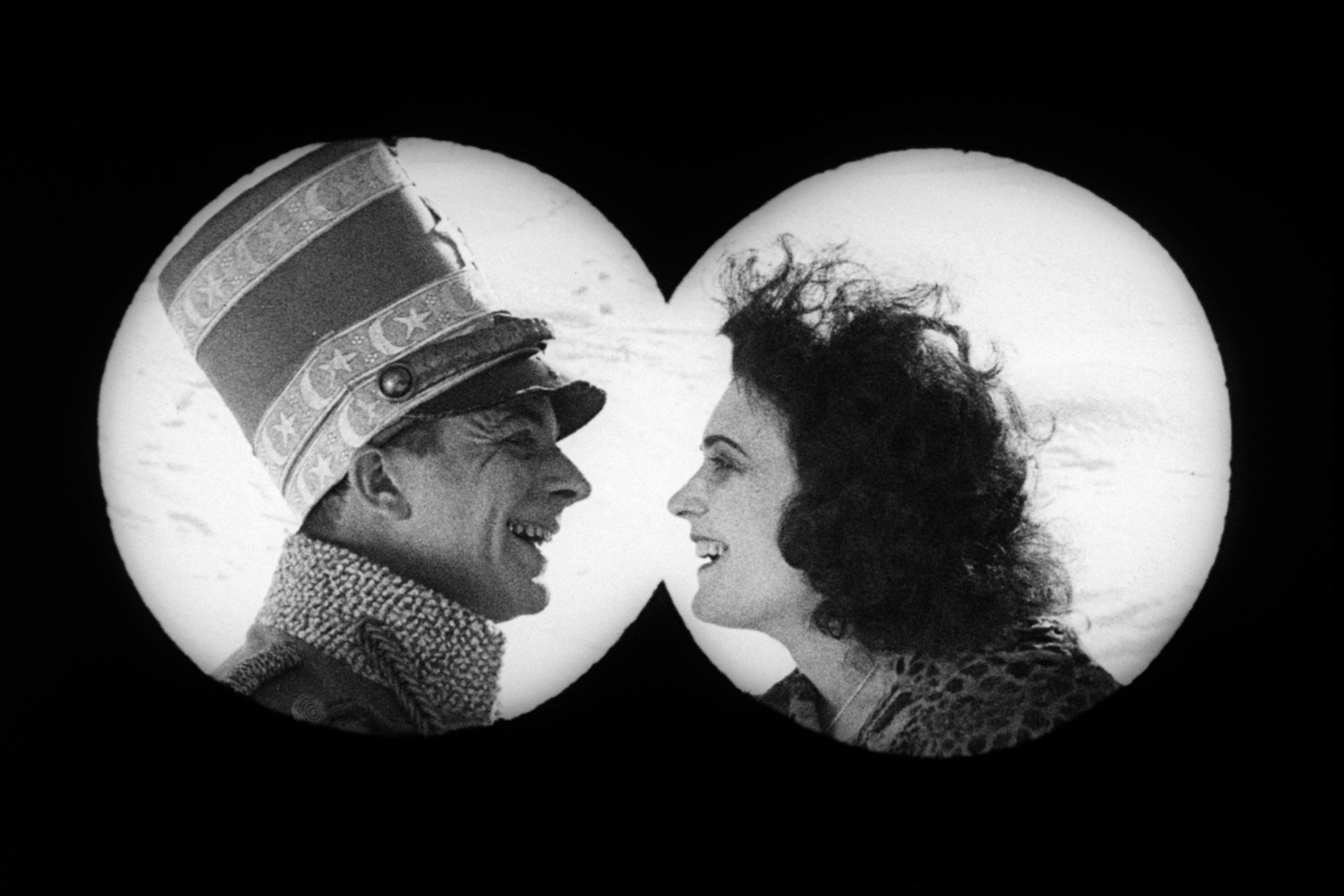
Lubitsch grasped the talents of his stars as no other and brought them to their highest achievements. For Pola Negri he created the finest role of her career: fierce Rischka, the robber chief’s daughter. Among goofy soldiers skidding on the ice and dwarflike robbers tumbling through the snow, Rischka radiates authority. She is well-practised in handling guns, snowballs and whips, and the adoration of the robbers (her father included) for the magnificent Rischka-Pola is intermingled with fear. “She has drive!”, exclaims the impressed operetta lieutenant, who considers himself irresistible, after Rischka has thrown him down a steep slope. On a foray, she chucks the furniture of the garrison castle out of the windows, quite the industrious housewife. It splinters in front of her waiting accomplices, and seeing it splinter makes us happy. Visual jokes, surprises and a spirit of relentless satire make this a unique and very underrated film. Art director Ernst Stern designed the castle, extravagant as a tiered cake, whose curves can serve as half-pipes and swings. Lubitsch kept the plot at a minimum, loosely stitching scenes together and giving free rein to his exuberant ideas: a concerto of snowmen, a wedding staged as a funeral, and much ridiculing of the military. (And this was three years after the war: the film was not well received.)
We viewers immediately lose the thread, since there is none, and do the right thing: we watch and try not to miss any of this fantastic fun. Amid the clamour, Pola glows with warm sensuality. The way she pours perfume into her bosom and moves like a bird enjoying its sand bath, or the way she kindly comforts her crying rival while at the same time deftly – woman’s work is never done – relieving her of her pearls… such moments are enduring gifts to the audience from a great director and a wonderful actress.
The realm of the vamp is the melodrama; time and again, the femme fatale makes men miserable and meets a miserable end. In this thoroughly anticlassical comedy, Lubitsch expresses his great admiration for his heroine and for women in general – celebrating their erotic strength, good sense and prowess. A must-see.
Mariann Lewinsky

Lubitsch set the story in an imaginary world. He treated the material with extraordinary style, leaving his mark from beginning to end, with rare unity. This organic quality sometimes grows out of strained interpretations: for example, when Lubitsch emphasizes style in countless vignettes cut out in a fantastical style, the underlying is nothing but sheer content, obtained through grotesque cuts in the framing. But it’s a fascinating choice, a daring experiment, and the way the director sees things is always surprising and clever. There’s no sense in listing the thousands of bright directing ideas capable of drawing applause from the audience; no German film has as much comedic charge, as much grotesque and original humor as this film. But it is this same newness that could result as obscure to an unprepared audience, even if its success at the Ufa-Palast would seem to indicate something else entirely. Pola Negri in the role of the bandit’s daughter, “The lovely Rischka”, shows a lively comic ability, a surprising capacity to handle all the sudden reversals required by her role. She belongs to a very rare class of actors, equally versed in both the comedic and tragic genres. Her comedic ability is truly impeccable. She acts with great force, and the effect is absolutely surprising. Each time a serious situation unexpectedly arises, it is she, the skilled artist, who proves herself capable of getting past the difficulty with her sublime acting. This grotesque comedy has also its serious moments, and they result to be deeply moving thanks to Negri’s masterful acting.
Lichtbildbühne, April 16, 1921
Die Bergkatze was the first commercial flop in the career of Ernst Lubitsch. And it was he who justified it in his letter to Weinberg in 1947: “The undertaking of the film Die Bergkatze was a complete failure, and yet on a visual level there were many more ideas, gags and satire in that film when compared to my others. When the film came out, shortly after the war, the audience was not ready to accept a film in which militarism and the war were satirized. I did not find the right atmosphere.”
Ernst Lubitsch, Brief an H.G. Weinberg, in Hans Helmut Prinzler/Enno Patalas, ed. by, Lubitsch, München-Luzern, C.J. Bucher GmbH, 1984