[MOVIE]
R.: Joseph Henaberry. S.. dalla omonima commedia di Martin Brown. Sc.. Anthony Coldway. F.: J.D. Jennings, Harry Fischbeck. In.: Rudolph Valentino (Conte Rodrigo Torriani), Nita Naldi (Elize van Zile), Casson Ferguson (Jack Dorning), Gertrude Olmstead (Mary Drake), Hector V. Sarno (Victor Minardi), Claire De Lorez (Rosa Minardi), Eileen Percy (Sophie Binner), Lillian Langdon (Mrs. Porter), Rosa Rosanova (Marie), Henry Barrows. P.: Ritz-Carlton Pictures. D.: Paramount. L.: 1900 metri D.: 90’ a 20 f/s
“Valentino is an Italian, of vague noble origins, as he hadn’t been since the times of his second lead in A married virgin. The film has a contemporary setting, the dominating tone is that of cosmopolitan elegance, where every detail has its effect: white jackets, ties, wristwatches. Driving the narrative and the chief moral question, so to speak, are women, and the film arrives in parts at a remote autobiographical irony. Women dominate the life of Conte Torriani, they attract him irresistibly, they mould his will, they condemn him to the frenetic sadness of the seducer, and finally to solitude: ‘Women! Always women! If only I could get away from all that…’, and like the real Valentino, Conte Torriani too, in search of a new life, leaves Europe for America, he espies the Statue of Liberty from afar and then, once on the avenues, cannot help but concentrate on the passing female legs (legs like those which the young Guglielmi accompanied for some time on the floors of New York’s tango palaces). The character has a dandyistic melancholy, he moves through a complex gallery of faces, hats and female clothes which frame him, creating a refined setting of comedy to which, however, Valentino’s humour remains external. […] It is as if this thoughtful and removed Valentino, this man who loved women without joy became an opaque diva’s body, sucked into the huge sets of bleak and almost abstract luxury designed by William Cameron Menzies.
Paola Cristalli, Rodolfo Valentino: lo schermo della passione, Ancona, Transeuropa, 1996

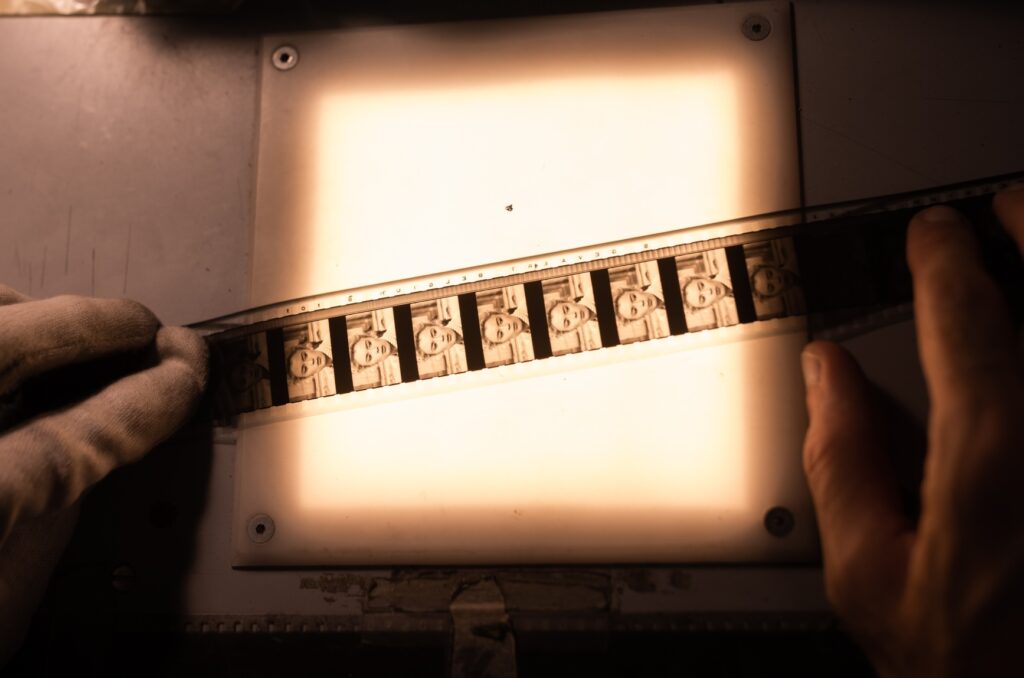
This print was made from the original nitrate by Paramount in 1969