[MOVIE]
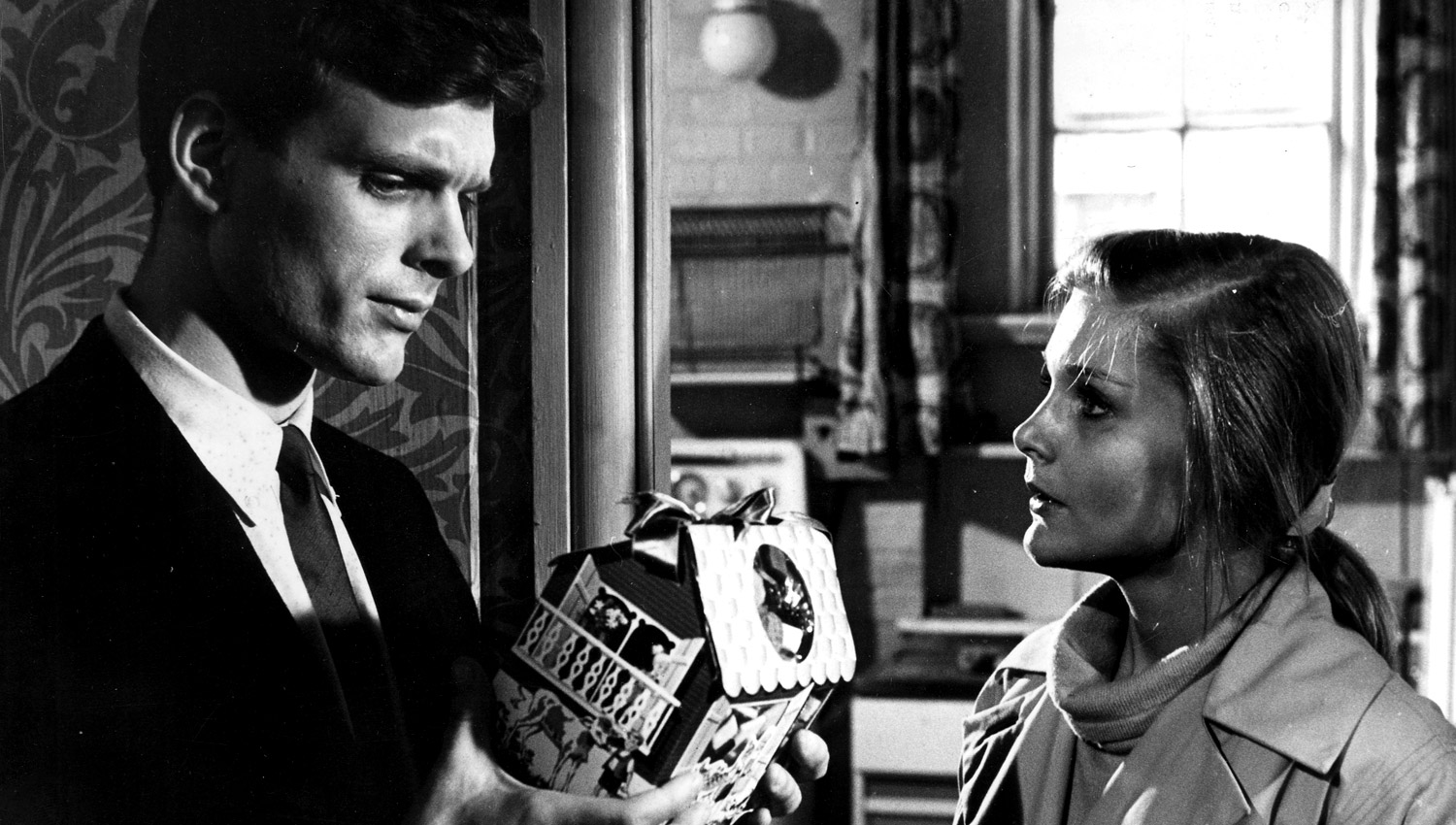
T. It.: Bunny Lake È Scomparsa; Sog.: Dal Romanzo Di Evelyn Piper; Scen.: John E Penelope Mortimer; F.: Denys Coop; Mo.: Peter Thornton; Scgf.: Don Ashton; Cost.: Hope Bry- Ce; Mu.: Paul Glass; Int.: Laurence Olivier (Ispettore Newhouse), Carol Lynley (Ann Lake), Keir Dullea (Steven Lake), Martita Hunt (Ada Ford), Anna Massey (Elvira Smollett), Clive Revill (Sergente Andrews), Noel Coward (Horatio Wilson), Adrienne Corri (Dorothy), Lucie Manheim (La Cuoca); Prod.: Otto Preminger, Martin C. Schute Per Wheel Productions; Pri. Pro.: 3 Ottobre 1965; 35mm. D.: 107′. Bn.
Edition History
Here, the desire to lose the viewer among false leads and false characters is so obvious as to create a doubt not about the truth of the characters and the secret of their nature, but about the reality of their existence itself: as if the absence of Bunny Lake, presented in the film as a creation of the mind, undermines the real existence of her parents, confining them too to the role of ghosts. So much so that we wonder if we are passing through a world of phantoms moving vacuously looking for shade… The psychological motives, the police investigation, the psychoanalytic explanations encountered along the way appear superfluous, irritating in this game of ghosts, and contradictory, as a result of the realist devices dragging behind them, compared to the evocation of dramas and figures so poorly personified.
In one sense, Bunny Lake is the final destination of Preminger’s ‘fantasy’ streak: never were mysteries, doubts, dreamlike visions, double or triple personalities more flaunted; but it is also his admission of failure: never, in fact, were cruder patterns and more pompous means used for such a subtle and common cause. We can visibly trace – paralyzed within the failure – the dialectic between suggestion and excess, between allusion and redundancy, between the effective and the superfluous, between the two-faced and the monolithic, the struggle between mystery and the system, between shadow and the spotlight (a prophetic scene of Advise and Consent) which, perpetuating itself from film to film and leaving its mark more or less evident in each, ended up with the loss of value of the central figure of the piece, at the same time its symbol and secret.
Jean-Louis Comolli, L’œil du maître, “Cahiers du Cinéma”, n. 178, May 1966

Restored in 4K by Sony Pictures from the original camera negative and fine grain master. 4K wetgate scanning at Cineric. Image restoration by Prasad and MTI Film. Audio restoration at Chace Audio
“Preminger’s direction benefits when his style consciously gives in to the effects of shock, to violent visual stimulation, and to the seductive enticement of the audience. Immersed in a fertile contradiction, he is steps away from perfecting his style. Bunny Lake Is Missing seems both true to and inconsistent with his style. A suffocating thriller, subtly hesitant, obsessed with Carol Lynley’s mysterious face, fuelled by implicit (incest) or explicit sexual observations: this is Preminger territory. He sets his film in London and chooses a rich but unglamorous black and white. His style is easily identifiable through the use of space, the slow movements of the crane, and very long camera shots. Contrary to his usual wavering, virtual schemes, Preminger connects the shocking events (Keir Dullea’s guilt, Carol Lynley’s escape from the hospital, the chase in the house, the swing). Along with its sinuous movements, the camera framing is also composed of aggressive images, extreme close-ups, and horrifying caricatures. Bunny Lake may appear heterogeneous and calculated with its uncertain clues (long and tortuous sequences) and revelations (cuts, aggressive close-ups), yet it’s the movement from one to another that is important and that makes the film the pinnacle of Preminger’s work. (…) The thriller, the whodunit, saves Ann and Bunny from the worst scenario, rescuing them from the tragic destruction of incest. All of this occurs in a cold, sad, modern world, where the film’s events seem at times anecdotal, at times crime news, hyperbolic, sensationalised. And somewhat abstract. The direction takes shape in the police hunt for Ann and Steven, and following the characters down hallways and staircases… (…) Preminger’s style radicalized the direction of classic films. Within his great, manipulative schemes he explores uncertainty.(…)”
Pierre Berthomieu, Les accords vagues d’Otto Preminger, “Positif”, n. 554, April 2007