[MOVIE]
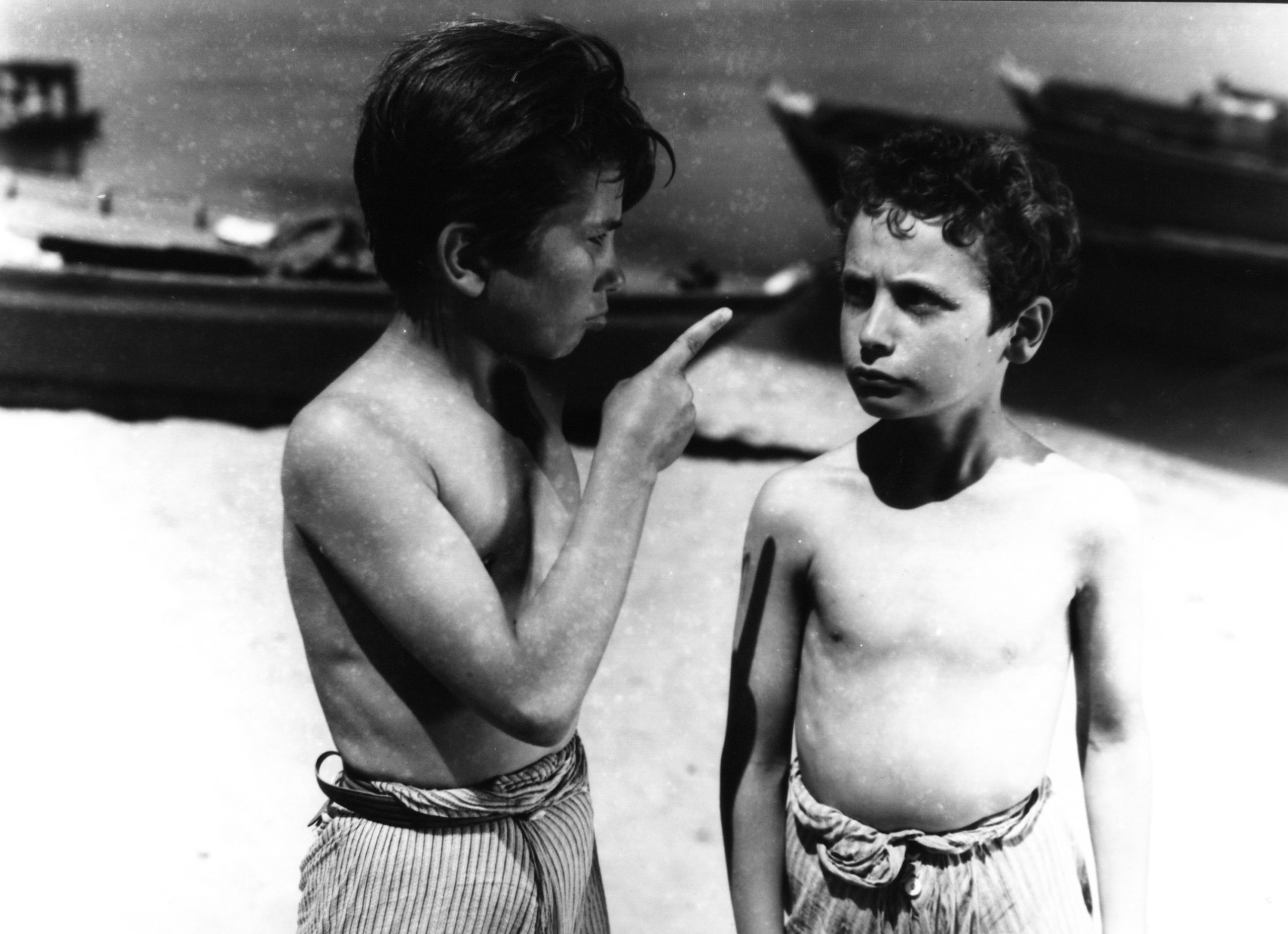
Sc.: Manoel de Oliveira da Ragazzi miliardari di Rodrigues de Freitas. F.: Aquilino Mendes. In.: Horacio Silva, Antonio Santos, Fernanda Matos, Nascimento Fernandes, Vital dos Santos, Manuel de Acevedo, Antonio Morais Soares, Feliciano David, Armando Pedro, Antonio Palma. P.: Antonio Lopes Ribeiro. 35mm. L.: 1941m. D.: 71’ a 24 f/s. Bn
Only in 1942, eleven years after the release of Douro, would Oliveira manage to make his first full length film, produced by Antonio Lopes Ribeiro (1908 – 1995), the most prolific and busiest director of Salazar’s “Estado Novo” that had attempted to give new impetus to Portuguese cinema during the war. Oliveira chose a story by Rodrigues de Freitas for his film. The story had been published in the magazine “Presença”, which at that time was the most influential literary magazine in Portugal. It was a purposeful and intimist text on children from the poor neighborhoods in Oporto, poor children with rich imaginations. From there the title, Meninos Milionarios (Millionaire Children). Oliveira reworked the text substantially (the young girl character was not originally present) and chose the strange title Aniki Bòbò from a nursery rhyme the children in the film had taught him. The film was shot almost entirely in natural environments, and the children, who had never been in film before, came from the shores of the Douro, the river that crosses Oporto. Only the adult roles are played by fairly well-known theatrical actors. These superficial characteristics gave the film (when it became known in Europe in the Fifties) the reputation of a work very near to Italian neorealism, especially to Sciuscià by De Sica, just made a little later. Oliveira himself though emphasized the fact that his film was made earlier, calling attention to the fact that Ossessione by Visconti was made a year after Aniki Bòbò. And he would always regret the fact that the film wasn’t ready for a premiere (on the other hand it hadn’t been planned) at the Venice Festival in 1942, which would have allowed for more full comprehension of its significance. All the same, apart from the superficial characteristics (outdoor shots, non professional actors) there is not a great resemblance between Aniki Bòbò and Italian neorealism.
João Bénard Da Costa

Restored in 1997/98 from nitrate image and sound negatives. Sound digitally restored