[MOVIE]
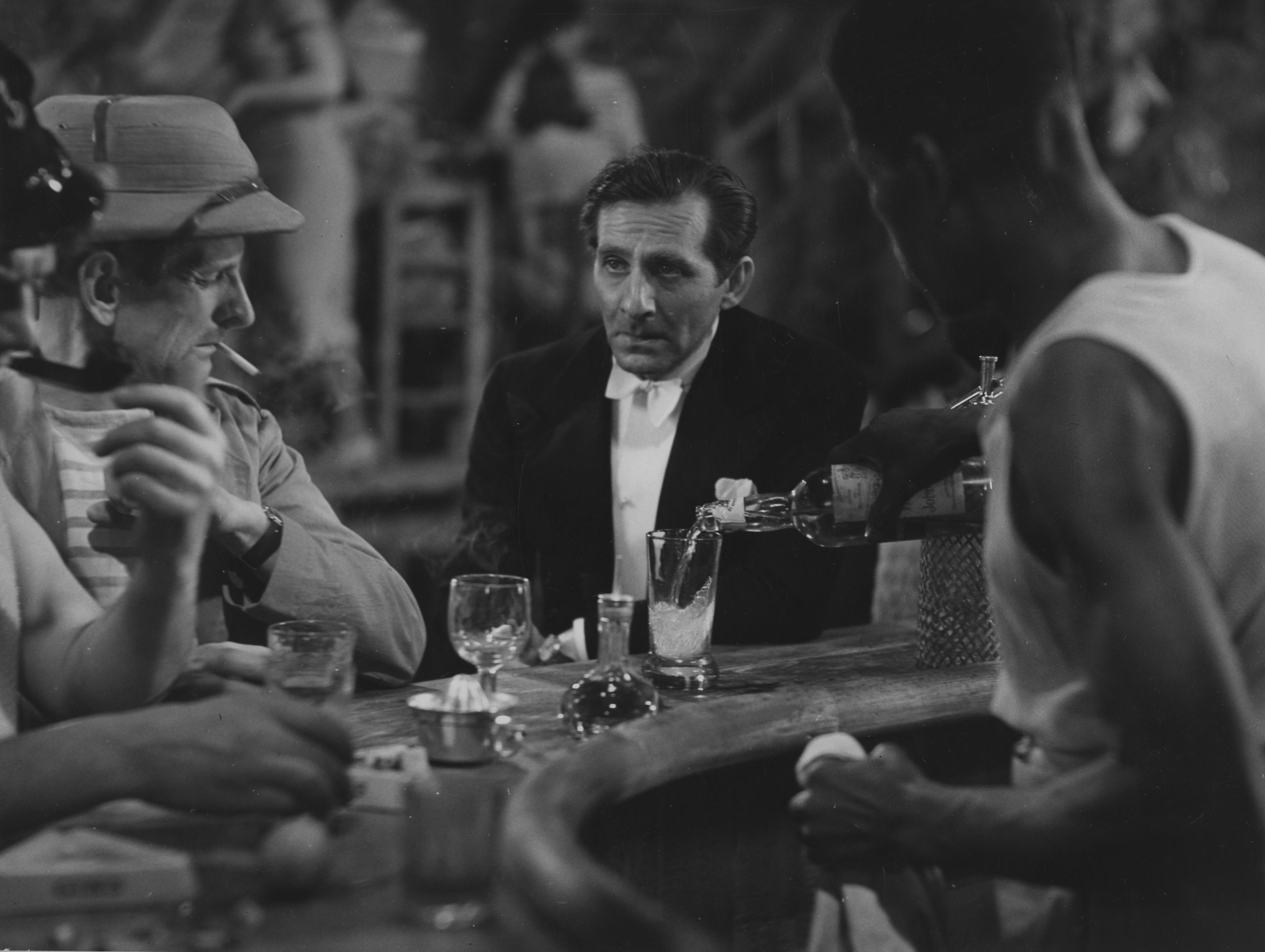
R.: Fëdor Ozep. S.: André Lang, dal romanzo di Stefan Zweig. Dial.: H.R.Lenormand. F.: Curt Courant. Mu.: Carol Rathaus. Scgrf.: Lazáre Meerson. In.: Jean Yonel (Holk), Valéry Inkijinoff (Amok/Maté), Jean Servais (Jan), Pierre Magnier (Président), Hubert Daix (Van der Tomb), Marcelle Chantal (Helen Haviland), Madeleine Guitty (servante de cabaret), Fréhel (chanteuse). P.: Pathé-Natan. L.: 2393 m. D.: 90’ a 24 f/s.
The films was prohibited for some time by French censors because of its plot.
“Even today his name does emerge in literary chronicles, when writers from Mitteleuropa are evoked: Stefan Zweig, a first-class author in the period between the two World War and a fascinating decadent personality. A Jew from Vienna, where he was born in 1881, he held a degree in philosophy, and started his literary career writing poems and texts where he still showed the strong influence of his models (Hoffmanstahl, Rilke, Kleist, Schnitzler). In reality only later would his vocation truly emerge, when, after having travelled a lot (his family was very wealthy) and stayed in France, England, Italy, Belgium, he could adapt his own style to these experiences. He was a friend of Romain Rolland, Verhaeren and Freud who introduced him to psychoanalisis. Harassed by Austrian police, Zweig took refuge in London and then in Brazil, which he had visited in 1936 during a congress of the Pen Club. He went there with his secretary, Charlotte Altmann, introduced to him by his wife Freiderike von Winternitz, a wealthy woman with a Catholic background and a strong personality. His life was haunted by fear, fear of being killed by Nazis even in Brazil, of being a failure, of ruining Charlotte, of being unworthy of the country he had chosen, or inadequate to its gaudy colours, its life-instilled violence. On February 23rd, 1942, a Monday, Stefan and Charlotte were found dead by their servants; they has ingested Veronal. They were buried in Petropolis, where their remains are still at rest.
Also in Italy Zweig’s work enjoyed a great success, in particular the collection of short stories, printed many times with the title Sovvertimento dei sensi.
Amok (1922), the novel brought on the screen by Ozep in 1934, tells the story of a doctor who in the Dutch Indies falls prey of Amok, madness, for a woman who will soon die while having an abortion. The doctor will kill himself by plunging into the sea together with the bier of the woman he loved. Freud, passion which destroys, madness, ruin, foreign countries are all major themes in Zweig’s work, and also all his anxieties”.
Sandro Toni