[MOVIE]
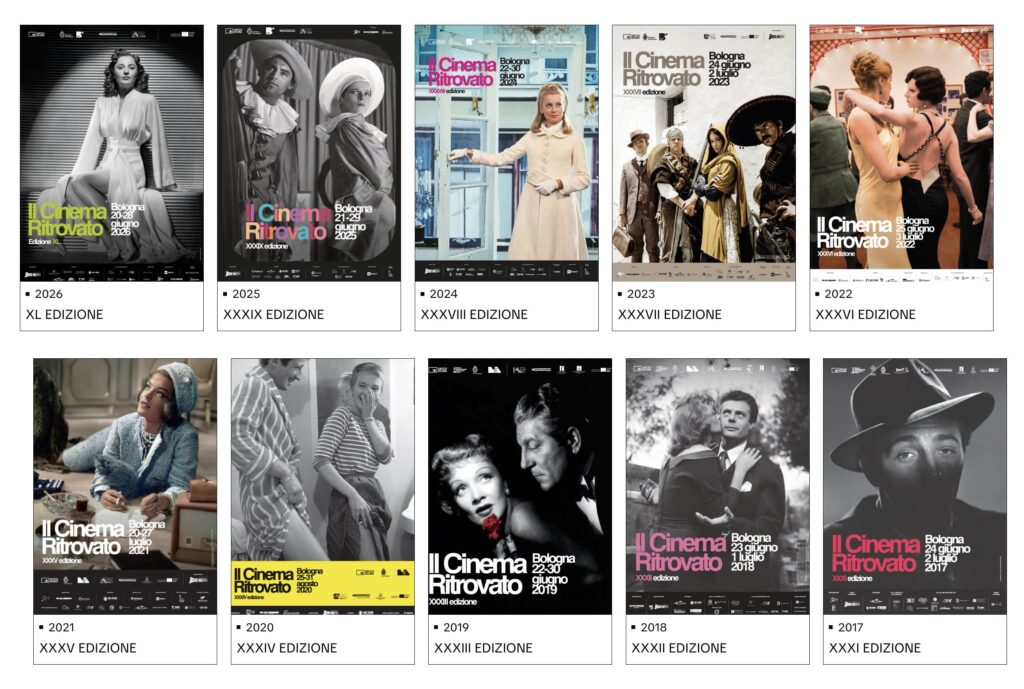
Edition History
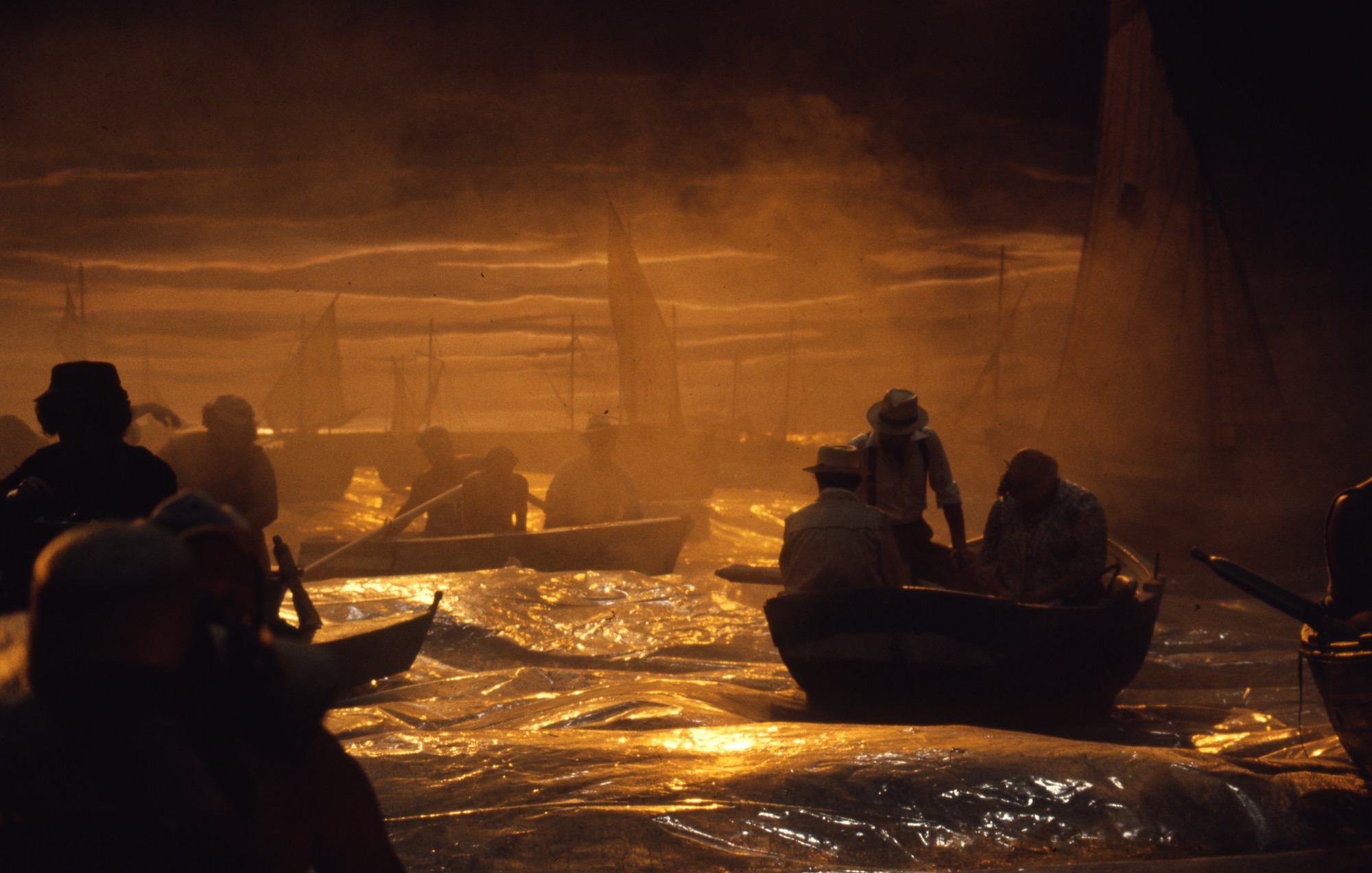
After the age of 50, Federico Fellini made two films about the cities of his life, Rome and Rimini. Made in close proximity to one another, the two movies ought to be considered as a pair. The screenwriters with whom Fellini recreated his past for each film were crucial figures, the Roman Bernardino Zapponi for Roma (1972) and Tonino Guerra from Romagna for Amarcord (1973). Roma is probably the greatest of Fellini’s forgotten films, while Amarcord is one of his most extraordinary works and the last movie he won an Oscar for (before winning another for lifetime achievement).
An oneiric abyss, according to Tullio Kezich, a film to love without hesitation. In fact, Amarcord is one of the movies filmmakers love most. Woody Allen recommends seeing it at least once a year, and Emir Kusturica claims it was his inspiration for making films.
Fellini was truly gifted at hiding the deeper motives of his work, but this time he concealed nothing: “If you put amare (to love) and amaro (bitter), core (heart) and ricordare (to remember) together, you get Amarcord.” Of course, as with Roma, remembering is the film’s core. In it, Fellini proves a theory of his own and of Italian auteur cinema: nothing is truer than what is entirely recreated. In this film, the recreation of his memory is perfect and could not be more true: in fact, not a single metre of footage was shot in Rimini or even Romagna, and none of the starring actors were from Romagna! Production and costume designer Danilo Donati displayed great talent and accuracy in Roma and Amarcord, proceeding by analogy and chasing a cherished but hazy memory. Its final effect is a distillation of truth to the beat of Nino Rota’s music, which plays on the themes of irony and sweetness in unison with the film.
The film offers a poetic treatment of big themes such as the fragility of life and beauty while following Titta’s memories across four seasons of one year. It is a film about Italy and its useless education based on rote memory and repetition, depicted with harsh humour, and about the ferocity and limits of fascism, in Italian cinema’s most accurate and definitive portrait of its miserable and squalid externalisation. An intimate film about the family and the desperate pursuit of normalcy. About the pain of adolescence, its rites and small delights. A film that is such a personal representation of adolescence as to be universal.
Gian Luca Farinelli
The reconstruction of a film score
Federico Fellini’s films rely heavily on Nino Rota’s compositions, and each cue gives the scenes structure, pace, meaning and a palpable feel. Some scenes are reversely built to accompany the music: Danzando nella nebbia, to name just one. Most Rota themes are deceptively simple, but the weight of the entire score relies on the craftsmanship of these perpetual tunes. We hear the Amarcord theme in almost every cue, and (nearly) every character shares them as if they were one singular protagonist – like a chorus of shared experiences.
There is only one theme that is character-specific, and much to my bewilderment, and disappointment, it was cut from the film. The cue Zio matto a vuoto is perhaps the most devastating piece of music Rota had ever written. A singular melody with no accompanying harmony, that goes right to the heart of the plaintive countryside scene. I do not know the circumstances under which the decision was made, but perhaps it would have caused more heartache than Fellini would want in this scene.
I was very fortunate to have a nearly complete original manuscript score, which supplied the basic material that eventually formed this restoration, plus the original master tapes of Rota’s selected takes. Although there was only one orchestrated score (incomplete), Rota recorded several variations of each cue in order to provide the best version for the film. The written score was definitely not the last word, as I could hear on the master tapes Rota himself making changes and suggestions for each take. It is from these sessions that I was able to modify (or sometimes discard) what was on paper, taking into account Rota’s verbal directions, and what ended up being on the final cut of the film.
The score to Amarcord is a testament to the intimacy of personal experience, however vicarious it may be. Rota is the musical embodiment of what Fellini certainly would have been himself if he were a composer.
My heartfelt gratitude to CAM Sugar for providing the original orchestrated score and several original Rota sketches, which were invaluable to this restoration.
Timothy Brock

courtesy of Cristaldifilm. Restored by Cineteca di Bologna at L’Immagine Ritrovata laboratory from the original camera negative. Funding provided by yoox.com and by Comune di Rimini, in collaboration with Cristaldifilm and Warner Bros. Special thanks to Sugar Music for producing the restoration of Nino Rota’s score
At over fifty, Fellini made two films about the cities of his life, Rome and Rimini. Made in close proximity to one another, the two movies ought to be considered as a pair. The screenwriters with whom Fellini re-created his past for each film were crucial figures, the Roman Bernardino Zapponi for Roma (1972) and Tonino Guerra from Romagna for Amarcord (1973). Roma is probably the greatest of Fellini’s forgotten films, while Amarcord is one of his most extraordinary works and the last movie he won an Oscar for (before winning the Oscar for lifetime achievement).
An oneiric abyss, according to Tullio Kezich, a film to love without hesitation. In fact, Amarcord is one of the movies filmmakers love most. Woody Allen recommends seeing it at least once a year, and Emir Kusturica claims it was his inspiration for making film. Fellini was truly gifted at hiding the deeper motives of his work, but this time he concealed nothing, “If you put amare(to love) and amaro(bitter), core (heart) and ricordare (to remember) together, you get Amarcord”. Of course, as with Roma, remembering is the film’s core. In it, Fellini proves a theorem of his own and of Italian auteur cinema: nothing is truer than what is entirely re-created. In this film, the re-creation of his memory is perfect and could not be truer: in fact, not a single meter of footage was shot in Rimini or even Romagna, and none of the starring actors were from Romagna! Production and costume designer Danilo Donati displayed great talent and accuracy in Roma and Amarcord, proceeding by analogy and chasing a cherished but hazy memory. Its final effect is a distillation of truth to the beat of Nino Rota’s music, which plays on the themes of irony and sweetness in unison with the film.
A film that poetically treats big themes like the fragility of life and beauty while following Titta’s memories across four seasons of one year. A film about Italy and its useless education based on rote memory and repetition, depicted with harsh humor, and about the ferocity and limits of fascism in Italian film’s most accurate and definitive portrait of its miserable and squalid externalization. An intimate film about the family and the desperate pursuit of normalcy. About the pain of adolescence, its rites and small delights. A film that is such a personal representation of adolescence as to be universal.
Fellini was a genius at getting actors to do their best, from Magali Noël (who replaced Sandra Milo at the last minute) to Ciccio Ingrassia, from Pupella Maggio to Nando Orfei to his youngest discoveries (Bruno Zanin and Alvaro Vitali), all of them dubbed without exception. For the role of the Prince (Umberto), whom Gradisca yields to, Fellini chose Marcello Di Folco (later Marcella), who would later become the president of the first Italian transsexual association.
With the collaboration of Cristaldi Film, Cineteca di Bologna retrieved over 180 boxes of outtakes and cuts, a treasure trove of information about how the movie was filmed, edited by Giuseppe Tornatore into a wonderful short film. The film’s restoration aimed at recovering Fellini’s dense, warm colors and was overseen by the film’s director of photography Giuseppe Rotunno and Gianfranco Angelucci, one of Fellini’s collaborators and an expert of his work.
Gian Luca Farinelli
Restored by Cineteca di Bologna with the support of yoox.com and the support of Comune di Rimini, in collaboration with Cristaldifilm and Warner Bros., from the original camera negative