[MOVIE]
Edition History
In a list of the most frequently occurring words in the titles of American films from the Forties and Fifties, the word ‘heaven’ would be ranked high up: meaning, almost always, a bitter paradise. What kind of heaven could ever welcome Gene Tierney, the evil, murderous female from the John Stahl film (Leave Her to Heaven)? And if Lubitsch’s secular touch allows Don Ameche to decide, in extremis, that Heaven Can Wait, while one last pair of beautiful legs cannot, the celestial censor has no pity for Deborah Kerr’s nun and Robert Mitchum’s marine, castaway and so troubled by each other on an island in the Pacific (Heaven Knows, Mr. Allison). The word shines more ambiguously than ever at the centre of this Douglas Sirk melodrama – and will not be overlooked by Todd Haynes, who in Far From Heaven will pay elegant homage to the film. “The studio loved the title. They thought it meant you could have everything you wanted. I meant it exactly the other way round. As far as I’m concerned, heaven is stingy” (from Jon Halliday, Sirk on Sirk).
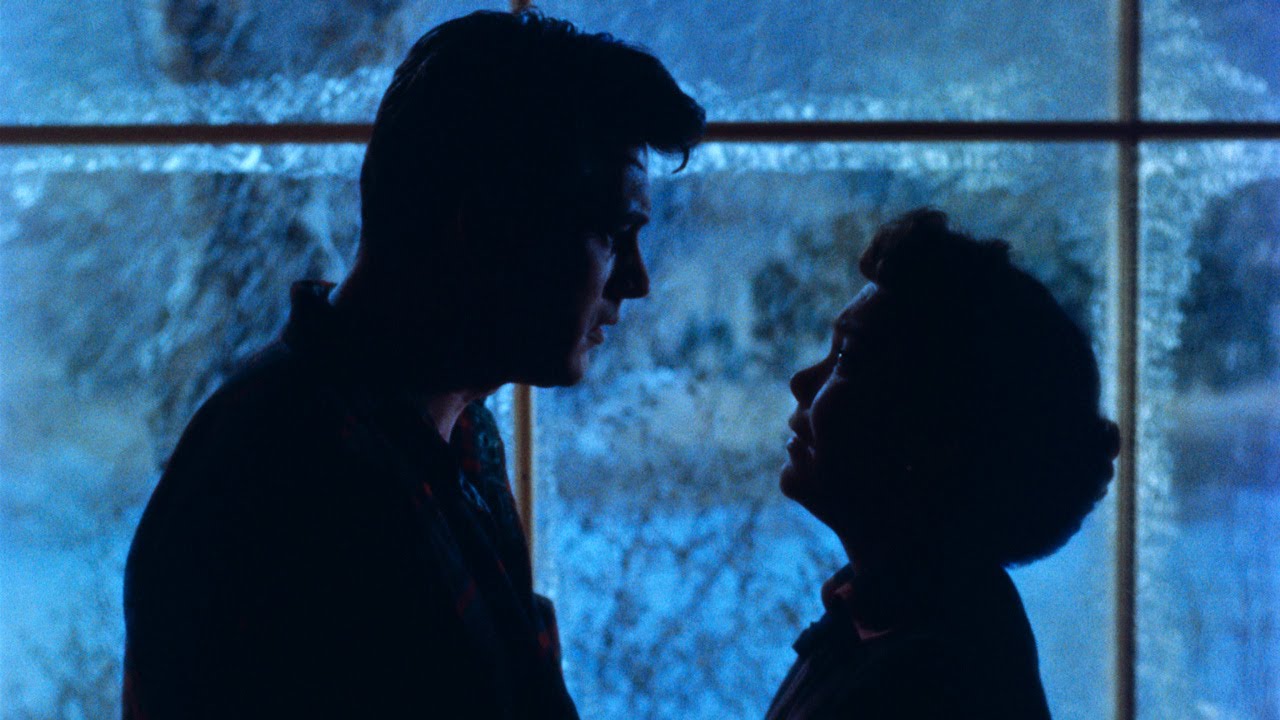
Stingy with everything, but not with colour. These films that call heaven into question are triumphs of Technicolor, lush or soft. Here, Russell Metty’s photography makes every hue of the Indian Summer vibrate, and even more so the foliage of Jane Wyman’s soul; she’s a widow, neither young nor old, heading towards a melancholic autumn that the sudden appearance of Rock Hudson tinges with golden hues. The bourgeois heaven forbids her a sentimental and sexual happiness condemned by a difference in age and status; her detestable children, to compensate for the loneliness, give her a television set: “All the company you want… right at your fingertips”. Jane Wyman, looking at her frozen reflection in the dark screen, sees which imitation of life is awaiting her and takes her own destiny in hand: aided by an occasional reading of Thoreau, and by an avalanche.
Drenched in the colours of nature, and in the American myth of innocence, All That Heaven Allows is a ruthless film. The traditional family (the flakiness of its values, its interwoven selfishnesses) is observed with quiet horror. Middle class houses are lavish sarcophagi without windows – while Rock Hudson’s old mill looks like the honest interpretation of an organic modernism in the spirit of Frank Lloyd Wright. So much so that outside its big, bright window, also heaven gives its blessing: an agnus dei shyly advances towards us in the form of a New England deer, “one of the most beautiful images in all of Sirk’s cinema” (Jacques Lourcelles).
Paola Cristalli

Per concessione di Universal Pictures. Vintage 35mm dye transfer Technicolor print from Eastmancolor negatives
In a list of the most frequently occurring words in the titles of American films from the Forties and Fifties, the word ‘heaven’ would be ranked high up: meaning, almost always, a bitter paradise. What kind of heaven could ever welcome Gene Tierney, the evil, murderous female from the John Stahl film (Leave Her to Heaven)? And if Lubitsch’s secular touch allows Don Ameche to decide, in extremis, that heaven can wait, while one last pair of beautiful legs cannot (Heaven Can Wait), the celestial censor has no pity for Deborah Kerr’s nun and Robert Mitchum’s marine, castaway and so troubled by each other on an island in the Pacific (Heaven Knows, Mr. Allison). The word shines more ambiguously than ever at the centre of this Douglas Sirk melodrama – and will not be overlooked by Todd Haynes, who almost half a century later, in Far from Heaven, pays elegant homage (almost a remake) to the film. “The studio loved the title. They thought it meant you could have everything you wanted. I meant it exactly the other way round. As far as I’m concerned, heaven is stingy” (from Jon Halliday, Sirk on Sirk).
Stingy with everything, but not with colour. These films that call heaven into question are triumphs of Technicolor, lush or soft. Here, Russell Metty’s photography makes every hue of the Indian Summer vibrate, and even more so the foliage of Jane Wyman’s soul; she’s a widow, neither young nor old, heading towards a melancholic autumn that the sudden appearance of Rock Hudson tinges with golden reflections. The bourgeois heaven, made up of friends with more wrinkles than smiles and country clubs ‘for members exclusively’, forbids her a sentimental and sexual happiness condemned by a difference in age and status; but as with most of Sirk’s oeuvre, numinous events will be on the lovers’ side. None of Sirk’s heroines, however, experiences such a perfect moment of desolation and deep personal revolt. An unforgettable scene: the detestable children, to compensate for the loneliness, give her a television set: “All the company you want… right at your fingertips”. Jane Wyman, looking at her frozen reflection in the dark screen, sees which imitation of life is awaiting her and takes her own destiny in hand: aided by an occasional reading of Thoreau, and by an avalanche.
Drenched in the colours of nature, and in the American myth of innocence, All That Heaven Allows is also a ruthless film. The traditional family (the flakiness of its values, its interwoven selfishnesses) is observed with quiet horror. The domestic spaces become a mise-en-scène of the bad and the good: the middle class houses are lavish sarcophagi without windows, Rock Hudson’s old mill looks like the honest and handcrafted interpretation of an organic modernism a bit in the spirit of Frank Lloyd Wright. So much so that outside its big, bright window, even heaven gives its blessing: an agnus dei shyly advances towards us in the form of a New England deer, “one of the most beautiful images in all of Sirk’s cinema” (Jacques Lourcelles).
Paola Cristalli

Vintage 35mm original distribution print made in 1956 at Tech London. Widescreen ‘flat’ film. 35mm dye transfer derived from Eastmancolor negatives
Per concessione di Universal Pictures