[MOVIE]
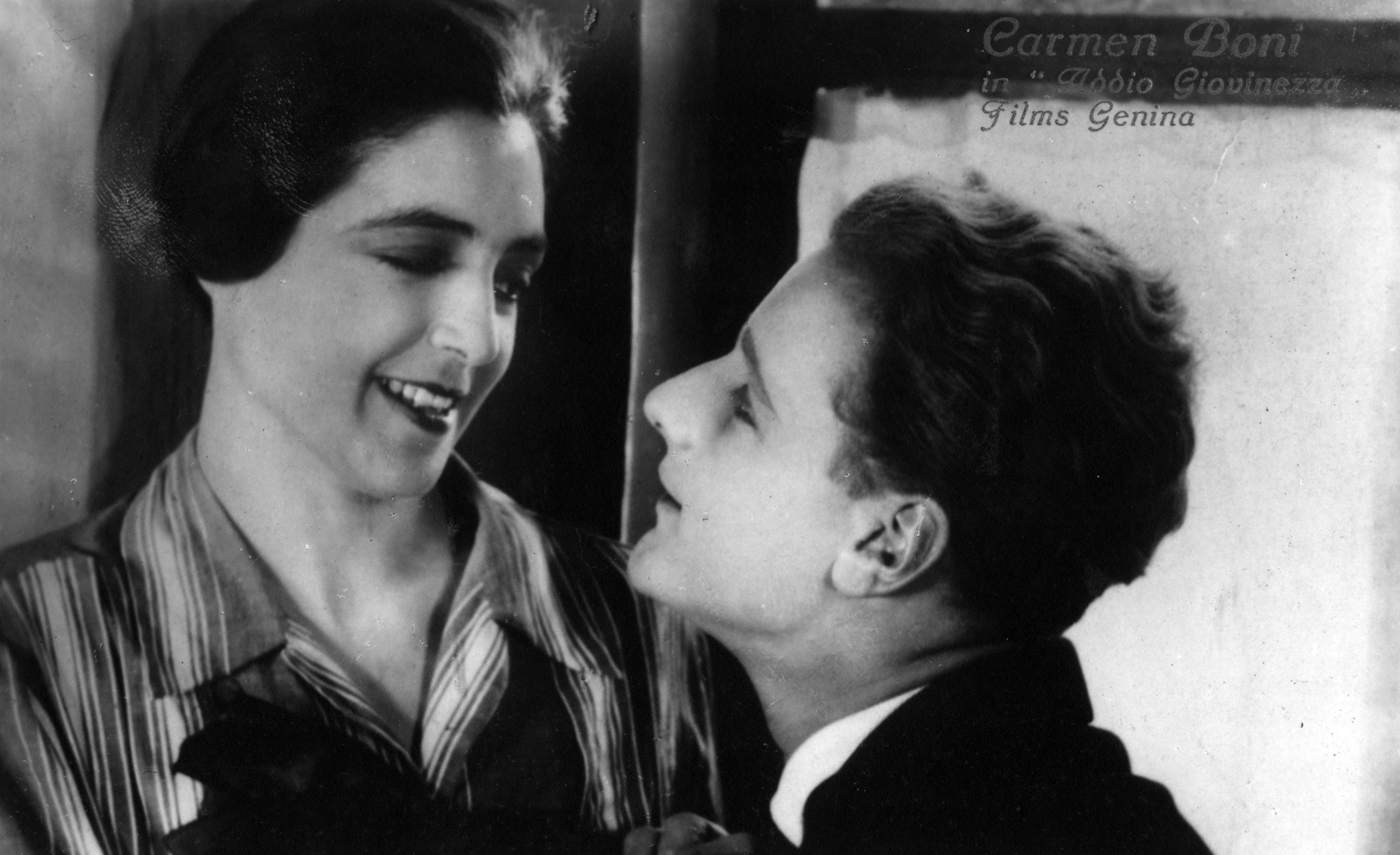
Sog.: dalla pièce omonima di Sandro Camasio e Nino Oxilia. Scen.: Augusto Genina, Luciano Doria. F.: Carlo Montuori, Antonio Martini. Scgf.: Giulio Folchi. Int.: Carmen Boni (Dorina), Walter Slezak (Mario), Augusto Bandini (Leone), Elena Sangro (Elena), Gemma de’ Ferrari (madre di Mario), Luigi Ricci (padre di Mario), Piero Cocco (Carlo). Prod.: Films Genina. 35mm. L.: 1658 m (incompleto, l. orig.: 2352 m). D.: 65’ a 22 f/s. Bn.
Edition History
This is the third film version of Camasio and Oxilia’s crepuscular play. It was preceded by two others for Itala Film (by Sandro Camasio in 1913 and by Genina again in 1918) and followed by a final version by Ferdinando Poggioli in 1940. In this instance, Genina moves the action to the late-Twenties, and it’s not just a matter of costumes and urban settings. We can glimpse traces of Italy’s transition to the Fascist era in the athletic arrogance of the youngsters in the park, or in the scene in which the bespectacled Leone rapidly changes seats in disgust when an African woman sits next to him on the train: this is merely a brief comic aside, but it reveals a racism that was gradually becoming institutionalised, in contrast to the more folkloric variety which had begun to appear in Italian cinema since the early 1910s (when, for example, Robinet had to face up to a ‘Negro King’ who arrives as part of a delegation in Rome and mistakes a film camera for a machine gun, as Denis Lotti reminds us in his shrewd overview of the phenomenon, “Immagine” 2011). Constrained by a story of edifying sadness and ideological good sense (the university students do not marry the seamstresses), Genina proceeds with some uneasiness and extends the student gags beyond their natural limits. However, there are still images and passages of great subtlety: the cross cutting between the despair of Dorina in her bed and the first secret encounter between Elena and the student; or her slight wince when she hears Mario closing his door, as he leaves to meet her rival – a good example of how ‘sound’ can be a major narrative function in silent cinema. It is a film resolutely and ironically not star-driven. Compared to the trepidation of Carmen Boni, in a rather conventional role, Elena Sangro is a femme fatale pushed to the point of self-parody, or at least of a critical self-awareness: free and brazen enough to search and enjoy a sexual adventure, she is also sufficiently disillusioned to know that if the game gets too hard it is better to look elsewhere. It is no longer the era of the Italian divas, nor is it yet the era of the dark ladies who, moreover, will never really find place in Italian cinema.
Paola Cristalli, “Cinegrafie”, n. 20, 1994, updated by the author

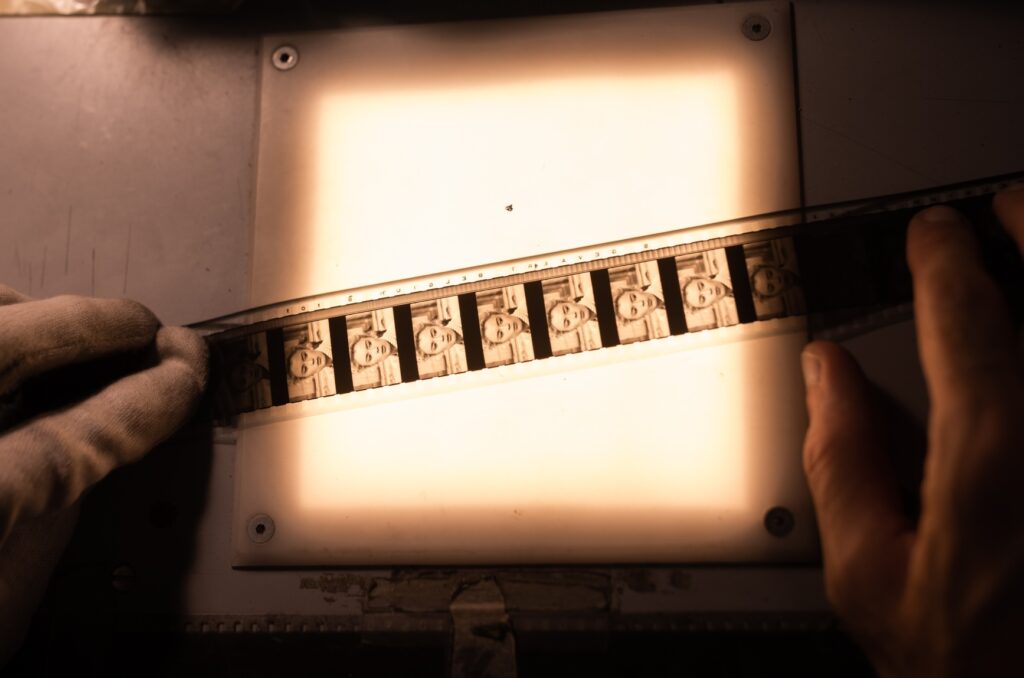
Restored in 1992 by Cineteca di Bologna and Cinémathèque de Toulouse with the contribution of the San Benedetto Filmfest from an incomplete nitrate positive conserved by the Cinémathèque de Toulouse and from positive material on safety stock drawn from an unedited nitrate negative conserved by Gosfilmofond in Moscow. The reconstructed version still has gaps in the final part.
Version made from an incomplete tinted positive copy with French intertitles conserved by the Cinémathèque de Toulouse and from positive material on safety film taken from an unedited negative without intertitles conserved by the Gosfilmofond of Moscow. The resulting reconstructed version is incomplete in the final part. “This was the third film version of the popular crepuscolar comedy of the same name by Camasio and Oxilia. Other versions were that of 1913 by Sandro Camasio for the Itala film company, that of 1918 by Genina, again for Itala and that of 1940 by Ferdinando Poggioli. In this, his second, version Genina moves the setting to the late twenties and not only is it a question of costumes and urban scenery. There are the signs of the growth of Fascism in Italy: bespectacled Leone finds himself beside a negress in the train and immediately changes seat in disgust, the sporting cockiness of the boys in the park. Confined to an edifyingly sad and ideologically reasonable (university types do not marry dress makers) story, Genina proceeds at a heavy pace, lengthens the student-like gags beyond any physiological limit and hardens the passages from one situation to another.
The film is resolutely and ironically not a star film: compared to the trepidation of Carmen Boni, in a rather conventional role, Elena Sangro is a femme fatale who is able to parody herself, or at least capable of critical reflection. She is free and impudent enough to look for and accept a sexual adventure, disenchanted enough to know that if the game gets too rough, it’s better to drop it for another. Divas were passé and the era of the dark ladies hadn’t arrived yet, come to think of it, they were never to find a place in Italian cinema”.
(Paola Cristalli, Cinegrafie, n.7)