[MOVIE]
Edition History
January 1919: Charlie Chaplin and Douglas Fairbanks hire three private detectives to gather information about a supposedly imminent merger of all the major distributors in the country, a multi-million-dollar monopoly that would notably reduce the power of individual directors and stars. A file preserved in the Chaplin archives reveals that the investigators set up base in the Alexandria Hotel in Los Angeles, where negotiations between producers and exhibitors were taking place; “Zucker [sic], S. Goldwyn, A.B. Schulberg and Tally” are among those taking part. Just before the agreement is about to be reached, Chaplin, Fairbanks and Pickford turn up at the Alexandria with D.W. Griffith and Bill Hart and call a press conference where they announce the future creation of United Artists. While this (highly novelesque) episode may have sped up the process, Chaplin nonetheless had to wait another four years before he could get out of his contract with First National and taste the kind of creative independence he had long desired. “I could not wait to achieve this goal. Every day I was filled with new ideas for a feature film.” When Chaplin was finally free, in 1923, he defied all expectations and made a melodrama. Without the Little Tramp. The public was so bewildered that the cinemas were forced to put up a notice to this effect in the box-office.
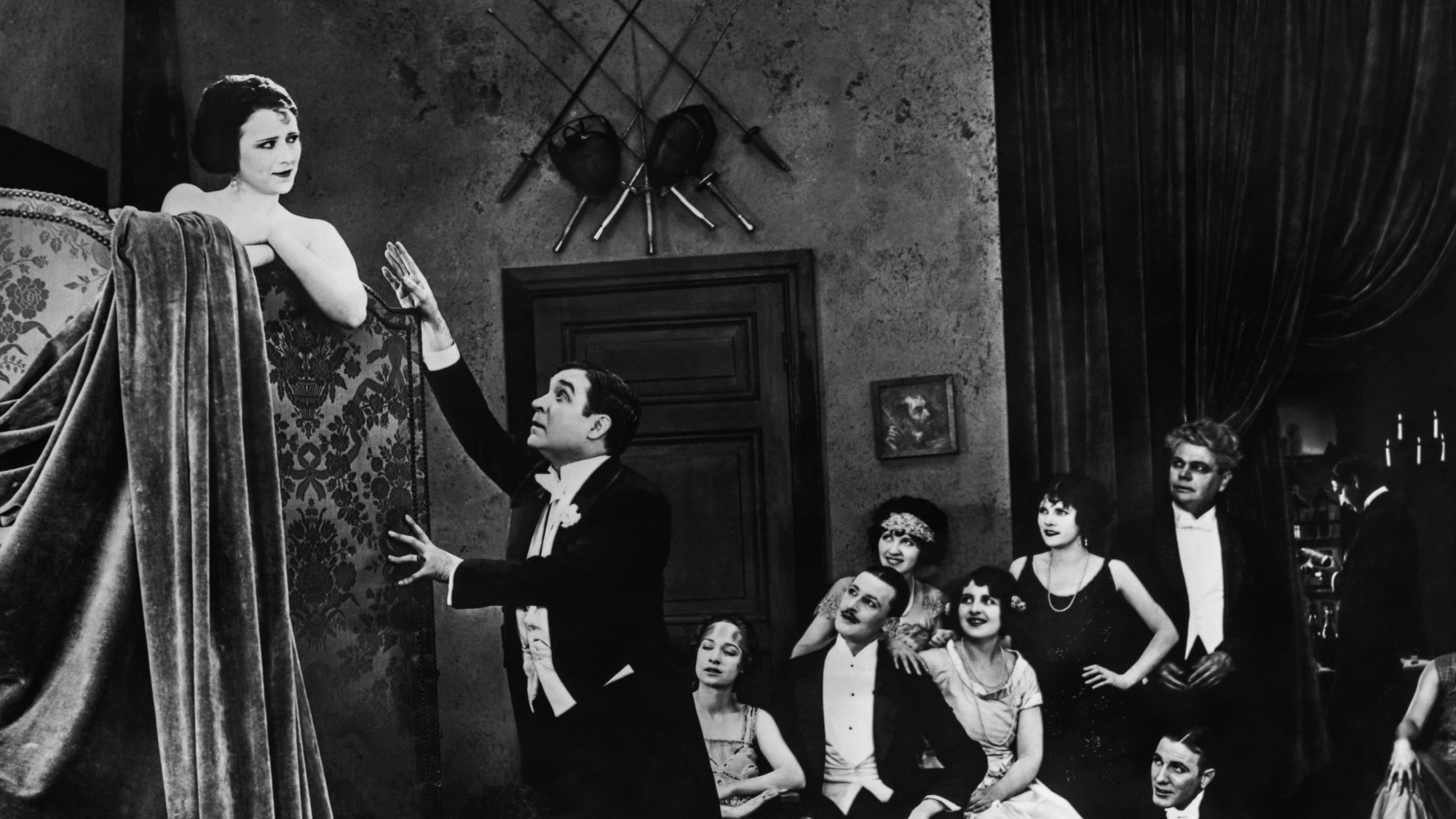
Created specifically for Edna Purviance, A Woman of Paris was inspired by the relationship between Peggy Hopkins Joyce, a dancer with the Ziegfeld Follies and well-known gold-digger, and the rich Parisian editor Henri Letellier (Menjou’s name in the first draft of the story), over which a young man who was in love with her took his own life. However, the film is anything but a morality play; it digs into and transcends the moral conventions and bourgeois respectability which Chaplin had already targeted in his comedies. It was praised by the critics for its sophisticated psychological analysis, “worthy of Ibsen or Maupassant”, and for the “Cartesian scepticism” which elevated its author to the status of “philosopher of human nature”. One hundred years after its release, it remains a Chaplin film ripe for rediscovery.
Cecilia Cenciarelli
The score for A Woman of Paris
When preparations for the rerelease of A Woman of Paris were being made in 1976, Chaplin’s health was in full decline. He had had a stroke and only with great effort had he managed to complete with the assistance of Eric James – the scores for the reissues of The Circus, The Kid, Sunnyside, Pay Day, The Idle Class, and A Day’s Pleasure: 226 minutes of fully orchestrated scores in only 6 years at an advanced age.
The 1977 score suffers primarily from the lack of material. One can only speculate that James used what little Chaplin was giving him at the age of 87 and tried to stretch the material as much as possible. James also drew from available unused compositions by Chaplin, originally written for comedies, which were most likely difficult to convert to dramatic situations. The assistance given in the orchestration by Eric Rogers – perhaps not as familiar with the Chaplin technique and style – might have been another contributing factor to a not altogether successful score, which made A Woman of Paris – Chaplin’s only melodrama – even harder to exhibit.
A few years ago, the Association Chaplin in Paris had miraculously recovered a series of over 19 hours of home and studio recordings. Dating back as early as 1951, these recordings are of Chaplin composing music on the piano; he subsequently gave them to his musical associates to transcribe but curiously, almost none of these recordings exist on paper. A large portion of it, though not all, is the music he was composing for Limelight, and the creative energy and vitality in his music are the same that come through in his films.
So, I carefully proceeded to create a new score for A Woman of Paris, by using both the 1951 recordings recently discovered, and reconfiguring some of the existing themes from the 1977 score, but more in the manner of previous Chaplin treatments of his own material. This experiment, I earnestly hope, will prove a worthy companion to A Woman of Paris which has for so long gone without proper musical support.
None of this would have been possible without the Orchestra Città Aperta, not only for offering to record this music, but also for saving the master recording from one of the most terrible earthquakes Italy has suffered in recent years.
Timothy Brock
Restored in 2022 by Cineteca di Bologna e Roy Export Company S.A.S. at L’Immagine Ritrovata laboratory in the framework of the Chaplin Project.
The score was performed by Orchestra Città Aperta and conducted by Timothy Brock. The 4K restoration used a second-generation full-frame dupe negative deposited by Roy Export S.A.S. at Cineteca di Bologna
The score
The dilemma of the 1977 version of the score to A Woman of Paris is a complex one, and for me, a source of mixed feelings. On behalf of the Chaplin estate, and on behalf of the composer himself, the primary objective has always been to restore the Chaplin scores as close (as I can come) to how Chaplin heard them himself. In the case of Modern Times, it was a painstaking 14 months of solid meticulous work, and City Lights and The Circus were much the same. However for A Woman of Paris, my 8th score restoration for the Chaplins, the goal was the same, but more than few educated guesses and well-thought-out liberties had to be taken. This was a very different kind of restoration.
When preparations for the re-release of A Woman of Paris were being made in 1976, Chaplin’s health was in full decline. He had had a stroke and it was only with great effort he had managed to complete the work required of him. Like the other re-issues up to this time, The Circus, The Kid, Sunnyside, Pay Day, The Idle Class, and A Day’s Pleasure, Chaplin had composed music (with the assistance of Eric James) for them all. 226 minutes of fully orchestrated scores in 6 years, from the composer’s age of 81 to 87. But for A Woman of Paris, the last film to be re-released, Chaplin’s health had deteriorated rather significantly, and due to the efforts of James and others, a “Chaplin” score had been created by means of using some previously un-used compositions and by James’ emulation of the Chaplin style, with whom he had a close musical relationship for some 18 years.
The 1977 score suffers primarily from one simple fact: the lack of material. One can only speculate that James, not wanting to “ghost write” a score in the name of Chaplin, used what little he had been given by Chaplin at age 87, and tried to stretch the material over the course of 82 minutes. Moreover, the available unheard compositions that James brought out were originally written for comedies, and were most likely difficult to convert to dramatic situations. Equally the assistance given in the orchestration by Eric Rogers, perhaps not as familiar with the Chaplin technique, did not follow the stylistic guidelines established by previously published trademark-Chaplin scores.
All of these understandable reasons, among others, were contributing factors to a not-all-together successful score. And although dozens of festivals over the last 30 years had expressed desire to exhibit A Woman of Paris, many others were reluctant. However, as it holds true for all Chaplin films, one must abide by
the credo that testifies to the complete art that is a Chaplin film. It must be his music and nobody else.
Enter 2003. The Association Chaplin in Paris had recovered and preserved a series of over 19 hours of miraculous home and studio recordings. Dating back as early as 1951, these recordings are of Chaplin composing music on the piano, which he subsequently gave to his musical associates to transcribe onto paper. A large portion of these recordings are devoted to music he was composing for Limelight (however one can hear the budding musical themes of not only Limelight, but also later recordings he made composing The Kid, The Pilgrim and The Circus).
The music Chaplin composed here, in the year 1951, is really the young composer at work, and these amazing recordings reflect that creative energy and vitality in his music that somehow always come through in his films. Yet Chaplin had composed so much music for Limelight that, due to one reason or another, much of it had been left out of the final cut. And along with Modern Times, The Great Dictator and Monsieur Verdoux, there are stacks of rejected musical material from Limelight in the archives in Montreux. But, curiously, almost none of the unused portions of Limelight on these recordings exist anywhere on paper. So from these early recordings, I established and transcribed the “unknown” compositions onto paper, totaling about 14 complete compositions, and 20 or more incomplete or nearly complete ones.
This, perhaps, was the answer. Music written while he was still at the peak of his composing abilities, music for his ONLY other serious dramatic feature, and music completely un-heard by the public before.
So in co-operation with the Chaplin family, I carefully proceeded to create a new score for A Woman of Paris, by using both the recently un-earthed dramatic compositions of 1951, and reconfiguring some of the existing themes from the 1977 score, but more in the manner of previous Chaplin treatments of his own material. The orchestration model I used was an exact duplication of the forces for City Lights, flute (piccolo), oboe (cor anglais), 3 clarinets, 3 saxophones, bassoon, 2 horns, 3 trumpets, 2 trombones, tuba, percussion, harp, piano (celesta) and strings, with the exception of the banjo, but with the addition of accordion (as in The Pilgrim).
This experiment, I earnestly hope, will prove a worthy companion to A Woman of Paris which has for so long gone without proper musical support. Although Chaplin could not have foreseen the difficulty which arose from the score during the last year of his life, I do hope it would be to his liking if he were here today. After all, that has always been the ultimate goal.
Timothy Brock

Print restored at l’Immagine Ritrovata in 2005 from a duplicate safety negative by Roy Export
Original score restored and conducted by Maestro Timothy Brock, performed live by Orchestra del Teatro Comunale di Bologna. World premiere