[MOVIE]
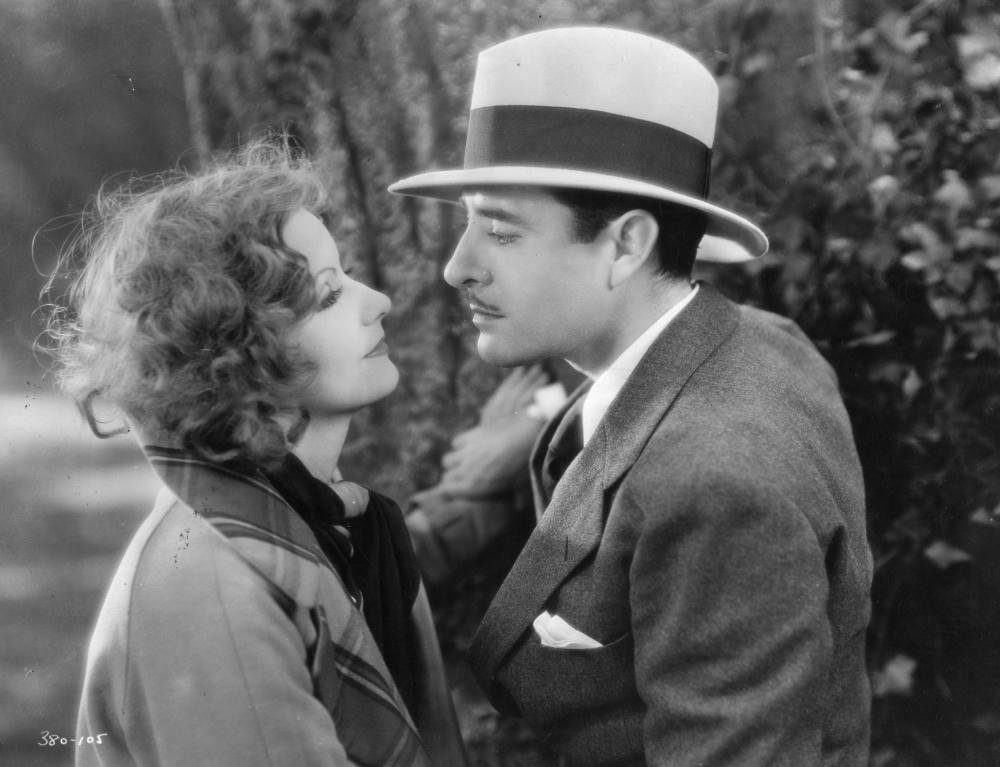
R.: Clarence Brown. S. e Sc.: Bess Meredyth, dal romanzo e dal lavoro teatrale The Green Hat di Michael Arlen. F.: William Daniels. M.: Hugh Wynn. Scgf.: Cedric Gibbons. Didascalie: Marian Ainslee, Ruth Cummings. In.: Greta Garbo (Diana Merrik), John Gilbert (Neville Holderness), Lewis Stone (Hugh Trevelyan), John Mack Brown (David Furness), Douglas Fairbanks jr. (Geoffrey Merrik), Hobart Bosworth (Sir Montague Holderness), Dorothy Sebastian (Constance). P.: Metro-Goldwyn-Mayer. L.: 2486m. D.: 96’.
Robert Israel ha reconstructed important film scores, performing at the Academy of Motion Picture Arts & Sciences and in programming of Last Remaining Seats at Los Angeles Conservancy. He lives in a Los Angeles, and participate regularly in film festivals taking place at the Bing Theatre in Los Angeles County Museum and at UCLA’s Melnitz Hall. Besides concerts, Israel and his orchestra recorded the accompaniments for films distributed by Sony Pictures Entertainment, Turner Entertainment and Kino International, in collaboration with Film Preservation and Associates. Robert Israel performed in United States, and in Europe, in festivals organized in Italy, Germany and France.
The Symphonic Orchestra of Emilia-Romagna Region, “Arturo Toscanini” was founded in 1975 as Emilia-Romagna’s permanent orchestra; in February 1982 it took its present name, for the 25th anniversary of the great orchestra conductor’s death. It is structured in such a way as to carry out both an autonomous concert-making activity, and to participate in the opera and ballet year season. It is composed of around 100 musicians, and it makes around 180 performances a year. The Orchestra participate on a regular basis in the Biennale Musica of Venice, the Festival Wien Modern, and many other Italian and international events. It has held concerts in some of the most musically prestigious cities in Europe and the United States.
“At the closing of one of the most felicitous careers that the world has ever seen, Talleyrand said: ‘Peut-être eut-il mieux valu souffrir’. At the top of her success, Greta Garbo is said to have confessed to a new Swedish friend: ‘I’m wondering whether my life has been all wrong’. These words were spoken just a few months ago. The biographical mask of this woman who has depicted in all her films the hard failure of one’s destiny would have to coincide with the actress’s usual role, that is an unhappy one, which until some time ago has been the role of mystery, of a secret life eluding every indiscretion. With a woman like Garbo, there is always the risk of falling into literature; but there are at least other words we would like to ascribe to her, the famous ones that Ismene addresses to her sister Antigone: ‘You bear a burning soul clouded in ice’. Greta is a modern Antigone, mixing fire and ice.
Her life? Three statements: ‘I was born in a house. I grew up like everybody else. I did not like school’.
Giacomo Debenedetti, L’ardua vita di Greta Garbo, Cinema, no. 8, 25/10/1936
Accompaniment music
“With regard to the music accompanying Greta Garbo films, her earliest films for MGM which would include The Torrent, The Temptress, Flesh and the Devil and Love, studio prepared scores were not done, but rather cue sheets from independent companies or the cue sheets prepared at theatres of the time. The inherent problems of published cue sheets are that they were designed to help musicians at smaller theatres (who did not have scoring skills), provide adequate accompaniment, but do not offer many important suggestions such as how to play a composition most effectively. Also, selections named in these cue sheets (depending on who the compiler was) are very often weak in the choices of music suggested. Cue sheets were by no means looked upon as complete legitimate scores unto themselves, but rather as a very basic foundation which could easily be improved upon when accompanying a silent film. Musical selections would be listed by title and composer with a cue given as to where the music would start, but only an approximate timing would be given regarding a specific cue. Other Garbo films which include A Woman of Affairs, The Mysterious Lady and Wild Orchids had scores prepared and recorded for theatres equipped with sound.
In the case of A Woman of Affairs the piano/conductor score by William Axt was located in the Turner Vaults and it is this ‘Original’ score which is being presented with orchestra. This score represents a fine exemple of a thoughtfully prepared work with great consideration to musical details. Themes have been carefully selected, variations on those themes have been composed and original music has been composed for this production. Stylistically, this score is typical of the music being prepared by studios in the late 1920’s. Since this score was prepared for recording use, and there is no document showing that it was circulated as a published score with the film, it is safe to say that this is the first public performance of this score since the film’s release in 1928”.
Robert Israel
The film
Garbo told New York critic, Mordaunt Hall, that A Woman of Affairs was her favourite silent film role. Critics have mentioned her performance in one particular scene as one of the most unforgettable of the silent era. Alexander Walker, in his book Garbo (Wiedenfeld & Nicholson, 1982) writes: “The film would be worth treasuring even if it contained nothing else exept the hallucinatory scene in hospital, when Garbo it visited by John Gilbert. Suddenly, Garbo appears at the doorway and advances towards the bouquet he has brought, seeing only the flowers, everything else being unfocused. Sweeping up the flowers, she presses them to her body like a woman with her lover, plunges her face deeply into them, inhaling strength from them, and finally bears the bouquet back to her room pressed close to her cheek like a new-born baby in that hospital setting. It is one of the greatest transformation effects in Garbo’s repertoire.
A Woman of Affairs was adapted from Michael Arlen’s book The Green Hat. The book had been published in London and New York in 1924 and, thanks to its startling subject matter, became an international sensation. The MGM reader, Nina Lewton, reported that the book was sordid and filthy and entirely impossible for screen consideration. MGM acquired it for $50.000. The book’s heroine, Iris March, was described as a “nymphomaniac”. It was prominent on the list of books banned by the Hays office.
Irving Thalberg said that the problem with the picture was one word-syphilis. But he was confident that if that word was changed, they stood to make millions.
Although MGM did not have an untarnished reputation with the censor. The Green Hat was allowed, subject to important conditions. Thalberg was obliged to change a great deal more than one word. The title had to go. It became A Woman of Affairs. The original title could not even be mentioned in the author’s credit. The names of characters were all changed. Iris March, became Diana Furness. In the novel, Iris said of her husband that “he died for purity”. Hays, who lived for purity, found this phrase too graphic, so in the film he dies “for decency”.

Original score by William Axt (1929), reconstructed and conducted by Robert Israel,
Orchestra Regionale dell’Emilia-Romagna, Arturo Toscanini