

Film notes
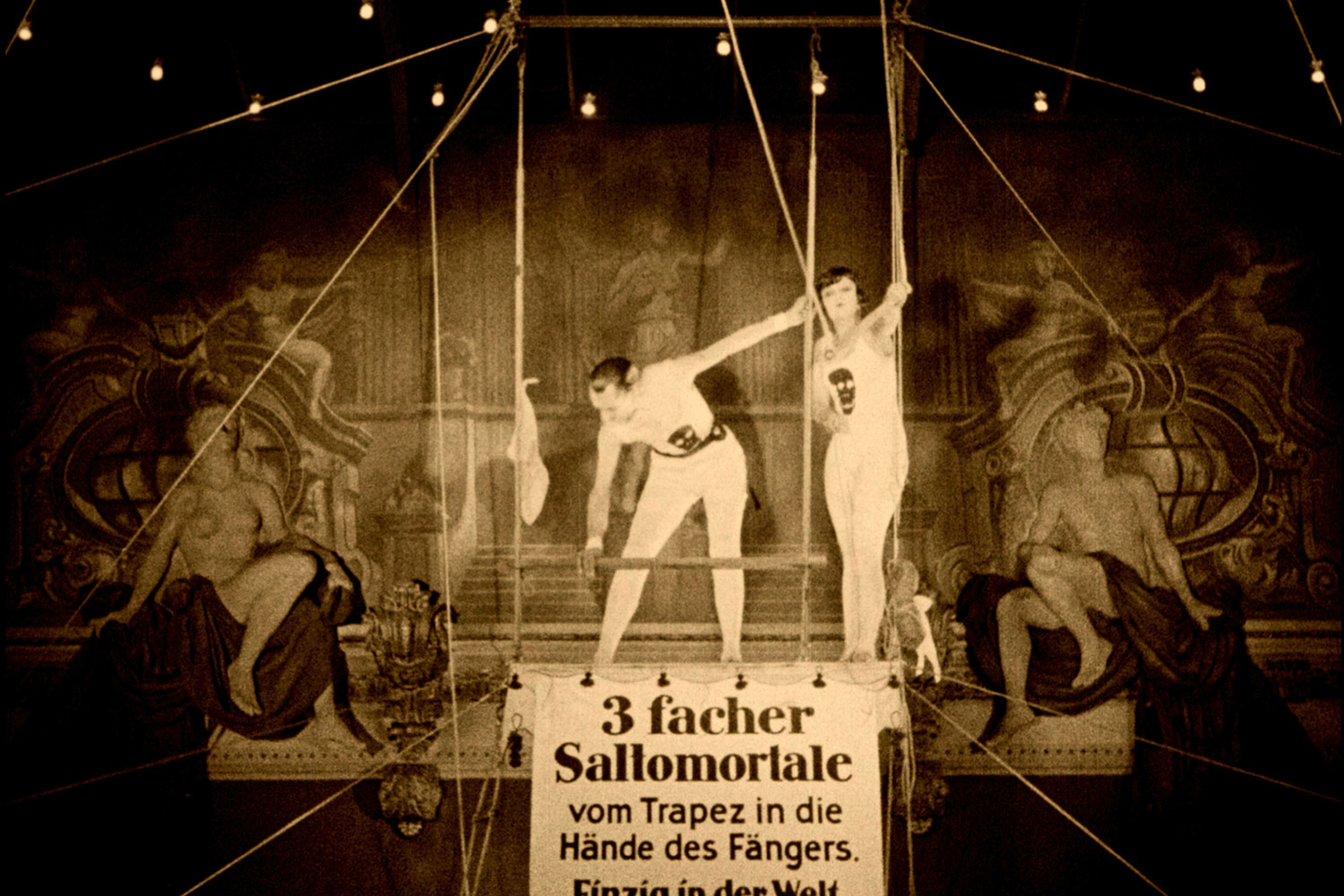
The source material on which Variety is based – Der Eid des Stephan Huller (The Oath of Stephan Huller) – was published in 1912. The material was pure pulp fiction and a prime example of the widespread trend of emotional and sensationalist literary kitsch so predominant at the turn of the century. Two movie versions were made of it in the years after publication, but by the 1920s this kind of literature had fallen into gracious oblivion. The 1925 movie, by Ewald André Dupont, which borrows its motifs from this novel ranks among the most prominent cinematic works produced during the Weimar Republic era. Variety’s international box office success was Dupont’s ticket to Hollywood. It was also due to the then still sensational appeal of a melodramatic love triangle between acrobats around which the plot revolves. Yet its film-historical significance, and timeless appeal to today’s audiences, have different reasons: its directorial finesse, systematically translating the plot into the silent movie language of expressions and gestures, and virtuose camera work which conveys the emotional turmoil in the form of sensual sensations and visual vertigo.
Set as the personal account of a convicted murderer, the plot is one long flashback of a jealousy-ridden conflict between trapeze artists, which reaches its thrilling climax at dizzying heights. However, the inevitable tragic turn does not occur in front of the audience beneath the starry ceiling of Berlin’s Wintergarten Theater, but in an uneven duel between the cuckolded Boss (Emil Jannings) and Artinelli (Warwick Ward) over the beautiful Berta-Marie (Lya de Putti). In a movie, overflowing with intriguing visibility, which kindles the audience’s curiosity like nothing else; by a cascade of innovative camera effects, suggestive props, artistic performances and erotic eye and body contacts, the homicidal act eludes the vaudeville audience’s view and curiosity as the fighting men descend to the floor while the camera, unchained throughout the rest of the movie, rests in position undeterred. The movie audience sees but an arm suddenly going limp and dropping a knife, before the hulky figure of the victorious Boss rises above his slain opponent, rendering it a distinctive ellipse. It signalizes less an act of subjective suppression in the murderer’s memory, but rather a moment of moral reflection of the drama which has been captivating the viewer’s minds up to that point.
Michael Wedel