


Film notes
What, precisely, is the theme? It is a river – Titas. Our East Bengal has a river-based civilisation. I do not know how much of East Bengal you have actually seen, or into what depths of its life you have really entered, but I went deep into its life. Titas is a river, it is a sustaining force. The river is dying – and one day it dried up and the island that raised its head belonged no more to the fishermen. The peasants then came to the forefront… everything is shattered down. My hint at the end is at the new order, the new life that is struggling to be born …Individuals are mortal but humanity is immortal.
Ritwik Ghatak, Arguments/Stories, Screen Unit, Bombay 1985
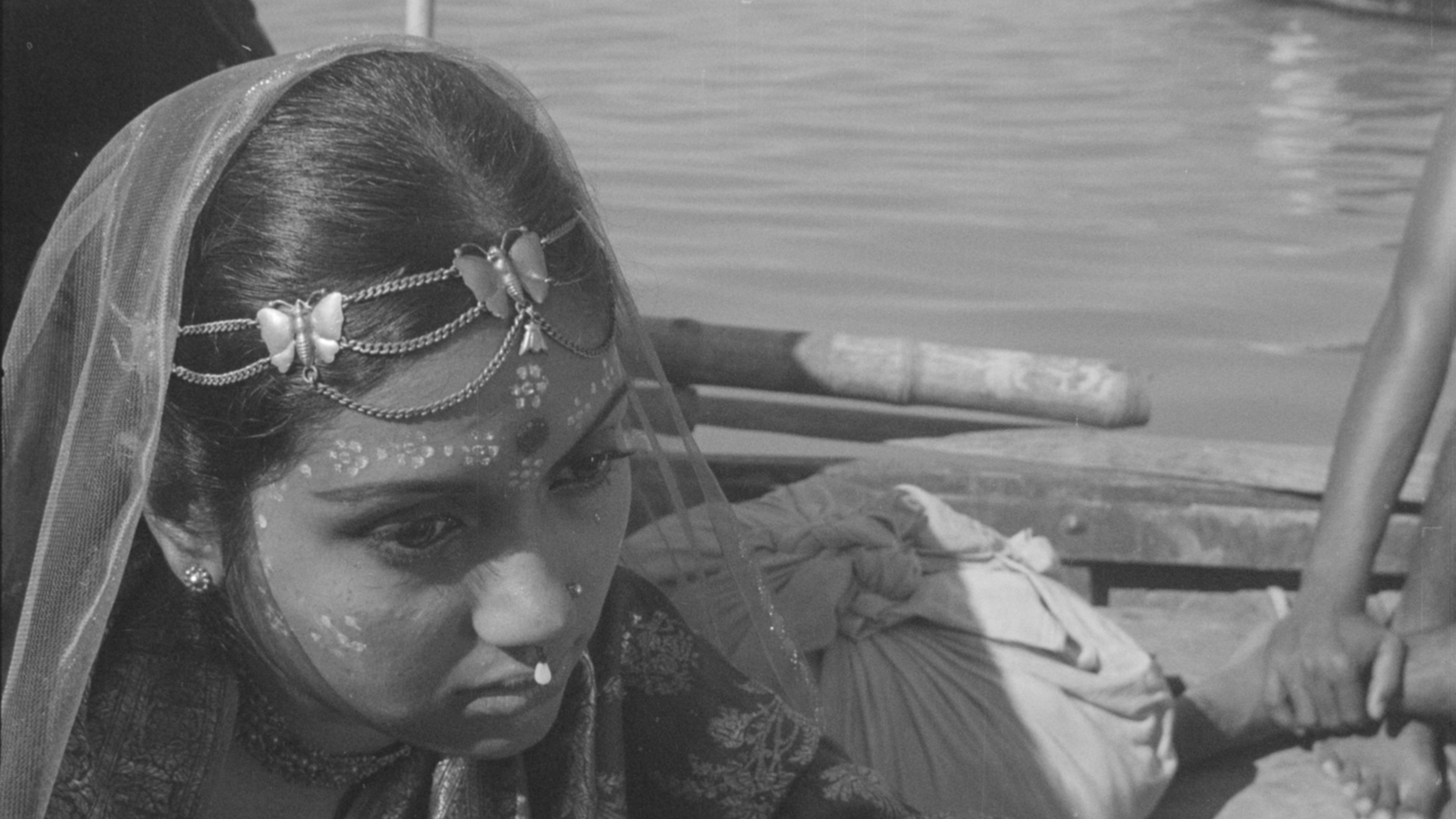
Based on the Bengali classic novel of the same name by Adwaita Mallabarman, Titas Ekti Nadir Naam is a poignant, lyrical elegy to the passing of a way of life that follows the ebb and flow of the Malo fishing community whose existence, survival, and traditions are deeply intertwined with the Titas River. Set in pre-Independence East Bengal (now Bangladesh), the story is pure melodrama, a form that Ritwik Ghatak made unmistakably his own, beginning with the marriage of a young fisherman, Kishore, whose bride Rajar Jhi is abducted the day after their wedding night, on their journey home, setting off a chain of separation, loss, and wandering that spans years. Ghatak builds the narrative out of multiple, loosely connected storylines in an episodic structure that jumps across time and space, shifting across different characters and even across generations as their lives intersect indirectly. Scenes often feel like fragments or memories placed side by side and characters appear and disappear without explanation. What binds these strands is the river connecting disparate stories into a collective narrative that flows and pauses like a poem. As always, the film is an allegory of the trauma of Partition. Ghatak repeatedly returned to themes of rupture, displacement and fragmentation of identity and community in his work. As the narrative expands in the film across multiple characters and generations, it portrays the gradual disintegration of the community under social, economic, and environmental pressures. The drying of the river ultimately mirrors the collapse of their way of life, turning the film into a haunting meditation on memory, displacement, and cultural erosion.
Shivendra Singh Dungarpur