Film notes
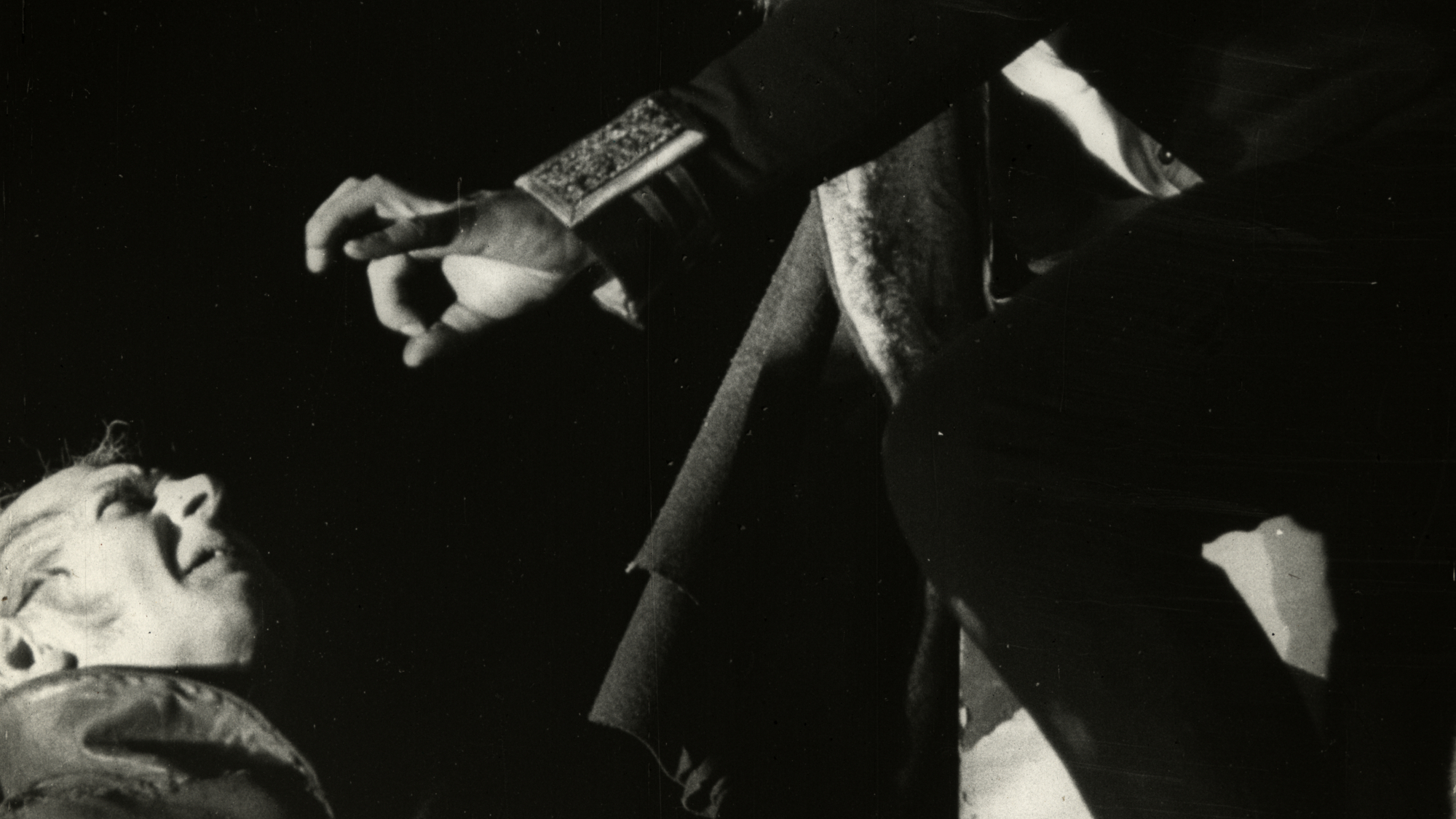
Alongside F.W. Murnau’s The Last Laugh (1924), Šinel’ is arguably the greatest silent-era film parable on the age-old adage “clothes make the man”. Adapted from two short stories by Nikolai Gogol, the plot centres on a timid, downtrodden clerk, whose life seems to turn around after he purchases a lavish overcoat. The film was the fourth effort by Leningrad-based duo Grigori Kozintsev (1905-1973) and Leonid Trauberg (1902-1990). The pair, who both hailed from the part of the Russian Empire that is now Ukraine, met at a young age and shared a passion for American serials and comedies. In 1921, together with other like-minded individuals, they founded the avant-garde theatre group “Factory of the Eccentric Actor” (abbreviated to “FEKS”), later venturing into cinema in 1924 with The Adventures of Oktyabrina, followed in 1925 by the light children’s comedy Mishki versus Yudenich. These early efforts, both considered lost, proved unsuccessful, and as historian Jay Leyda notes, “It was not until 1926 that the style which we now identify as peculiar to the collaborations of Kozintsev and Trauberg began to develop”. This style, heavily influenced by contemporary German cinema, was aided by the addition of cameraman Andrei Moskvin (1901-1961) to the FEKS team starting with The Devil’s Wheel (1926). Of Moskvin’s work on Šinel’, Leyda writes: “Andrei Moskvin’s photography, as romantic or grotesque as the scenes call upon it to be, maintains the cloak’s character as a fetish, observing the clerk with heroic and powerful camera angles so long as he is wrapped in it, and photographing him mercilessly from above after it is taken from him.” Unfortunately, the full extent of Moskvin’s contribution to the visual aesthetic of Šinel’ has been marred by the poor quality of the prints available until now. George Eastman Museum’s new restoration gives us an opportunity to see the film with new eyes.
Oliver Hanley