

Film notes
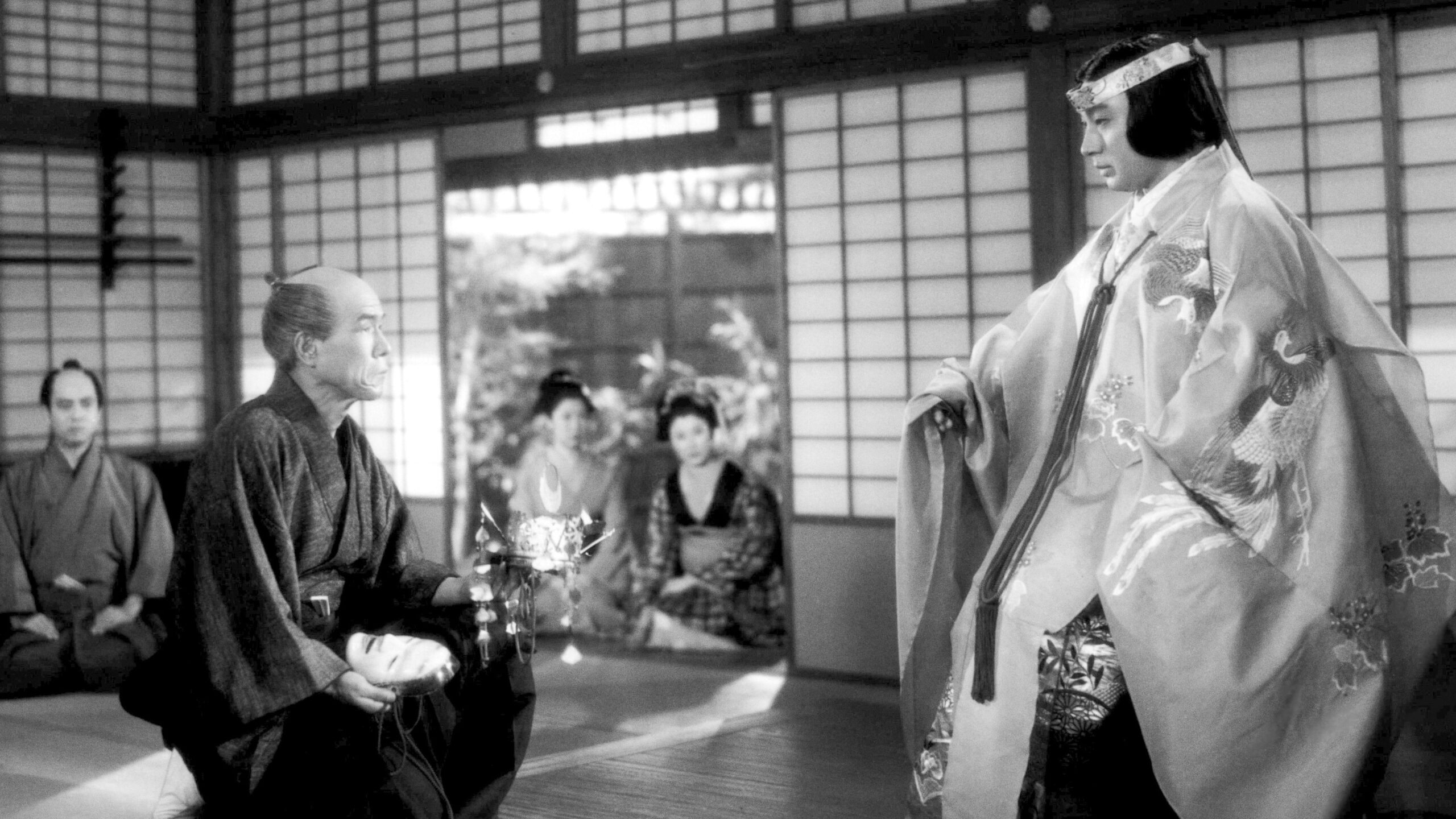
In Edo (the future Tokyo) in 1848, a family of Noh actors prepares for an isseidai kanjin-no – “once-in-a-lifetime benefit performance” – a prestigious undertaking that took place only once per generation and was normally reserved to the Kanze school (the most eminent of the several schools of Noh theatre). Historically, the (second most eminent) Hosho school was invited to stage an isseidai kanjin-no only twice, so it was an occasion of great importance. Ito and co-screenwriter Sumie Tanaka dramatise the difficult relationship between the head of the family and school, Yagoro Hosho, and his teenage eldest son, Ishinosuke, who is expected eventually to succeed him, but who chafes at the strict discipline required to master the art of Noh. Ito aimed for maximum authenticity, and two members of the Hosho family were brought on board as artistic supervisors. The film was based on a novel, Hatsukaminari (“First Thunder”) by Takashi Matsumoto (1906-1956), originally published in a magazine edited by Ito’s mentor, theatre and film director Kaoru Osanai. Best known as a haiku poet, Matsumoto had himself been born into a distinguished family of Noh actors, and had acted as a child, before illness obliged him to abandon a stage career. “Kinema Junpo” critic Ichiro Ueno expressed discomfort with the conservative elements of the film’s narrative, particularly its apparent endorsement of hereditary succession. “One cannot help feeling,” he wrote, “that Daisuke Ito has at last grown old.” Yagoro Hosho and his wife are played by two of the leading lights of Japanese cinema, Kazuo Hasegawa (1908-1984) and Kinuyo Tanaka. But Ueno singled out for praise the “natural quality” of the 13-year-old Masahiko Kato (1940- 2018), who plays Ishinosuke. He too was born into an artistic family as the grandson of silent film pioneer director Shozo Makino and the nephew of jidaigeki specialist Masahiro Makino. His parents, brother, aunt and uncle were actors. After several child roles, he graduated to starring parts under the name of Masahiko Tsugawa, and pursued a successful film and television career until his death.
Alexander Jacoby e Johan Nordström