
Film notes
“I’m crazy about riding and dance”, Hessling told an interviewer for “Minerva” in April 1926, the month Renoir’s Nana would be released with Hessling in the title role. “Right now, I’m studying classical dance, but I’m waiting for the return of negro jazz to Paris so I can dance the exotic dances”.
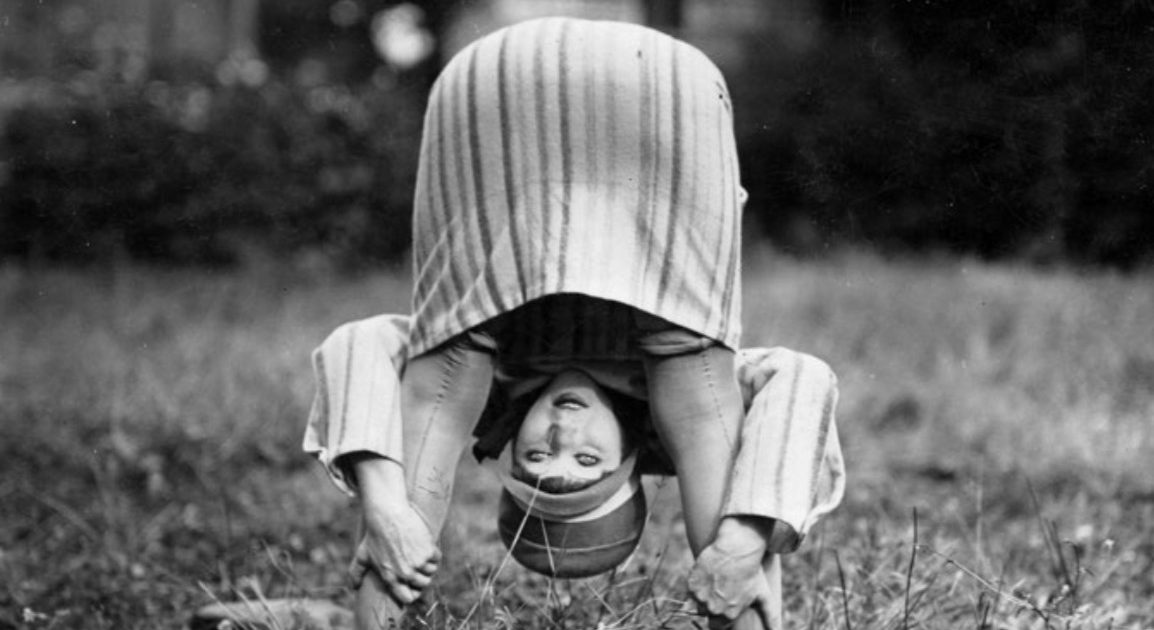
Sur un air de Charleston and La Petite marchande d’allumettes show Hessling performing opposite kinds of dance. In Charleston she shows off athletic skills, whereas in La Petite marchande d’allumettes she moves with the delicate grace of a balletic mime, every gesture defining her character in a changing fairytale landscape.
Nothing can explain the strangeness of Sur un air de Charleston, including Renoir’s claim that he might as well do something with film stock left over from Nana. Was it Jacques Becker, American jazz connoisseur and Renoir’s close friend for years before he became his assistant director, who persuaded Johnny Hudgins to join this racial role-reversal fantasy? Hudgins, an African American dancer with the Revue nègre in Paris, plays an African scientist who crosses the skies to find Paris in ruins and the scantily dressed Hessling. With non-sexual curiosity uniting them, she demonstrates the Charleston and Hudgins, in a suit and minstrelsy blackface, joins the jazz dance. After three days, the film was left unfinished, without the music written for all that dancing. According to Renoir, there were no intertitles.
La Petite marchande d’allumettes is a perfect film, typically Renoirian in the way Andersen’s fairytale turns even darker, as Renoir often does in his 1930s films. In the original, a little girl is doomed by poverty and indifference, unable to escape the freezing cold. When she lights matches to warm herself, images appear that delight her. In the second part of Renoir’s version, Hessling crosses a white background threshold into happiness cut short by Death, killing the toys that have come alive for her. Two horses gallop across the sky racing for her life, but the soldier trying to save her loses. Death takes her body and we return to some kind of reality. Renoir loved discovering what he could do with Panchromatic film and home-made special effects with cameraman Jean Bachelet, technical wizard Raleigh and co-creator Jean Tedesco, using the attic of Tedesco’s Vieux Colombier theater. According to Renoir, the film was meant to be shown without intertitles.
Janet Bergstrom