Film notes
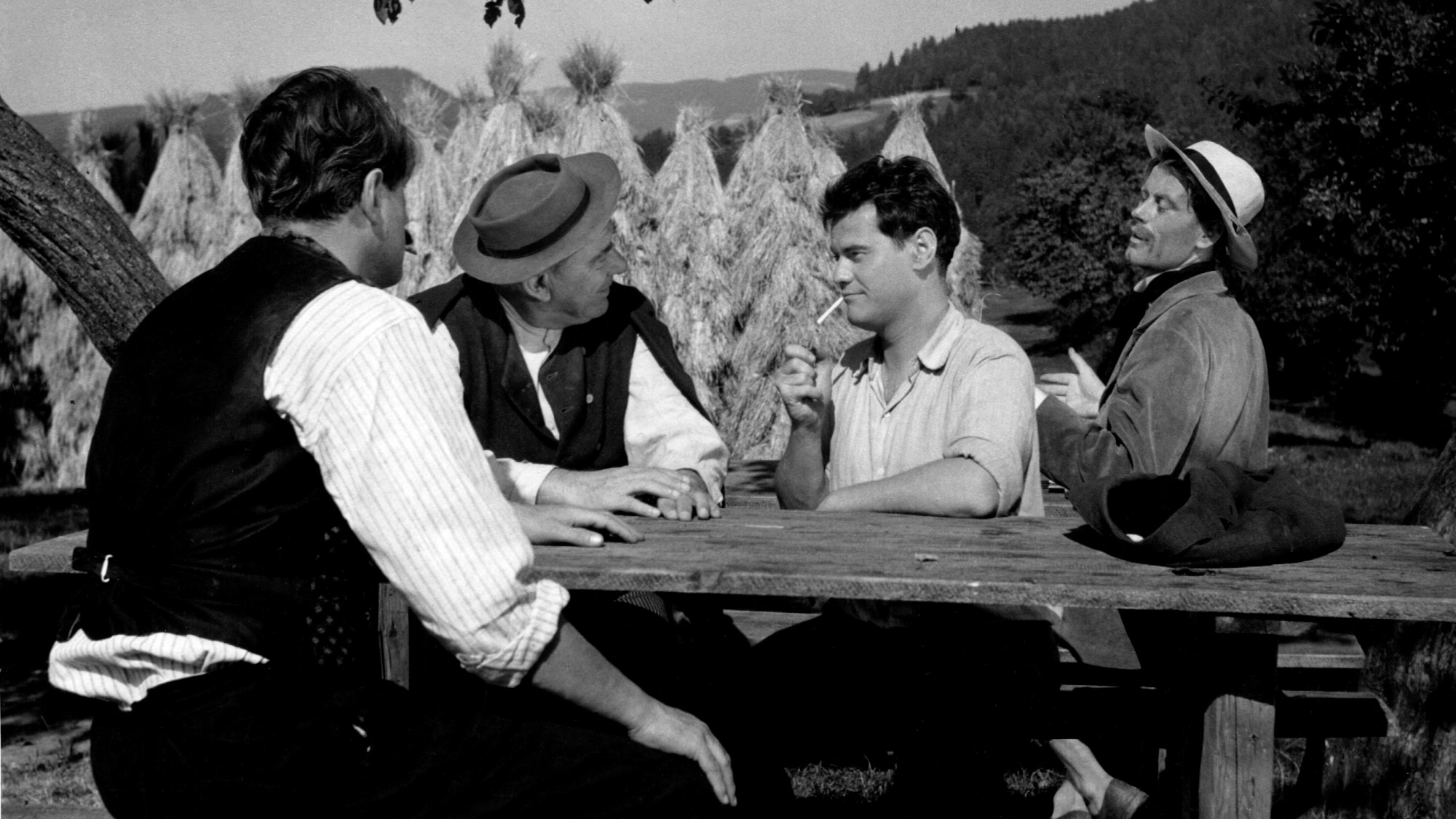
No other film can better illustrate how the emergence of the Black Wave, or modernism, in Yugoslav cinema cannot be separated from the history of Yugoslav cinema in the 1940s and 50s. And it is significant that Dušan Makavejev considered the final story of Tri zgodbe to be among the early releases that most influenced him. As with all New Wave cinema, even that in Yugoslavia, it is sometimes possible to criticise a certain arrogance in emphasising the originality of a generation. (We can see how a great veteran such as Vojislav Nanović has been overlooked in Serbian cinema, in reality better associated with the pathos element that Mića Popović and Miroslav Antić bring to the new cinema, and we remember unfortunately the shameful expulsion of the ‘mediocre’ Marijan Vajda.) However, in Slovenian cinema, the transition from the postwar production of Triglav film to that of the new Viba film, cannot deny the inspiration of what came before it, although a more poetically modern approach is evident in the works of Matjaž Klopčič, Boštjan Hladnik and Jože Pogačnik. The presence of an innovative production manager such as Dušan Povh in the last story of Tri zgodbe overcomes any rigidity in the “realistic” literary sources of the three stories. The film becomes a restless questioning of the national landscape itself, with hostile rivers (as in the contemporary Slovenian masterpiece by Czech František Čáp Trenutki odločitve written by Croat Branko Belan), while in other Slovenian films it is the lakes, mountains, and shoreline (in France Štiglic’s masterpiece, Dolina miru, Valley of Peace) that point to the problematic relationship of man with the landscape he lives in, which goes beyond ideological or national issues. The vulnerability of all the characters in Tri zgodbe and in particular the fragile beauty of the female figures provide the traditional school of filmmaking of Kavčič, Pretnar and Kosmač with variations on a melancholic theme bordering on the gloomy, freely echoing Duvivier and Clouzot.
Sergio M. Grmek Germani