Film notes
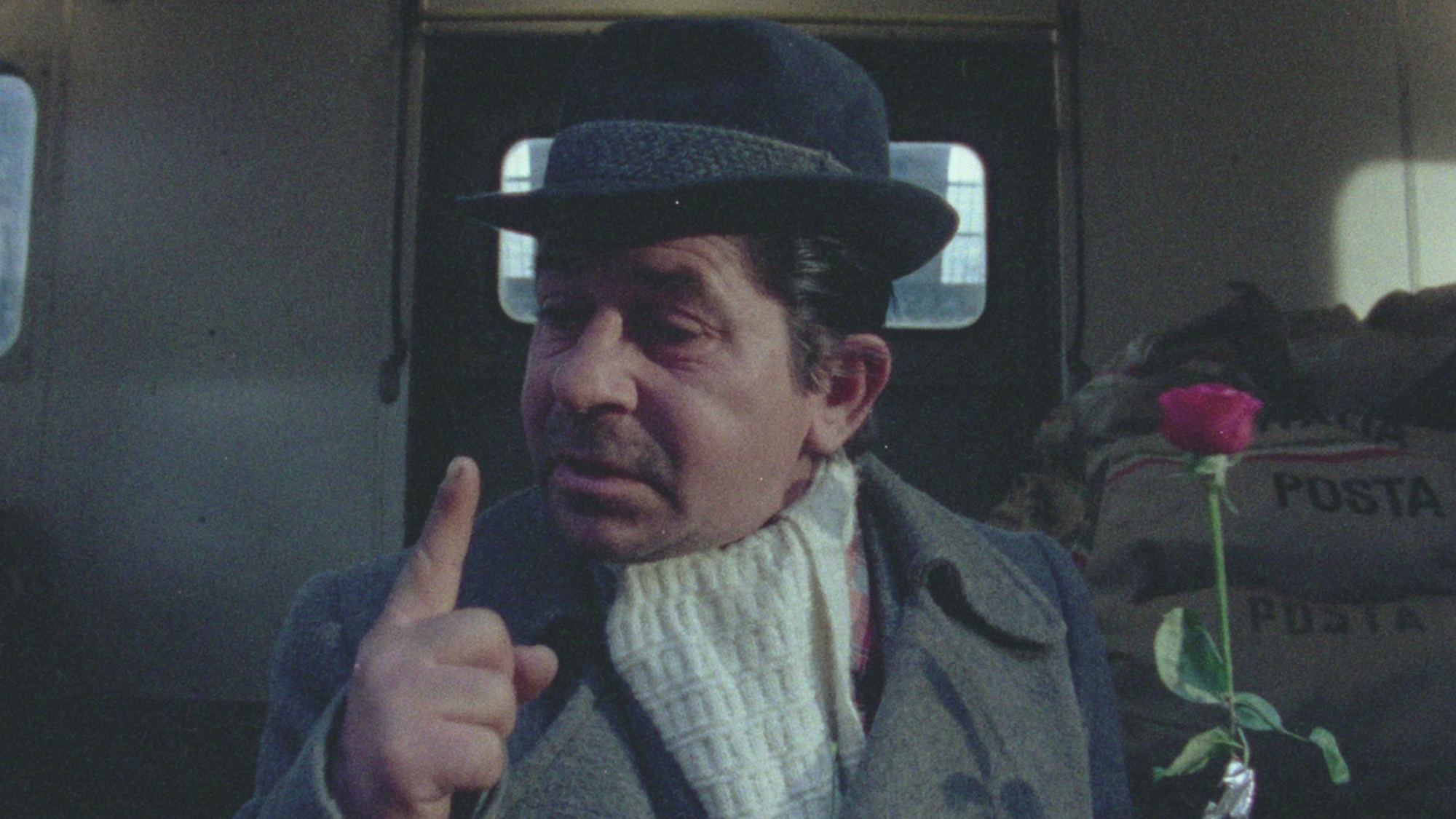
Since the very beginning of cinema, trains have been arriving at stations. But this time the camera is not standing still on the platform, waiting for the locomotive and its passengers; it is mounted on the train as it pulls in at dawn and penetrates the still half-dark vaults of Milan’s Central Station, like a cave filled with fog, flashes of light and muffled sounds. It is the first, beautiful shot of Giuseppe Bertolucci’s third film, Panni sporchi, a ‘documentary’ about Milan’s station, born from the unusual encounter between an electoral propaganda project for the Italian Communist Party (PCI) – for which the film ultimately proved unusable – and the director’s desire to return, without actors or a screenplay, to the same spaces where, only a few months earlier, he had shot Oggetti smarriti. If the Lumière brothers’ camera stood motionless, contemplating the movement of reality, this other brother’s camera arrives with the train and moves constantly through every recess of the dark cavern, filming people who do not move, who neither arrive nor depart, who never take the train because they are not passing through the station but instead live there. They are the so-called outcasts, a lumpen-humanity without chains but also without homes or bonds of affection, dragging out their days between a waiting room and a dead-end track: drug addicts and prostitutes, homeless drifters and punch-drunk boxers, visionaries and drunkards. They are the dirty laundry of society: no one even bothers to ask to be hidden away any more, but nor is it any longer enough simply to display them, in neorealist fashion, as cinematic inquiry and denunciation. Not least because they put themselves on display, performing their own condition, each in their own comic or dramatic style, in a film without a narrative but with a great deal of staging on both sides of the camera.
Alberto Farassino, C’è chi parte chi arriva chi ci vive aspettando,
“la Repubblica”, 19 February 1981
Panni sporchi, my ciné vérité film set in Milan’s railway station, was very important for the gratification I derived from my relationship with the cinematic apparatus and with the camera itself, because it is a film that, in my view, sustains itself almost like a jazz improvisation … The most appropriate interpretive key to Panni sporchi is psychoanalytic rather than sociological or political: it is a film about abandonment and mourning. Most of its characters have either been abandoned or abandoned someone.
Giuseppe Bertolucci, L’Avventurosa storia del cinema italiano. Da Teorema a Bianca,
Edizioni Cineteca di Bologna, Bologna 2026