Film notes
Museum of the here and now – Actualities
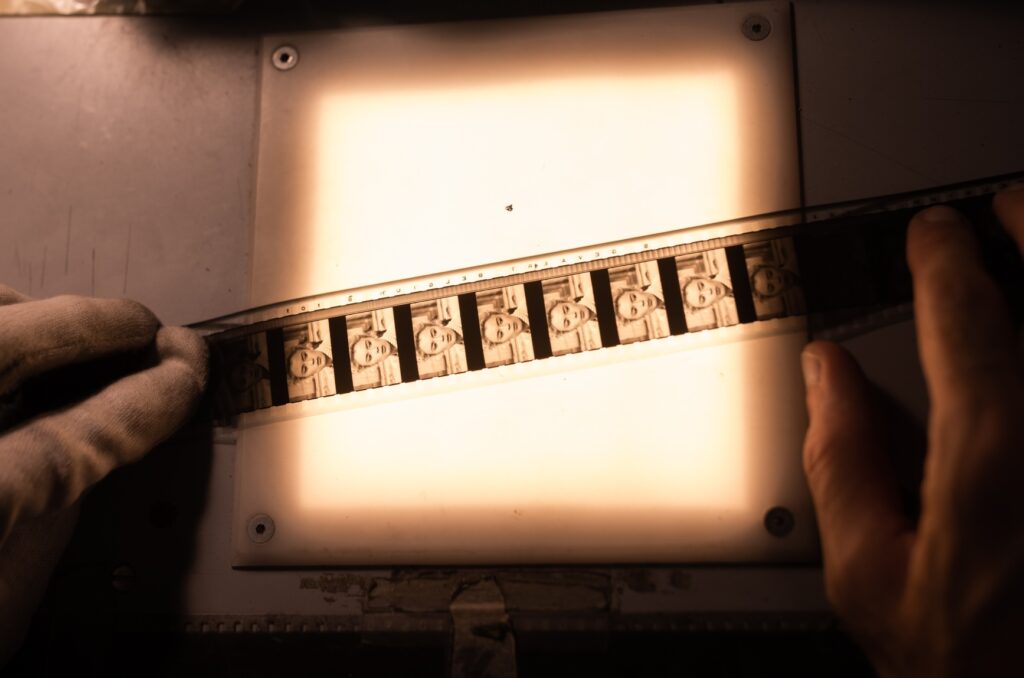
As material objects, these Lumière views are a homogeneous batch. Our screenings take place in 2016, and the 35mm prints screened here were made twenty years ago, in 1995, via intermediary elements, struck from negatives that were exposed and developed in 1896, a hundred and twenty years ago. What appears today on the screen happened to be in front of a Lumière Cinématographe a hundred and twenty years ago.
During their screenings, however, the views do not all stay there, in 1896; they behave in many different ways (and individually with different viewers). A flag flying, for example, crosses over easily and reaches the present, so does the play of light and shadow on a Boston tramway, and while a Tsar or a dowager Empress of Russia remains bound to the past, animals and children are free, timeless.
The uncanny magic of time in these very early films is overwhelming. How is it possible that we should be permitted to see the past, in 50 second glimpses. The old harbour of Marseilles, silvery sardines taken from nets, boys skating back and forth, a bird unfolding its wings – they appear and reappear, and every time we are engulfed in their present time, le vierge, le vivace et le bel aujourd’hui.
Mariann Lewinsky
Spectacle. The Power of the Cinématographe
You turn the handle a few times and your machine transforms a pig into appetizing sausages. You turn the handle a few times, and your Cinématographe transforms whatever it films into a spectacular appearance, endowing everything with meaning, mystery and glamour. Everybody becomes a protagonist, a performer. This effect is less noticeable in performances such as music-hall numbers and in family films (where people put on little shows for the benefit of the camera) and is at its strongest in apparently unarranged scenes of play or work, such as Bassin des Tuileries, Chargement du Coke and Mauvaises herbes.
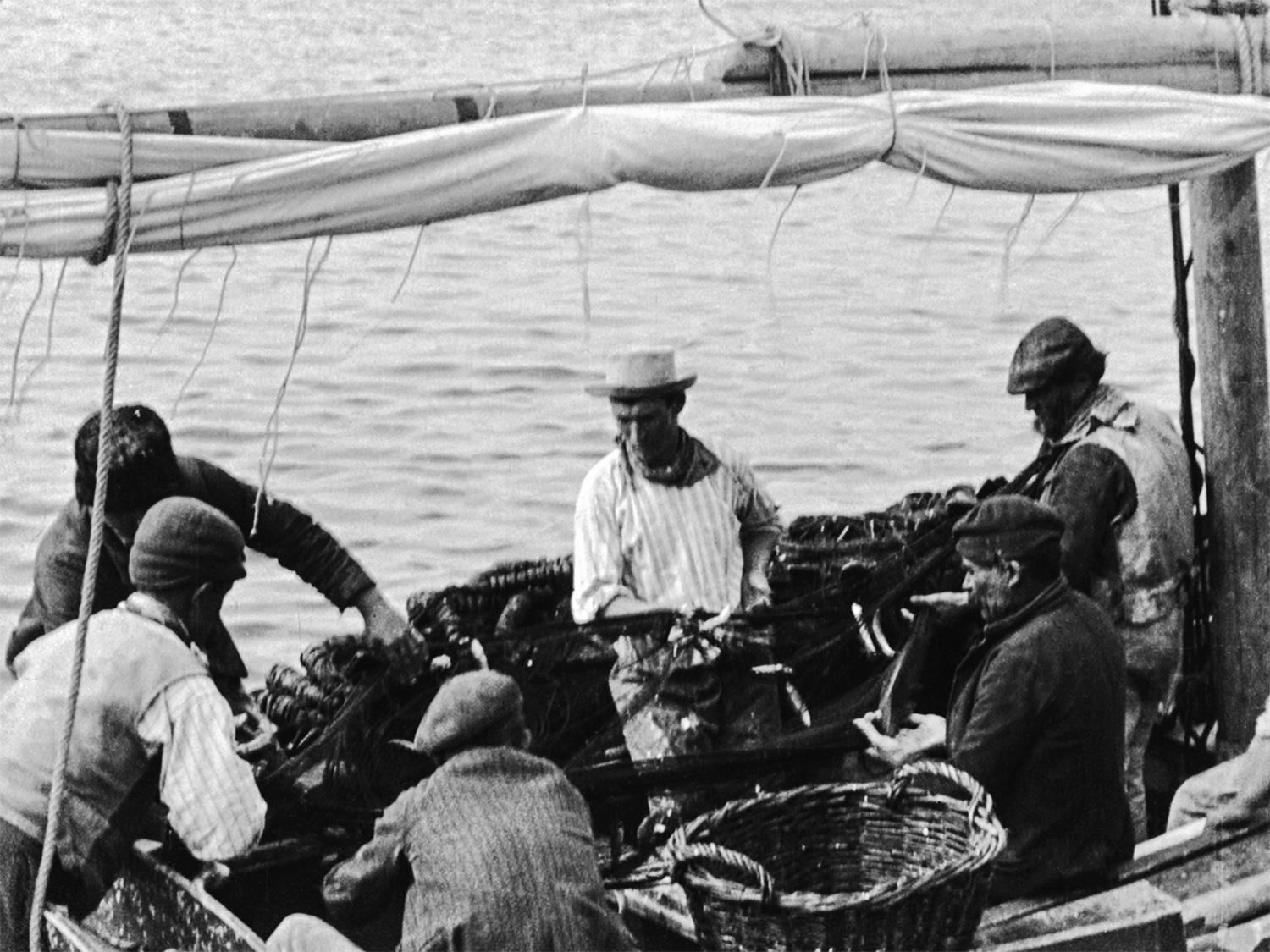
The views Lumière form an amazing documentation of work, much of it collective and unmechanized, done by groups of men, women and animals in orchestrated movements. Captured by the Cinématographe they appear as effortless choreographies when screened now in front of audiences no longer familiar with such kind of work and the sight of it.
Mariann Lewinsky