
Film notes
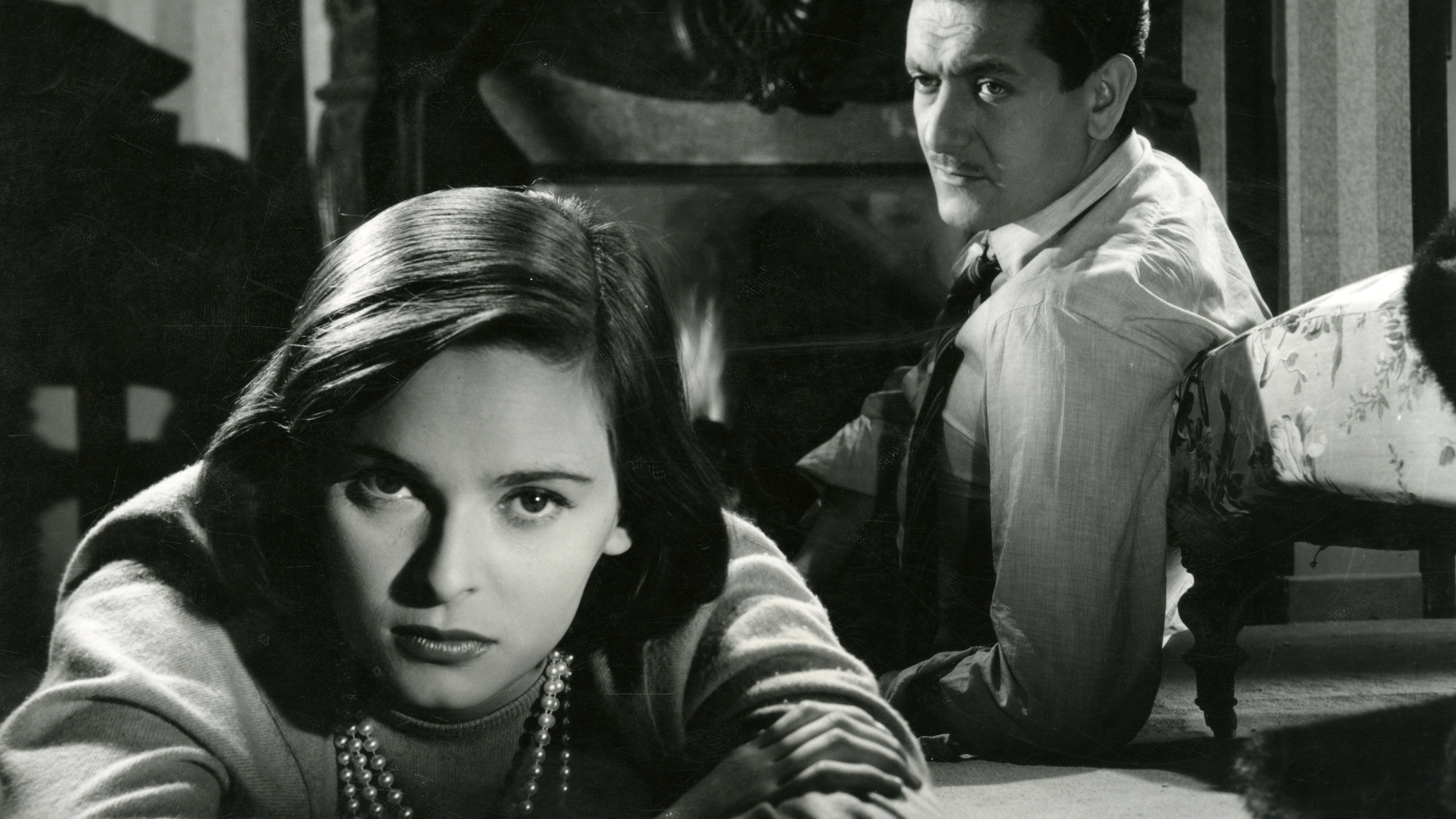
The vaguely neorealist stamp on Juan Antonio Bardem’s early films is often remarked upon, perhaps at the expense of his exquisite compositional framing, expressionist lighting, layered editing and the way in which spaces seem to swallow the characters whole, lending an existentialist quality to the images of Muerte de un ciclista. All these characteristics bring this masterpiece of Spanish cinema closer to the tradition of American noir and postwar British drama, with even a nod to the cinema of Antonioni, and not only because of the presence of Lucia Bosé in a role not unlike the one she had played in Cronaca di un amore (1950). A pair of lovers hit a cyclist with their car and flee the scene. Established in the film’s opening moments, the narrative premise of Muerte de un ciclista determines the state of paranoia that takes hold of the protagonists, as well as the way in which each of them deals with their conscience once they learn of the cyclist’s tragic fate. Half a century later, with different intentions, the Argentine director Lucrecia Martel would revisit the same premise for her film La mujer rubia (2008). In what is arguably his most representative and celebrated work (winner of the FIPRESCI Award at Cannes), Bardem introduces thriller elements and creates a claustrophobic atmosphere, a metaphor for the sociopolitical conditions of Francoist Spain, marked by corruption and social injustice. Despite censorship, imposed with considerable force by both Spanish and Italian oversight bodies explicitly to condemn behaviours and attitudes deemed transgressive, the film became a symbol of cultural opposition to the dictatorship and a landmark of Spanish political cinema.
Carlos Reviriego