

Film notes
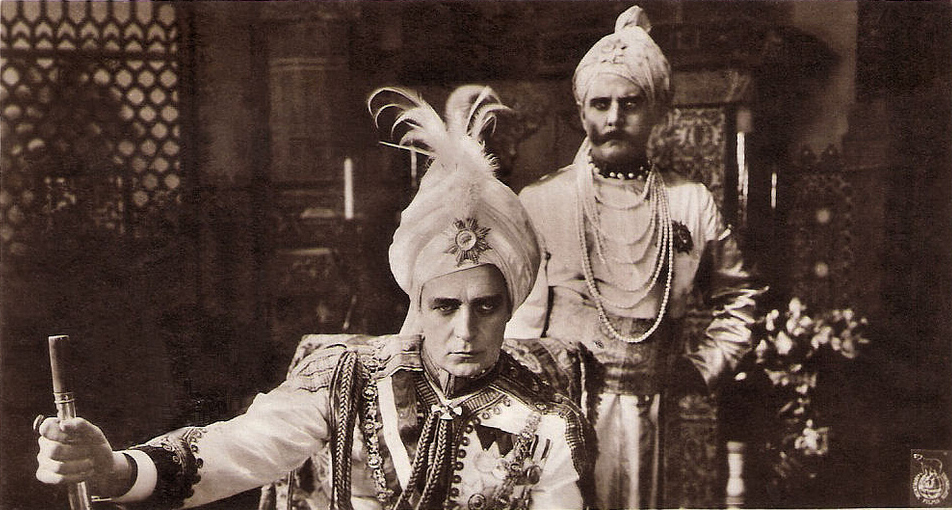
In early 1917 “Paimann’s Weekly Film-Lists” warmly recommended to its subscribers, the cinema owners of Austria, to book Robert Dinesen’s latest film: “The story is gripping and highly dramatic; the acting and photography are excellent, the sets lavish and the harem scenes first-rate”. Indeed, Maharadjahens yndlingshustru, a Nordisk production, became a crash box-office hit wherever it was distributed, and while the harem scenes probably didn’t hurt, the main attraction was beyond any doubt the fairytale plot: Elly, a rather ordinary European girl, wins the true love of a fabulously rich, handsome Indian prince. Within the patriarchal order of his male privileges (the harem), she rises to a position deemed privileged by the logic of the film’s happy ending, that of the best-beloved of several wives. Norwegian actor Gunnar Tolnæs, bedecked with jewels and military decorations in his Maharadjah attire, gained immense popularity and the tale-telling nickname ‘The Women’s Favorite Maharadjah’. Miscegenation goes unpunished in this film, contrary to the racist US productions in a similar vein: the Asian desiring a white woman in The Cheat (1915) must die (while it seems no problem that The Sheik, 1921, is a rapist, after it is revealed that he is white after all). It took a great writer like E.M. Forster to expose the fantasy of dark strangers desiring white women for what it is, a figment of white imagination. Incidentally, Forster had lived some years in India as a private secretary to the Maharajah of Dewas before publishing A Passage to India (1924).
Mariann Lewinsky